
A nurse is preparing to administer dextrose 5% in 0.45% sodium chloride 1000 mL to infuse at 100 mL/60 min. The drop factor on the manual IV tubing is 60 gtt/mL. The nurse should set the IV flow rate to deliver how many gtt/min?
(Round to the nearest whole number.)
The Correct Answer is ["100"]
To calculate the IV flow rate in drops per minute (gtt/min), we can use the following formula: Flow rate (gtt/min) = Volume to be infused (mL) × Drop factor (gtt/mL) ÷ Time (min) Given information:
Volume to be infused = 100 mL
Drop factor = 60 gtt/mL
Time = 60 min
Substituting the values into the formula:
Flow rate (gtt/min) = 100 mL × 60 gtt/mL ÷ 60 min
Flow rate (gtt/min) = 100 gtt/min
Therefore, the nurse should set the IV flow rate to deliver 100 gtt/min.
Nursing Test Bank
Naxlex Comprehensive Predictor Exams
Related Questions
Correct Answer is D
Explanation
The nurse should measure the gastric residual before administering a feeding to identify delayed gastric emptying. Gastric residual refers to the volume of formula or contents remaining in the stomach from the previous feeding. Measuring gastric residual helps assess how well the client's stomach is emptying and can indicate if there is delayed gastric emptying.
By measuring gastric residual, the nurse can:
● Determine if the stomach has adequately emptied from the previous feeding. ● Assess the client's tolerance to enteral feedings.
● Detect signs of delayed gastric emptying, which can be indicative of gastrointestinal motility issues or other complications.
● Adjust the feeding rate or make other modifications to the enteral feeding plan based on the amount of residual volume.
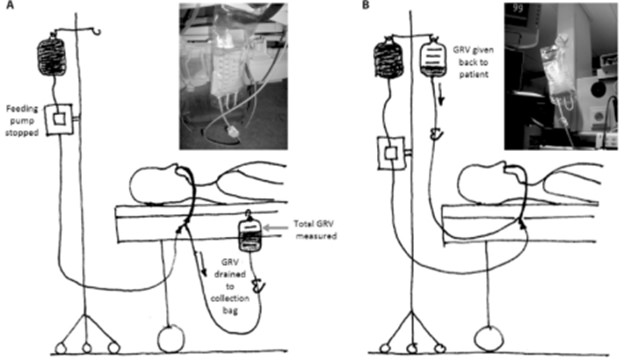
Confirming the placement of the NG tube is typically done using other methods, such as an X-ray, pH testing, or auscultation of air insufflation. Gastric residual measurement primarily serves the purpose of assessing gastric emptying, rather than confirming tube placement.
While electrolyte imbalances can be monitored in the overall care of a client receiving enteral feedings, measuring gastric residual specifically focuses on assessing gastric emptying and feeding tolerance, rather than determining the client's electrolyte balance.
Removing gastric acid that might cause dyspepsia is not the primary purpose of measuring gastric residual. Gastric residual measurement aims to evaluate the volume of the previous feeding and assess gastric emptying, rather than focusing on dyspepsia specifically.
Correct Answer is B
Explanation
When reinforcing teaching about cimetidine with a client who has peptic ulcer disease, the nurse should include the following information:
"Wait at least 1 hour after taking the medication before taking an antacid.": Cimetidine is a histamine-2 receptor antagonist that reduces stomach acid production. Taking an antacid too close in time to cimetidine may decrease its effectiveness as antacids can interfere with its absorption. The nurse should advise the client to follow the healthcare provider's instructions regarding the timing and administration of cimetidine and antacids.
The following statements are incorrect or not applicable:
"Expect breast tenderness while taking this medication.": Breast tenderness is not a common side effect of cimetidine. If the client experiences any unusual symptoms or side effects while taking the medication, they should consult their healthcare provider for further evaluation.
"Take this medication on an empty stomach.": To reduce stomach upset, this medication should be taken with food or milk
"Take ibuprofen for occasional aches and pains.": Ibuprofen is a nonsteroidal anti-inflammatory drug (NSAID) that can increase the risk of gastrointestinal complications, including ulcers. In individuals with peptic ulcer disease, it is generally recommended to avoid NSAIDs unless specifically prescribed by a healthcare provider. The nurse should emphasize the importance of discussing any pain management strategies or medications with the healthcare provider before use.
Whether you are a student looking to ace your exams or a practicing nurse seeking to enhance your expertise , our nursing education contents will empower you with the confidence and competence to make a difference in the lives of patients and become a respected leader in the healthcare field.
Visit Naxlex, invest in your future and unlock endless possibilities with our unparalleled nursing education contents today