
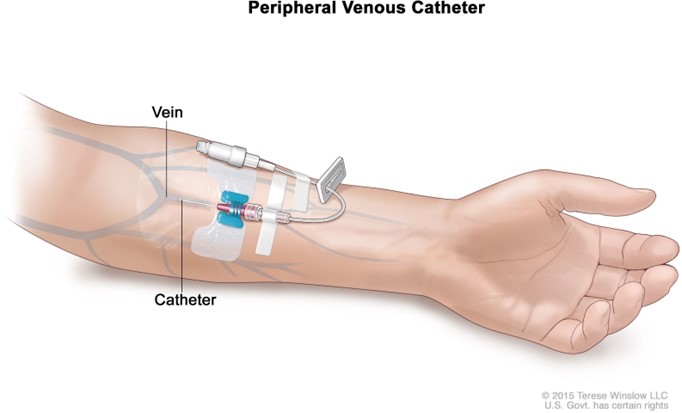
A nurse is preparing to insert a peripheral IV catheter into a client's arm. Which of the following actions should the nurse take to help dilate the vein?
Dangle the client's arm over the edge of the bed.
Stroke the skin near the vein in an upward direction.
Instruct the client to flex their arm with the hand open.
Apply a cool compress to the vein for 10 min.
The Correct Answer is A
The correct answer is that the nurse should dangle the client's arm over the edge of the bed to help dilate the vein. This technique uses gravity to increase blood flow to the arm and dilate the veins, making it easier to insert a peripheral IV catheter.
Options b, c and d are not effective techniques for dilating a vein for IV insertion. Stroking the skin near the vein in an upward direction, instructing the client to flex their arm with the hand open and applying a cool compress to the vein for 10 min are not effective methods for dilating a vein.
Nursing Test Bank
Naxlex Comprehensive Predictor Exams
Related Questions
Correct Answer is A
Explanation
When providing teaching about health promotion guidelines to a group of young adult male clients, the nurse should include the recommendation to have a dental examination every 6 months. Regular dental examinations can help prevent dental problems and maintain good oral health.
b) A testicular examination is recommended annually, not every 2 years.
c) A tetanus booster is recommended every 10 years, not every 5 years.
d) A herpes zoster immunization is recommended for adults age 60 and older, not age 50.

Correct Answer is B
Explanation
When planning an educational conference about informed consent, the nurse should include information about the potential risks of the procedure. Informed consent is a process in which the client is provided with information about a medical procedure or treatment, including its potential risks and benefits, so that they can make an informed decision about whether to proceed.
Option a is incorrect because after signing the informed consent, the client still has the right to refuse the procedure.
Option c is incorrect because it is not the nurse's responsibility to explain the procedure when obtaining informed consent; this is typically done by the healthcare provider performing the procedure.
Option d is incorrect because a nursing student cannot witness an informed consent; only a licensed healthcare professional can do so.
Whether you are a student looking to ace your exams or a practicing nurse seeking to enhance your expertise , our nursing education contents will empower you with the confidence and competence to make a difference in the lives of patients and become a respected leader in the healthcare field.
Visit Naxlex, invest in your future and unlock endless possibilities with our unparalleled nursing education contents today