
A nurse is providing care for four clients on a medical-surgical unit, Which of the following clients should the nurse identify as being at risk for the development of pressure ulcers? (Select all that apply.)
A client who has protein calorie malnutrition
A client who has type1 diabetes mellitus and is hyperglycemic
A client who has right-sided heart failure and 4+ edema to the lower extremities
A client who has postoperative delirium
A client who is ambulatory following a cardiac catheterization 4 hr ago
Correct Answer : A
A. Protein-calorie malnutrition can lead to decreased tissue integrity and delayed wound healing, increasing the risk of pressure ulcer development due to compromised nutritional status.
B. Diabetes, especially when uncontrolled, can lead to poor circulation and neuropathy, which increases the risk of pressure ulcers. Hyperglycemia can also impair wound healing and compromise the immune response, further contributing to the risk.
C. Edema increases pressure on the skin and underlying tissues, impairing circulation and increasing the risk of pressure ulcers, especially in areas where there is constant pressure or friction against surfaces.
D. A client with postoperative delirium is not necessarily at risk of delirium.
E. A client post cardiac catheterization and already ambulating is not at risk of pressure sores
Nursing Test Bank
Naxlex Comprehensive Predictor Exams
Related Questions
Correct Answer is B
Explanation
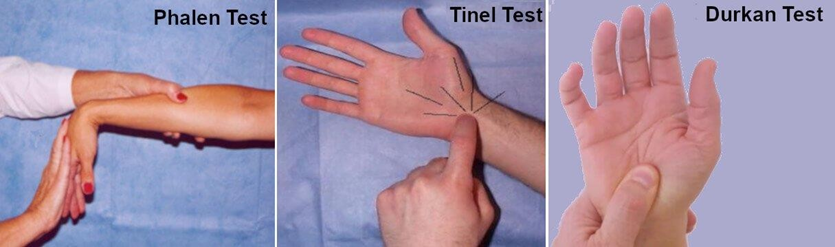
B. This test is known as Phalen's maneuver. It involves holding the wrist in flexion for 60 seconds or more to compress the median nerve, which runs through the carpal tunnel in the wrist. Reproduction of symptoms, such as numbness and tingling, during this maneuver is considered a positive sign for carpal tunnel syndrome.
A. Flexing the arm at the elbow doesn't directly assess for carpal tunnel syndrome. This movement primarily involves the elbow joint and the muscles of the upper arm.
C. Extending the arm upward doesn't directly assess for carpal tunnel syndrome. This movement primarily involves the shoulder joint and muscles of the upper arm.
D. Holding the arm straight doesn't directly assess for carpal tunnel syndrome. This movement primarily involves the elbow joint and muscles of the upper arm.
Correct Answer is C
Explanation
C. A neurovascular assessment involves evaluating the circulation, sensation, and movement of the limb distal to the cast to ensure there are no signs of neurovascular compromise, such as decreased pulses, numbness, tingling, or weakness. Prompt identification of any neurovascular impairment is essential for preventing complications such as compartment syndrome.
A. Explaining discharge instructions is important for ensuring the client and their parents understand how to care for the cast at home. However, it is not the priority action.
B. Applying an ice pack to the casted leg can help reduce swelling and provide pain relief, but it is not the priority action immediately after the cast application.
D. Providing reassurance is important for alleviating anxiety and promoting a positive experience for the client and their parents. However, it is not the priority action.
Whether you are a student looking to ace your exams or a practicing nurse seeking to enhance your expertise , our nursing education contents will empower you with the confidence and competence to make a difference in the lives of patients and become a respected leader in the healthcare field.
Visit Naxlex, invest in your future and unlock endless possibilities with our unparalleled nursing education contents today