
A nurse is providing teaching about a gluten-free diet to a client who has celiac disease. Which of the following foods should the nurse recommend the client include in his diet?
Wheat germ
Corn
Salami
Barley
The Correct Answer is B
Corn: Corn is a gluten-free grain and can be included in a gluten-free diet for individuals with celiac disease.
Wheat germ: Wheat germ is derived from wheat and contains gluten. Therefore, it should be avoided by individuals with celiac disease.
Salami: Salami is a processed meat product that may contain gluten-containing additives or fillers. Therefore, it is important for individuals with celiac disease to carefully read the ingredient labels of processed meat products or opt for certified gluten-free alternatives.
Barley: Barley is a gluten-containing grain and should be strictly avoided by individuals with celiac disease.
It is important for individuals with celiac disease to carefully read food labels and select gluten-free alternatives. Gluten-containing grains and their derivatives, such as wheat, barley, and wheat germ, should be avoided. Safe alternatives, such as corn, rice, quinoa, and Gluten-free oats, can be included in the diet.
Nursing Test Bank
Naxlex Comprehensive Predictor Exams
Related Questions
Correct Answer is A
Explanation
"Eat protein at each meal": This is an important instruction for a client with dumping syndrome. Including protein at each meal can help slow down the digestion process and reduce the rapid emptying of the stomach contents into the small intestine, which is characteristic of dumping syndrome. Protein takes longer to digest and can help stabilize blood sugar levels, promote satiety, and minimize the symptoms of dumping syndrome.
"Consume three large meals daily": Consuming three large meals daily is not recommended for clients with dumping syndrome. Large meals can exacerbate the symptoms by overloading the digestive system. Instead, it is generally advised to consume smaller, more frequent meals throughout the day to help manage dumping syndrome symptoms.
"Drink beverages with meals": It is not recommended to drink beverages with meals for clients with dumping syndrome. Consuming liquids with meals can further contribute to the rapid emptying of the stomach contents and worsen symptoms. It is preferable to drink fluids between meals to maintain hydration without affecting the digestion process.
"Sit up in bed after meals": This instruction is relevant for clients with gastroesophageal reflux disease (GERD) but may not be specifically related to dumping syndrome. In the case of dumping syndrome, it is generally recommended to remain in an upright position after meals to aid digestion and reduce symptoms, such as bloating, cramping, and diarrhea.
Correct Answer is C
Explanation
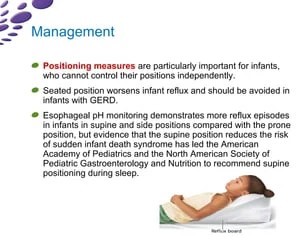
"Position the newborn at a 20-degree angle after feeding": This is the correct instruction. After feeding, it is beneficial to position the newborn at a slight angle, usually around 20 degrees, to help reduce gastroesophageal reflux. This position helps gravity keep the stomach contents down and prevents them from regurgitating back into the esophagus.
"Provide a small feeding just before bedtime": This instruction is not recommended for a newborn with gastroesophageal reflux. It is advisable to avoid feeding the baby just before bedtime as lying down can worsen the reflux symptoms. Instead, it is generally recommended to keep the baby upright for some time after feeding to allow for proper digestion and minimize reflux.
"Place the newborn in a side-lying position if vomiting": Placing the newborn in a side-lying position after vomiting is not recommended. This position does not provide adequate support to prevent choking or aspiration in case of vomiting. Instead, it is recommended to keep the newborn in an upright or slightly elevated position after feeding to minimize reflux.
"Dilute formula with 1 tablespoon of water": Diluting formula with water is not a recommended practice unless specifically advised by a healthcare provider. It is important to follow the instructions on the formula packaging or the healthcare provider's guidance regarding formula preparation to ensure appropriate nutrition and hydration for the newborn.
Whether you are a student looking to ace your exams or a practicing nurse seeking to enhance your expertise , our nursing education contents will empower you with the confidence and competence to make a difference in the lives of patients and become a respected leader in the healthcare field.
Visit Naxlex, invest in your future and unlock endless possibilities with our unparalleled nursing education contents today