
A nurse is receiving report on a group of clients. Which of the following clients should the nurse assess first?
A client who has a chest tube and reports a pain level of 6 on a scale of 0 to 10.
A client who received parenteral cephalosporin and reports urticaria and edema.
A client who is being admitted with bilateral stage 3 pressure injuries on both heels.
A client who has a systemic infection and an oral temperature of 39.1°C (102.4°F).
The Correct Answer is B
Choice A Reason
A client who has a chest tube and reports a pain level of 6 on a scale of 0 to 10. While pain management is important, this client is not in immediate life-threatening danger. Pain can be addressed after ensuring there are no urgent allergic reactions or other critical conditions.
Choice B Reason
A client who received parenteral cephalosporin and reports urticaria and edema. This is the correct choice. Urticaria (hives) and edema (swelling) can indicate an allergic reaction, which can progress to anaphylaxis, a life-threatening condition. Immediate assessment and intervention are required to prevent severe complications.
Choice C Reason
A client who is being admitted with bilateral stage 3 pressure injuries on both heels. While stage 3 pressure injuries are serious and require prompt attention, they do not pose an immediate life-threatening risk compared to a potential anaphylactic reaction.
Choice D Reason
A client who has a systemic infection and an oral temperature of 39.1°C (102.4°F). Although a systemic infection with a high fever is concerning and needs timely intervention, it is not as immediately life-threatening as a potential anaphylactic reaction.
Nursing Test Bank
Naxlex Comprehensive Predictor Exams
Related Questions
Correct Answer is A
Explanation
Choice A Reason:
Provide assistance with ambulation: Patients with cerebellar tumors often experience ataxia, which is a lack of muscle coordination affecting voluntary movements such as walking and balance. Assisting with ambulation is crucial to prevent falls and ensure the patient’s safety. The cerebellum plays a significant role in motor control, and damage to this area can severely impair a patient’s ability to move safely. Therefore, providing assistance with ambulation is a priority to prevent injury and promote mobility.
Choice B Reason:
Facilitate retention of facts by repeating instructions: While repeating instructions can be beneficial for patients with cognitive impairments, it is not the primary concern for a patient with a cerebellar tumor. The main issues with cerebellar tumors are related to motor control and balance. Although cognitive support is important, ensuring physical safety through assistance with ambulation takes precedence.
Choice C Reason:
Place the client in a darkened room: Placing a patient in a darkened room might help with symptoms like photophobia (sensitivity to light), but it does not address the primary concerns associated with cerebellar tumors, such as balance and coordination. This action does not directly contribute to the patient’s immediate safety and mobility needs.
Choice D Reason:
Speak slowly and clearly: Clear communication is always important in nursing care, especially for patients who may have difficulty understanding due to neurological issues. However, for a patient with a cerebellar tumor, the immediate priority is to address motor dysfunction and prevent falls. Speaking slowly and clearly is supportive but not the primary action needed to ensure the patient’s safety.
Correct Answer is A
Explanation
Choice A Reason:
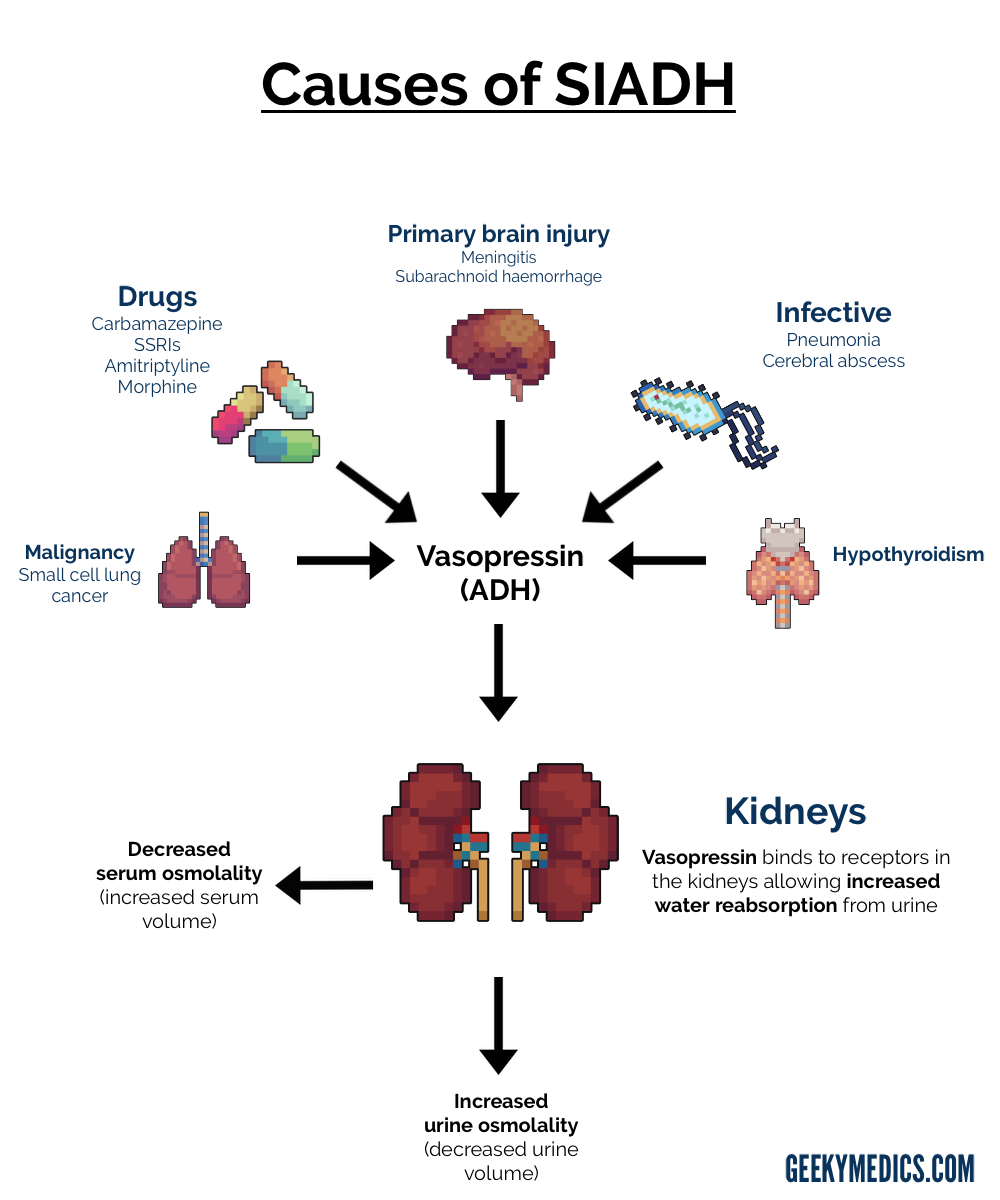
A urine specific gravity of 1.02 falls within the normal range (1.005 to 1.03) and indicates that the kidneys are excreting water appropriately. In SIADH, urine is typically concentrated due to excessive antidiuretic hormone (ADH) secretion. A normal urine specific gravity suggests that the ADH levels are normalizing and the condition is resolving.
Choice B Reason:
A sodium level of 119 mEq/L is significantly below the normal range (136 to 145 mEq/L) and indicates persistent hyponatremia. This finding suggests that the SIADH is not resolving, as effective treatment should lead to an increase in serum sodium levels.
Choice C Reason:
A BUN level of 8 mg/dL is slightly below the normal range (10 to 20 mg/dL) but is not a primary indicator of SIADH resolution. BUN levels can be influenced by various factors, including hydration status and renal function.
Choice D Reason:
A calcium level of 8.7 mg/dL is slightly below the normal range (9 to 10.5 mg/dL) but does not directly indicate the resolution of SIADH. Calcium levels are not typically used to monitor the effectiveness of SIADH treatment.
Whether you are a student looking to ace your exams or a practicing nurse seeking to enhance your expertise , our nursing education contents will empower you with the confidence and competence to make a difference in the lives of patients and become a respected leader in the healthcare field.
Visit Naxlex, invest in your future and unlock endless possibilities with our unparalleled nursing education contents today