
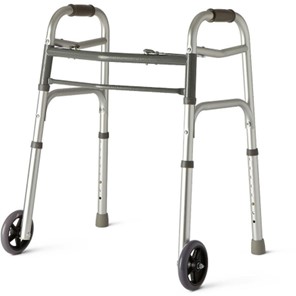
A nurse is teaching a client who requires maximal support about how to use a two-wheeled walker. Which of the following actions by the client indicates an understanding of teaching?
The client stoops slightly forward when moving the walker.
The client moves the walker ahead 25.4 cm (10 in) with each step.
The client stands with her elbows slightly flexed while holding the walker.
The client picks up the walker with each step.
The Correct Answer is C
When using a two-wheeled walker, the client should stand with their elbows slightly flexed while holding the walker. This allows for proper posture and support while using the walker.
Option a is incorrect because stooping forward can cause strain on the back and neck.
Option b is incorrect because moving the walker too far ahead can cause instability and increase the risk of falls.
Option d is incorrect because picking up the walker with each step can cause fatigue and decrease the effectiveness of the walker.
Nursing Test Bank
Naxlex Comprehensive Predictor Exams
Related Questions
Correct Answer is B
Explanation
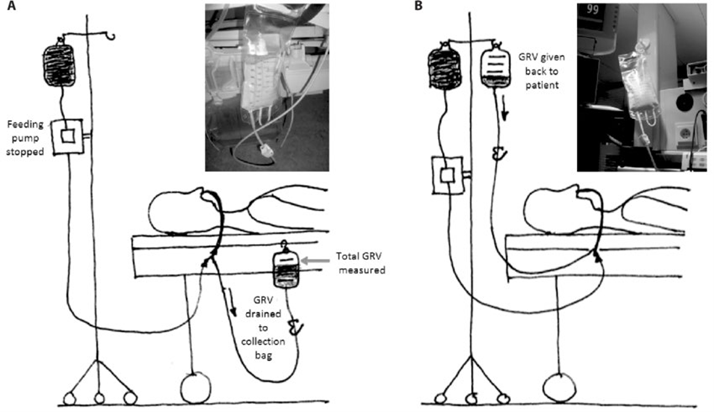
Before administering enteral feedings via an NG tube, the nurse should check for gastric residual volume to ensure that the client is able to tolerate the feeding. If the residual volume is high, it may indicate delayed gastric emptying and the feeding may need to be delayed or the rate adjusted.
a. Encouraging the client to take sips of water may help maintain hydration, but it is not necessary prior to administering enteral feedings.
c. Flushing the tube with sterile 0.9% sodium chloride irrigation can help maintain patency of the tube, but it is not necessary prior to administering enteral feedings.
d. Encouraging the client to breathe deeply and cough can help clear secretions from the lungs, but it is not necessary prior to administering enteral feedings.
Correct Answer is A
Explanation
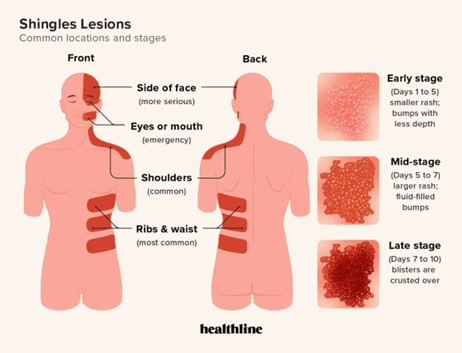
When providing change-of-shift report about a client who has shingles, the nurse should include information about the type of transmission-based precautions in place to prevent the spread of infection to other clients and staff. Shingles is caused by the varicella-zoster virus and can be spread through direct contact with the rash.
- The times for routine vital sign measurements may be important information to include in the report, but it is not specific to the client's condition of shingles.
- The client's background health history may be important information to include in the report, but it is not specific to the client's condition of shingles.
- The number of visitors the client had during the shift may be important information to include in the report, but it is not specific to the client's condition of shingles.
Whether you are a student looking to ace your exams or a practicing nurse seeking to enhance your expertise , our nursing education contents will empower you with the confidence and competence to make a difference in the lives of patients and become a respected leader in the healthcare field.
Visit Naxlex, invest in your future and unlock endless possibilities with our unparalleled nursing education contents today