
A nurse is using a glucometer to measure a client's capillary blood glucose level. Which of the following actions should the nurse take?
Select the central tip of a finger.
Wear sterile gloves.
Keep the finger in a dependent position.
Milk or massage the finger site.
The Correct Answer is C
Choice A Reason:
Select the central tip of a finger is incorrect. The nurse should select a puncture site on the side of the finger, slightly off-center from the central tip, as it tends to be less painful. The side of the finger has an adequate blood supply and can provide an accurate blood sample without causing excessive discomfort.
Choice B Reason:
Wearing sterile gloves is incorrect. Sterile gloves are not typically necessary for routine capillary blood glucose monitoring. However, clean hands and proper hand hygiene are essential. The nurse should perform hand hygiene before the procedure.
Choice C Reason:
Keeping the finger in a dependent position is correct. Keeping the finger in a dependent position (hanging down) can promote blood flow and make it easier to obtain a blood sample. This is a recommended technique to facilitate the puncture and collection of blood.
Choice D Reason:
Milking may hemolyze specimen and introduce excess tissue fluid.
Nursing Test Bank
Naxlex Comprehensive Predictor Exams
Related Questions
Correct Answer is B
Explanation
Choice A Reason:
Posterior fontanel closed is incorrect, it is normal for the posterior fontanel to close earlier than the anterior fontanel, usually by 2 to 3 months of age.
Choice B Reason:
Anterior fontanel closed is correct. The anterior fontanel is the soft spot on the top of a baby's head, and it typically closes between 12 to 18 months of age. If the anterior fontanel is closed in a 4-month-old infant, it is considered an early closure, which can be a cause for concern. Early closure of the anterior fontanel can be associated with various underlying medical conditions, such as craniosynostosis (premature fusion of the skull bones) or dehydration.
Choice C Reason:
Plays with toes is incorrect. At 4 months of age, infants are typically developing their motor skills, and playing with their toes is a sign of normal development.
Choice D Reason:
Moves objects to mouth is incorrect. At this age, infants often explore their environment by bringing objects to their mouths as part of their sensory exploration and development.
Correct Answer is D
Explanation
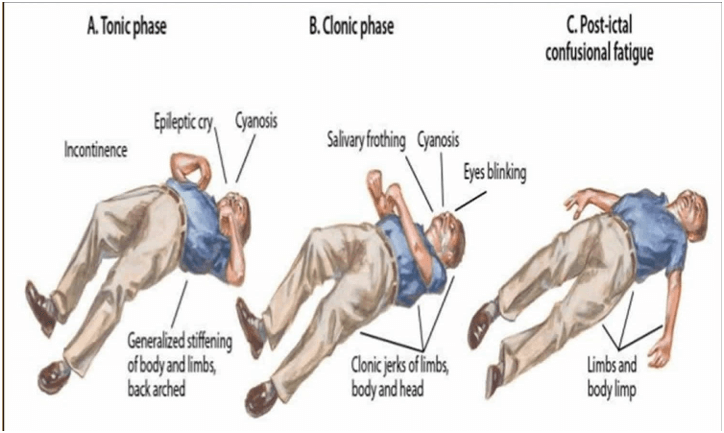
After a tonic-clonic seizure, the nurse should first check the child for any injuries, particularly in the oral cavity. This is because during a seizure, the child's tongue may have been biten, or there may be other oral injuries. Therefore, it is essential to check the oral cavity for any injury or bleeding.
Whether you are a student looking to ace your exams or a practicing nurse seeking to enhance your expertise , our nursing education contents will empower you with the confidence and competence to make a difference in the lives of patients and become a respected leader in the healthcare field.
Visit Naxlex, invest in your future and unlock endless possibilities with our unparalleled nursing education contents today