
A nurse who serves on an infection control committee is assessing the adequacy of environmental controls against infection.
What does the nurse know to be the first line of defense in medical asepsis?
Isolation or barrier procedures.
Standard precautions.
Hand hygiene techniques.
Routine cleaning of client rooms.
The Correct Answer is C
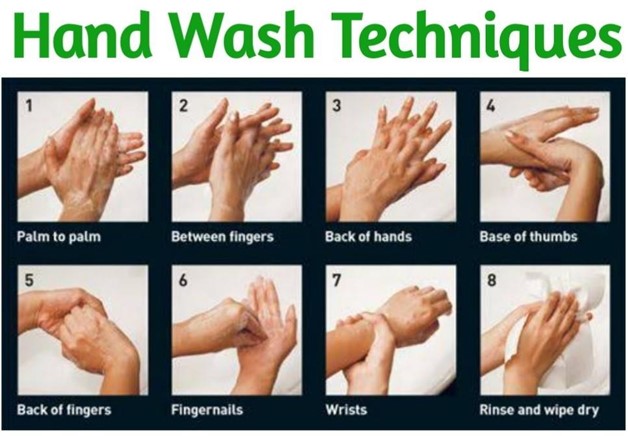
Hand hygiene techniques are the first line of defense in medical asepsis because they prevent the transmission of microorganisms from one person or object to another. Hand hygiene techniques include washing hands with soap and water or using an alcohol-based handrub.
Choice A is wrong because isolation or barrier procedures are not the first line of defense in medical asepsis, but rather a way of preventing the spread of infection to other patients or health care workers when a patient has a known or suspected infection.
Choice b is wrong because the nature of detergent used on the unit is not the first line of defense in medical asepsis, but rather a factor that affects the effectiveness of cleaning and disinfection of surfaces and equipment.
Choice D is wrong because the ventilation system type is not the first line of defense in medical asepsis, but rather a factor that affects the quality of air and the risk of airborne transmission of microorganisms.
Nursing Test Bank
Naxlex Comprehensive Predictor Exams
Related Questions
Correct Answer is D
Explanation
Insulin regular (Humulin-R) is the only form of insulin that is safe for intravenous administration. This is because it is a short-acting insulin that has a rapid onset and peak time, and does not contain any additives or suspensions that could interfere with the infusion.
Choice A is wrong because insulin aspart (Novo Log) is a rapid-acting insulin that is usually taken right before a meal. It is not suitable for intravenous use because it has a different amino acid sequence than human insulin.
Choice B is wrong because insulin glargine (Lantus) is a long-acting insulin that covers insulin needs for about a full day. It is not suitable for intravenous use because it forms micro-precipitates under the skin that release insulin slowly and steadily.
Choice C is wrong because insulin lispro (Humalog) is a rapid-acting insulin that is usually taken right before a meal. It is not suitable for intravenous use because it has a different amino acid sequence than human insulin.
Correct Answer is A
Explanation
This is because coughing can indicate aspiration of the feeding into the lungs, which can lead to pneumonia and other serious complications. Aspiration is reported in up to 89% of patients receiving nasogastric tube feeding.
Therefore, the nurse should prioritize assessing the client for signs of aspiration and ensuring proper tube placement.
Choice B is wrong because mild abdominal cramps are a common side effect of nasogastric tube feeding and do not require immediate intervention unless they are severe or persistent.
Choice C is wrong because high-pitched bowel sounds are normal and indicate peristalsis and digestion.
They do not indicate a problem with the tube feeding.
Choice D is wrong because one to two soft bowel movements per day are desirable and indicate adequate nutrition and hydration.
They do not indicate a problem with the tube feeding.
Normal ranges for gastric residual volume are less than 200 mL for adults and less than 100 mL for children. Normal ranges for pH of gastric aspirate are 1 to 5.
Whether you are a student looking to ace your exams or a practicing nurse seeking to enhance your expertise , our nursing education contents will empower you with the confidence and competence to make a difference in the lives of patients and become a respected leader in the healthcare field.
Visit Naxlex, invest in your future and unlock endless possibilities with our unparalleled nursing education contents today