
A patient with a broken rib is concerned about the type of bone affected. What classification does a rib fall under, and what is its primary function?
Flat bone; protection of thoracic organs
Irregular bone; varied functions
Short bone; stability and support
Long bone; support and leverage
The Correct Answer is A
A. Flat bone; protection of thoracic organs: Ribs are classified as flat bones (thin, flattened, often slightly curved) and their major functions include protecting thoracic organs (heart and lungs) and providing attachment sites for muscles involved in respiration and trunk movement.
B. Irregular bone; varied functions: Irregular bones (e.g., vertebrae, some facial bones) have complex shapes and varied functions; ribs are not irregular bones.
C. Short bone; stability and support: Short bones (e.g., carpals and tarsals) are roughly cube-shaped and provide stability with limited motion; ribs are not short bones.
D. Long bone; support and leverage: Long bones (e.g., femur, humerus) are longer than they are wide and function mainly in support and leverage for movement; ribs are not long bones.
Nursing Test Bank
Naxlex Comprehensive Predictor Exams
Related Questions
Correct Answer is A
Explanation
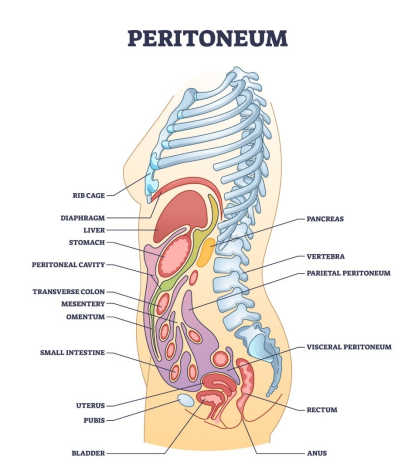
A. Providing support and reducing friction:The peritoneum is a continuous serous membrane that lines the abdominal cavity and covers the abdominal organs. It secretes a lubricating serous fluid that allows organs to glide against each other without friction during digestion and movement. It also helps suspend organs in place via folds (mesenteries).
B. Producing digestive enzymes:Digestive enzymes are primarily produced by the glandular organs such as the pancreas, salivary glands, stomach lining, and the small intestine, not the peritoneal membrane.
C. Storing bile:Bile is produced by the liver and stored/concentrated in the gallbladder.
D. Filtering waste products:The filtration of waste products from the blood is the primary function of the kidneys(and to a metabolic extent, the liver), not the peritoneum.
Correct Answer is C
Explanation
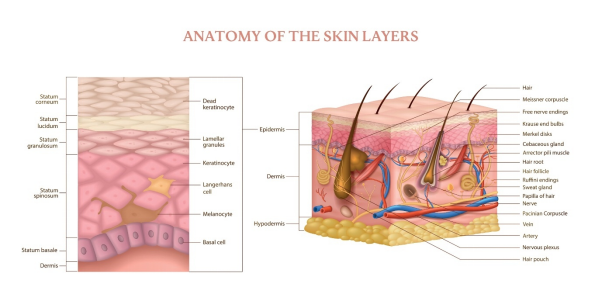
A. Adipose tissue:Adipose (fat) tissue is primarily located in the hypodermis(subcutaneous layer), which is the layer beneath the dermis.
B. Stratum lucidum:This is a specific layer of the epidermis(the outermost skin layer), found only in thick skin like the palms and soles. If the wound has reached the dermis, it has already passed through the epidermis.
C. Sweat glands:The functional units of sweat glands, hair follicles, and sebaceous (oil) glands are located within the dermis. A wound extending into this layer would disrupt these structures.
D. Melanocytes:Melanocytes are pigment-producing cells located in the stratum basale, which is the deepest layer of the epidermis, sitting just above the dermis.
Whether you are a student looking to ace your exams or a practicing nurse seeking to enhance your expertise , our nursing education contents will empower you with the confidence and competence to make a difference in the lives of patients and become a respected leader in the healthcare field.
Visit Naxlex, invest in your future and unlock endless possibilities with our unparalleled nursing education contents today