
What is the primary function of the pancreas in digestion?
Absorbing nutrients
Storing glycogen
Producing bile
Secreting digestive enzymes
The Correct Answer is D
A. Absorbing nutrients: Absorption is the primary function of the small intestine (specifically the jejunum and ileum), where nutrients pass through the villi into the bloodstream.
B. Storing glycogen: Glycogen storage primarily occurs in the liver and skeletal muscles. While the pancreas produces the hormones (insulin/glucagon) that tell these organs to store or release glycogen, the pancreas does not store it itself.
C. Producing bile: Bile production is the specific function of the liver. The gallbladder stores it, and the pancreas has nothing to do with bile production.
D. Secreting digestive enzymes: The pancreas has a crucial exocrine function where it produces "pancreatic juice." This cocktail contains powerful enzymes-amylase (for carbs), lipase (for fats), and proteases (for proteins)-which are released into the small intestine to break down food.
Nursing Test Bank
Naxlex Comprehensive Predictor Exams
Related Questions
Correct Answer is A
Explanation
A. Flat bone; protection of thoracic organs: Ribs are classified as flat bones (thin, flattened, often slightly curved) and their major functions include protecting thoracic organs (heart and lungs) and providing attachment sites for muscles involved in respiration and trunk movement.
B. Irregular bone; varied functions:Irregular bones (e.g., vertebrae, some facial bones) have complex shapes and varied functions; ribs are not irregular bones.
C. Short bone; stability and support:Short bones (e.g., carpals and tarsals) are roughly cube-shaped and provide stability with limited motion; ribs are not short bones.
D. Long bone; support and leverage:Long bones (e.g., femur, humerus) are longer than they are wide and function mainly in support and leverage for movement; ribs are not long bones.
Correct Answer is C
Explanation
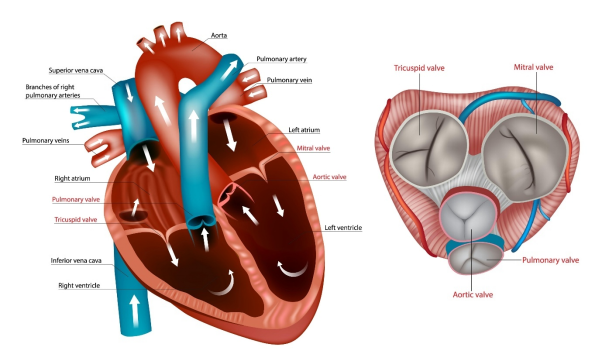
A. Tricuspid valve:The tricuspid valve is located on the right side of the heart. It prevents blood from flowing backward from the right ventricle into the right atrium during contraction (systole).
B. Pulmonary valve:The pulmonary valve is a semilunar valve located between the right ventricle and the pulmonary artery. It prevents blood from flowing back into the right ventricle after it has been pumped to the lungs.
C. Mitral valve:Also known as the bicuspid valve, this valve is located between the left atrium and the left ventricle. During ventricular contraction (systole), it closes tightly to prevent blood from regurgitating (flowing back) into the left atrium, ensuring blood exits through the aorta.
D. Aortic valve:The aortic valve is located between the left ventricle and the aorta. It prevents blood from flowing back into the left ventricle after it has been pumped out to the rest of the body.
Whether you are a student looking to ace your exams or a practicing nurse seeking to enhance your expertise , our nursing education contents will empower you with the confidence and competence to make a difference in the lives of patients and become a respected leader in the healthcare field.
Visit Naxlex, invest in your future and unlock endless possibilities with our unparalleled nursing education contents today