
Escitalopram (Lexapro) belongs to which class of medications?
Monoamine oxidase inhibitors (MAOIs)
Betablockers
Benzodiazepines
Selective serotonin reuptake inhibitors (SSRIs)
The Correct Answer is D
Choice A reason: Monoamine oxidase inhibitors (MAOIs) are not the correct class of medications to which escitalopram (Lexapro) belongs. MAOIs are a group of antidepressants that work by inhibiting the enzyme monoamine oxidase, which breaks down neurotransmitters such as serotonin, norepinephrine, and dopamine. MAOIs can increase the levels of these neurotransmitters in the brain and improve mood and energy. However, MAOIs can also cause serious side effects and interactions with other drugs and foods, and they are not commonly used as firstline treatment for depression. Escitalopram is not an MAOI, and it should not be taken with MAOIs or within 14 days of stopping or starting MAOIs, as this can cause a dangerous drug interaction called serotonin syndrome.
Choice B reason: Betablockers are not the correct class of medications to which escitalopram (Lexapro) belongs. Betablockers are a group of drugs that work by blocking the beta receptors on the heart and blood vessels, which are stimulated by adrenaline and noradrenaline. Betablockers can lower the heart rate, blood pressure, and cardiac output, and they are used to treat conditions such as hypertension, angina, arrhythmias, and heart failure. Betablockers can also reduce anxiety and tremors, but they are not antidepressants and they do not affect serotonin levels. Escitalopram is not a betablocker, and it does not have any significant effect on the cardiovascular system.
Choice C reason: Benzodiazepines are not the correct class of medications to which escitalopram (Lexapro) belongs. Benzodiazepines are a group of drugs that work by enhancing the activity of the neurotransmitter gammaaminobutyric acid (GABA), which has a calming and sedating effect on the brain. Benzodiazepines are used to treat anxiety, insomnia, seizures, and muscle spasms, and they can also cause relaxation, drowsiness, and amnesia. Benzodiazepines are not antidepressants and they do not affect serotonin levels. Escitalopram is not a benzodiazepine, and it does not have any significant effect on GABA receptors .
Choice D reason: Selective serotonin reuptake inhibitors (SSRIs) are the correct class of medications to which escitalopram (Lexapro) belongs. SSRIs are a group of antidepressants that work by blocking the reuptake of serotonin by the nerve cells, which increases the availability of serotonin in the synaptic cleft. Serotonin is a neurotransmitter that regulates mood, appetite, sleep, and cognition, and low levels of serotonin are associated with depression and anxiety. SSRIs can improve the symptoms of depression and anxiety by enhancing the serotonin signaling in the brain. Escitalopram is an SSRI, and it is used to treat major depressive disorder and generalized anxiety disorder.
Nursing Test Bank
Naxlex Comprehensive Predictor Exams
Related Questions
Correct Answer is B
Explanation
Choice A reason: Ancef (ciprofloxacin) is not the correct answer for the nurse who anticipates administering a broad-spectrum antibiotic to a client diagnosed with a beta lactam resistant bacteria. Ancef is the brand name of cefazolin, which is a firstgeneration cephalosporin, a subclass of beta lactam antibiotics. Cefazolin is effective against gram-positive bacteria, but has limited activity against gram negative bacteria and anaerobes. Cefazolin is also susceptible to beta-lactamase enzymes, which are produced by some bacteria to degrade beta lactam antibiotics and confer resistance. The nurse should avoid using Ancef or any other beta lactam antibiotic for a client with a beta lactam resistant bacteria.
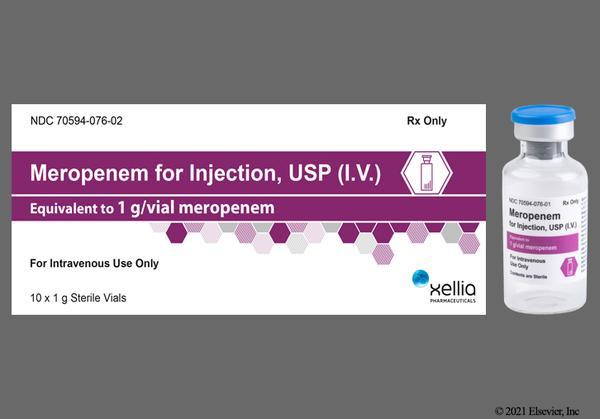
Choice B reason: Merrem (meropenem) is the correct answer for the nurse who anticipates administering a broad-spectrum antibiotic to a client diagnosed with a beta lactam resistant bacteria. Merrem is the brand name of meropenem, which is a carbapenem, a subclass of beta lactam antibiotics. Meropenem is effective against a wide range of bacteria, including gram-positive, gram negative, and anaerobic bacteria. Meropenem is also resistant to most beta-lactamase enzymes, except for metallo-beta-lactamase’s, which are rare and can be detected by laboratory tests. The nurse should consider using Merrem or another carbapenem for a client with a beta lactam resistant bacteria, unless they have a history of allergy or intolerance to beta lactam antibiotics .
Choice C reason: Flagyl (metronidazole) is not the correct answer for the nurse who anticipates administering a broad spectrum antibiotic to a client diagnosed with a beta lactam resistant bacteria. Flagyl is the brand name of metronidazole, which is a nitroimidazole antibiotic. Metronidazole is effective against anaerobic bacteria and some protozoa, but has no activity against aerobic bacteria. Metronidazole is not a beta lactam antibiotic, and it is not affected by beta-lactamase enzymes. However, metronidazole is not a broad spectrum antibiotic, and it is not suitable for treating infections caused by aerobic bacteria, which are more common than anaerobic bacteria. The nurse should use Flagyl only for specific indications, such as bacterial vaginosis, trichomoniasis, or Clostridioides difficile infection .
Choice D reason: Zosyn (piperacillin tazobactam) is not the correct answer for the nurse who anticipates administering a broad-spectrum antibiotic to a client diagnosed with a beta lactam resistant bacterium. Zosyn is the brand name of piperacillin tazobactam, which is a combination of penicillin, a subclass of beta lactam antibiotics, and a beta-lactamase inhibitor. Piperacillin is effective against some gram-positive and gram-negative bacteria, but it is susceptible to beta-lactamase enzymes. Tazobactam is a compound that binds to and inhibits some beta-lactamase enzymes, thereby protecting piperacillin from degradation and extending its spectrum of activity. However, piperacillin tazobactam is not effective against all types of beta-lactamase enzymes, especially those that are encoded by plasmids and can be transferred between bacteria. The nurse should not use Zosyn or any other beta lactam/beta-lactamase inhibitor combination for a client with a beta lactam resistant bacterium unless the specific type of beta-lactamase is known and susceptible to the inhibitor.
Correct Answer is A
Explanation
Choice A reason: This is correct. Excedrin contains a combination of aspirin, acetaminophen, and caffeine. Aspirin is a nonsteroidal anti-inflammatory drug (NSAID) that reduces pain, inflammation, and swelling. Acetaminophen is a pain reliever and a fever reducer. Caffeine is a central nervous system stimulant that enhances the pain-relieving function of aspirin and acetaminophen.
Choice B reason: This is incorrect. Ibuprofen and naproxen are both NSAIDs, but they are not the same as aspirin. They have different chemical structures and may have different effects and side effects. Caffeine is not an ingredient in ibuprofen or naproxen products.
Choice C reason: This is incorrect. Loratadine is an antihistamine that is used to treat allergies, not headaches. It does not have any pain-relieving or anti-inflammatory properties. Caffeine is not an ingredient in loratadine products.
Choice D reason: This is incorrect. Naproxen is an NSAID, but it is not the same as aspirin. It has a different chemical structure and may have different effects and side effects. Loratadine is an antihistamine that is used to treat allergies, not headaches. It does not have any pain-relieving or anti-inflammatory properties. Caffeine is not an ingredient in acetaminophen, naproxen, or loratadine products.
Whether you are a student looking to ace your exams or a practicing nurse seeking to enhance your expertise , our nursing education contents will empower you with the confidence and competence to make a difference in the lives of patients and become a respected leader in the healthcare field.
Visit Naxlex, invest in your future and unlock endless possibilities with our unparalleled nursing education contents today