
Immediately after log-rolling a client to a lateral position, which intervention should the practical nurse (PN) implement?
Raise the head of the bed 30 degrees.
Measure blood pressure and pulse rate.
Flex legs and place blanket between legs.
Place pillows to maintain alignment.
The Correct Answer is D
Log-rolling is a technique of moving a client as a unit without twisting or bending the spine, which is used for clients with spinal injuries or surgeries. After log-rolling a client to a lateral position, the PN should place pillows to maintain alignment and prevent pressure ulcers or nerve damage. The pillows should be placed under the head, neck, upper arm, chest, abdomen, pelvis, and lower leg.
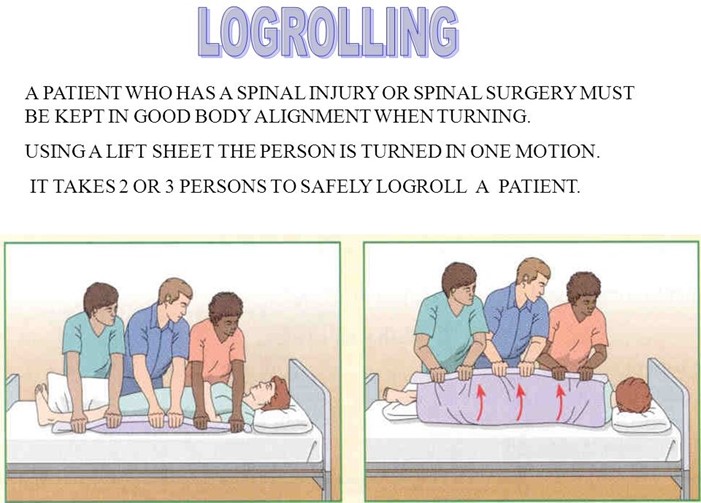
The other options are not correct because:
A. Raising the head of the bed 30 degrees is not necessary or appropriate after log-rolling a client to a lateral position, as it can cause shearing forces or compromise the spinal stability. The head of the bed should be kept flat or slightly elevated during log rolling.
B. Measuring blood pressure and pulse rate is not the immediate intervention after log-rolling a client to a lateral position, as it does not ensure the comfort or safety of the client. The PN should monitor the vital signs before and after log-rolling, but not during or immediately after.
C. Flexing legs and placing a blanket between legs is not the immediate intervention after log-rolling a client to a lateral position, as it does not support the spine or prevent pressure ulcers or nerve damage. The PN should keep the legs straight and aligned with the body during log-rolling, and place a pillow under the lower leg after log-rolling.
Nursing Test Bank
Naxlex Comprehensive Predictor Exams
Related Questions
Correct Answer is B
Explanation
The Herpes zoster (shingles) vaccination is recommended for adults aged 60 years and older, regardless of whether they have had shingles or chicken pox before. The vaccine can reduce the risk of developing shingles and its complications, such as postherpetic neuralgia.
The other options are not correct because:
a. The vaccine is useful even if the person has had a case of shingles before, as shingles can recur in some people. The vaccine can prevent or reduce the severity of future episodes.
c. The person needs to get this vaccination even if they have had chicken pox, as shingles is caused by the reactivation of the same virus that causes chicken pox (varicella-zoster virus). The vaccine can boost the immunity against the virus and prevent it from reactivating.
d. The vaccination does not minimize outbreaks of cold sores, as cold sores are caused by a different virus (herpes simplex virus). The vaccine has no effect on this virus or its symptoms.
Correct Answer is B
Explanation
This is the best initial intervention for the PN to implement because it promotes comfort, relaxation, and circulation for the client. A back rub can also reduce anxiety and muscle tension, which can interfere with sleep. The PN should use non-pharmacological methods to facilitate sleep before resorting to medication.
Whether you are a student looking to ace your exams or a practicing nurse seeking to enhance your expertise , our nursing education contents will empower you with the confidence and competence to make a difference in the lives of patients and become a respected leader in the healthcare field.
Visit Naxlex, invest in your future and unlock endless possibilities with our unparalleled nursing education contents today