
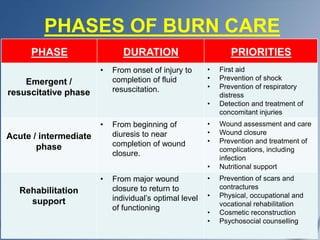
Most of the deaths from burn trauma in the emergent phase that require a referral to a burn center result from:
cardiac arrest related to septic shock
Infection
adrenal failure
hypovolemic shock and renal failure.
The Correct Answer is D
A. Cardiac arrest related to septic shock:
Septic shock can occur in burn patients due to the breakdown of the skin barrier, which allows pathogens to enter the bloodstream and cause systemic infection. However, while septic shock is a serious complication of burn injuries, it is not the primary cause of death in the emergent phase. Septic shock can lead to multiple organ failure and contribute to mortality, but it is often a later complication rather than an immediate cause in the emergent phase.
B. Infection:
Infections are a significant concern in burn patients, especially as the burn wound provides an ideal environment for bacterial growth. However, infections typically contribute more significantly to mortality in the later phases of burn care rather than in the emergent phase. In the emergent phase, hypovolemic shock and other immediate complications have a greater impact on mortality.
C. Adrenal failure:
Adrenal failure, specifically acute adrenal insufficiency or Addisonian crisis, can occur in burn patients due to the stress response and corticosteroid depletion. While adrenal insufficiency is a concern in severe burn cases, it is not the primary cause of death in the emergent phase requiring referral to a burn center.
D. Hypovolemic shock and renal failure:
Hypovolemic shock is a critical concern in the emergent phase of burn trauma because burns can lead to significant fluid loss and electrolyte imbalances. Hypovolemic shock results from insufficient circulating blood volume, leading to inadequate perfusion of organs and tissues, which can be life-threatening. Additionally, renal failure can develop due to hypovolemia, decreased cardiac output, and the release of inflammatory mediators, leading to acute kidney injury (AKI). Hypovolemic shock and subsequent renal failure are major contributors to mortality in the emergent phase of burn trauma, necessitating prompt referral to a burn center for specialized care.
Nursing Test Bank
Naxlex Comprehensive Predictor Exams
Related Questions
Correct Answer is ["B","C","E"]
Explanation
A. Healthy middle-aged adult who never had chickenpox:
This individual has not had chickenpox, which means they are susceptible to varicella-zoster virus (VZV) infection. If they contract herpes zoster (shingles), they are at risk for complications, although typically healthy adults are less likely to experience severe complications compared to immunocompromised individuals or older adults.
B. Older adult who takes large doses of prednisone for a chronic condition:
Chronic corticosteroid use, such as prednisone, can suppress the immune system and increase the risk of herpes zoster infection. Additionally, if herpes zoster develops in an older adult, they are at higher risk for complications such as postherpetic neuralgia (persistent nerve pain), bacterial superinfection of the rash, and dissemination of the virus.
C. Middle-aged adult who just started taking chemotherapy:
Chemotherapy suppresses the immune system, making individuals more susceptible to infections. If a person undergoing chemotherapy develops herpes zoster, they are at increased risk for serious complications due to their weakened immune response.
D. Nurse who recently received the first dose of varicella vaccine:
The varicella vaccine is designed to prevent chickenpox and reduce the risk of herpes zoster (shingles) in vaccinated individuals. Therefore, a nurse who received the varicella vaccine is less likely to experience serious complications from herpes zoster infection compared to those who are unvaccinated.
E. Young adult who is positive for the human immunodeficiency virus (HIV):
Individuals with HIV have a weakened immune system, increasing their susceptibility to infections, including herpes zoster. Moreover, herpes zoster in HIV-positive individuals can be more severe, prolonged, and may lead to complications such as disseminated herpes zoster, involving multiple organs and potentially becoming life-threatening.
Correct Answer is C
Explanation
A. Inform the client that the recovery nurse will instruct them how to manage postoperative pain:
This is an important aspect of postoperative care, but it is typically addressed by the post-anesthesia care unit (PACU) or recovery nurse after surgery rather than in the preoperative education phase. While pain management education is crucial, the focus of preoperative education is usually on what to expect before, during, and immediately after surgery.
B. Remind the client they will return to their room after surgery:
This information is part of the preoperative instructions and helps alleviate anxiety by providing clarity about the post-surgical process. However, it may not be the most critical aspect of preoperative education compared to other options.
C. Provide instructions about how to cough and deep breathe effectively:
This is a key nursing intervention to include in preoperative education. Teaching the client how to cough and deep breathe effectively helps prevent postoperative complications such as atelectasis and pneumonia. These breathing techniques are typically taught preoperatively to ensure the client understands and can perform them correctly after surgery.
D. Notify the client that they will receive a food tray in the recovery room:
While it's important for the client to understand the postoperative diet plan, including any dietary restrictions or instructions, this information is usually provided after surgery rather than in the preoperative education phase.
Whether you are a student looking to ace your exams or a practicing nurse seeking to enhance your expertise , our nursing education contents will empower you with the confidence and competence to make a difference in the lives of patients and become a respected leader in the healthcare field.
Visit Naxlex, invest in your future and unlock endless possibilities with our unparalleled nursing education contents today