
A charge nurse is observing a staff nurse who is caring for a child who has pertussis.
Which of the following actions by the staff nurse indicates an understanding of infection control practices?
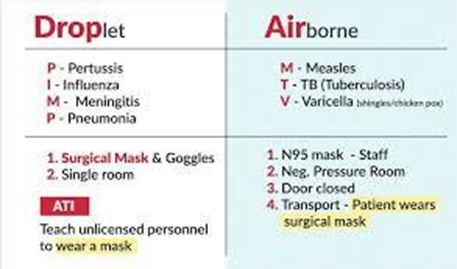
Maintains droplet precautions while the child is coughing and sneezing
Applies a face mask after entering the child's room
Wears gloves when assisting the child to the bathroom
Follows airborne precautions by wearing an N95 respirator while caring for the child
The Correct Answer is A
Rationale:
A. Maintaining droplet precautions while the child is coughing and sneezing is appropriate because pertussis is primarily transmitted via respiratory droplets. Droplet precautions include wearing a surgical mask when within 3 feet of the patient to prevent droplet transmission.
B. Applying a face mask after entering the child's room is not necessary if droplet precautions are already being followed during periods of coughing and sneezing.
C. Wearing gloves when assisting the child to the bathroom is not directly related to preventing the spread of pertussis, which is primarily transmitted via respiratory droplets.
D. Airborne precautions with an N95 respirator are not indicated for pertussis, as it is not transmitted via airborne particles.
Nursing Test Bank
Naxlex Comprehensive Predictor Exams
Related Questions
Correct Answer is A
Explanation
A. Given the cloudy appearance of the cerebrospinal fluid (CSF) and elevated white blood cell count (WBC) in the CSF, there may be an indication of meningitis.
Ceftriaxone is a broad-spectrum antibiotic commonly used to treat bacterial meningitis. Therefore, administering ceftriaxone would be an appropriate action.
B. While vaccines are important for preventing infections, administering the pneumococcal conjugate vaccine is not the immediate priority in this scenario. The patient is already exhibiting signs of a potential infection, and treatment should focus on addressing the current condition first.
C. The infant's serum glucose level is low at 64 mg/dL (normal range: 60 to 100 mg/dL).
However, the primary concern at this moment appears to be the potential bacterial meningitis indicated by the cloudy CSF, elevated WBC count, and abnormal CSF glucose level. While monitoring serum glucose is important, it is not the most critical action in this case.
D. Neutropenic precautions are typically implemented to protect patients with low neutrophil counts (neutropenia) from acquiring infections. However, there is no indication of neutropenia in the provided diagnostic results. Additionally, the cloudy CSF and elevated WBC count suggest a possible bacterial infection rather than a neutropenic condition.
Correct Answer is B
Explanation
Rationale:
A. This response is beyond the child’s understanding.
B. Curiosity about what happened to the sibling's body is a common reaction in preschool-age children and can be considered age-appropriate.
C. Preschool-age children may struggle to give a logical explanation for death due to their limited cognitive development and understanding of abstract concepts.
D. Feeling responsible for the sibling's death is not an age-appropriate response for a preschool-age child. Young children may experience guilt but usually do not attribute death to their actions or feelings of responsibility.
Whether you are a student looking to ace your exams or a practicing nurse seeking to enhance your expertise , our nursing education contents will empower you with the confidence and competence to make a difference in the lives of patients and become a respected leader in the healthcare field.
Visit Naxlex, invest in your future and unlock endless possibilities with our unparalleled nursing education contents today