
The healthcare provider prescribes penicillin 200,000 units intramuscularly for a patient with pneumonia.
The available vial is labeled “Penicillin 500,000 units/mL”. How much penicillin should be administered to the patient? (Enter numerical value only.
If rounding is required, round to the nearest tenth.)
The Correct Answer is ["0.4"]
Step 1 is to determine the amount of penicillin in each milliliter (mL) of the available solution. The vial is labeled as “Penicillin 500,000 units/mL”.
Step 2 is to divide the prescribed dose by the concentration per mL. So, the calculation is 200,000 units ÷ 500,000 units/mL. The result is 0.4 mL.
Nursing Test Bank
Naxlex Comprehensive Predictor Exams
Related Questions
Correct Answer is A
Explanation
Choice A rationale
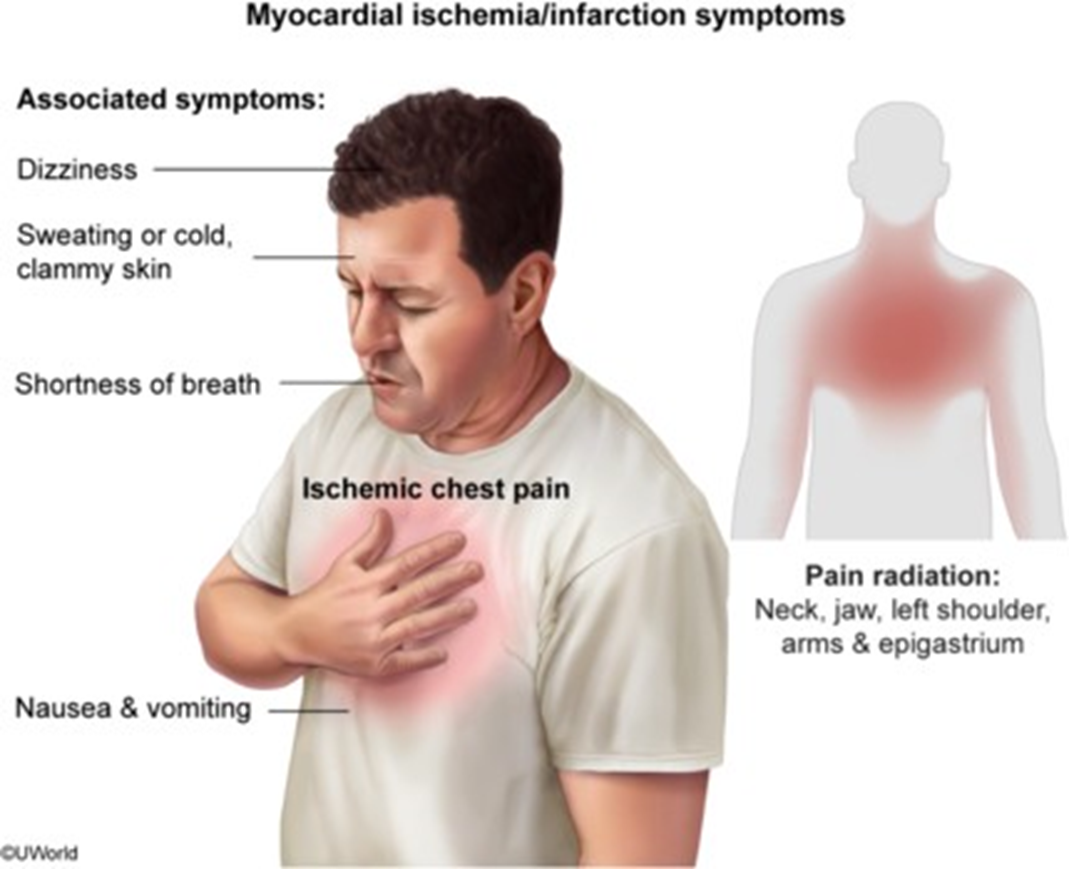
The client’s presentation of chest pain radiating to the left arm, shortness of breath, and diaphoresis are classic symptoms of a myocardial infarction (heart attack)56. Morphine is often administered in this situation to relieve pain and reduce the workload of the heart.
Choice B rationale
Oxycodone is a strong opioid medication used to treat severe pain. However, it is not typically the first choice for pain relief in the setting of a suspected heart attack.
Choice C rationale
Hydromorphone is another strong opioid medication used to treat severe pain. Like oxycodone, it is not typically the first choice for pain relief in the setting of a suspected heart attack.
Choice D rationale
Fentanyl is a potent opioid pain reliever. While it can be used in the management of severe pain, it is not typically the first choice for pain relief in the setting of a suspected heart attack.
Correct Answer is ["0.4"]
Explanation
Step 1 is to determine the amount of penicillin in each milliliter (mL) of the available solution. The vial is labeled as “Penicillin 500,000 units/mL”.
Step 2 is to divide the prescribed dose by the concentration per mL. So, the calculation is 200,000 units ÷ 500,000 units/mL. The result is 0.4 mL.
Whether you are a student looking to ace your exams or a practicing nurse seeking to enhance your expertise , our nursing education contents will empower you with the confidence and competence to make a difference in the lives of patients and become a respected leader in the healthcare field.
Visit Naxlex, invest in your future and unlock endless possibilities with our unparalleled nursing education contents today