
The nurse administers risedronate to a client with osteoporosis at 07:00. The client asks for a glass of milk to drink with the medication. Which action should the nurse take?
Consult a pharmacist about the scheduling of the dose one hour after the client eats.
Assign unlicensed assistive personnel (UAP) to bring the client a glass of low-fat milk.
Withhold the medication until the client’s breakfast tray is available on the unit.
Instruct the client that it is necessary to take nothing but water with the medication.
The Correct Answer is D
Risedronate should be taken with plain water only. It should be taken on an empty stomach, at least 30 minutes before eating or drinking anything other than plain water. Taking risedronate with milk or other beverages can interfere with its absorption and reduce its effectiveness.

Nursing Test Bank
Naxlex Comprehensive Predictor Exams
Related Questions
Correct Answer is D
Explanation
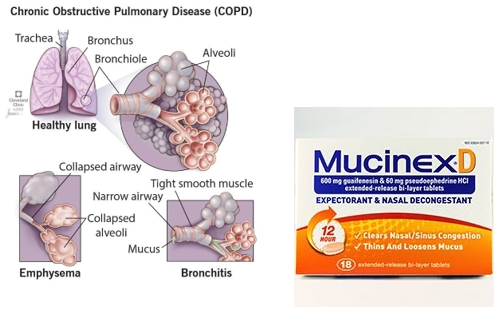
Guaifenesin is an expectorant that helps to loosen and thin mucus in the airways, making it easier to cough up. It is commonly used to manage symptoms of a chronic productive cough in conditions such as COPD.
Salmeterol and Tiotropium are both bronchodilators that help to open up the airways and improve breathing in COPD, but they are not specifically indicated for managing a chronic productive cough.
Prednisone is a corticosteroid that can help reduce inflammation in the airways and improve breathing in COPD exacerbations, but it is not typically used for managing a chronic productive cough.
Correct Answer is C
Explanation
Tamsulosin is an alpha-1 adrenergic receptor blocker that is commonly used to treat benign prostatic hyperplasia (BPH). One of the potential adverse reactions of tamsulosin is hypotension, which can be manifested as dizziness, lightheadedness, and fainting. Therefore, monitoring blood pressure is a crucial intervention for clients receiving tamsulosin.
Assessing urine output (option a) and performing a bladder scan (option b) may be appropriate interventions for clients with urinary retention or other urinary tract issues, but they are not specific to monitoring adverse reactions to tamsulosin.
Obtaining daily weights (option d) may be useful for monitoring fluid balance in some clients, but it is not directly related to adverse reactions to tamsulosin.

Whether you are a student looking to ace your exams or a practicing nurse seeking to enhance your expertise , our nursing education contents will empower you with the confidence and competence to make a difference in the lives of patients and become a respected leader in the healthcare field.
Visit Naxlex, invest in your future and unlock endless possibilities with our unparalleled nursing education contents today