
The nurse counts an adults heart beat at 110 beats per minute. The nurse describes this as
Asystole
Bigeminy
Bradycardia
Tachycardia
The Correct Answer is D
Tachycardia refers to a heart rate that is faster than the normal range, which is typically considered to be between 60 and 100 beats per minute in adults. A heart rate of 110 beats per minute is above the normal range and is considered tachycardia.
Nursing Test Bank
Naxlex Comprehensive Predictor Exams
Related Questions
Correct Answer is B
Explanation
The mitral and tricuspid valves are located between the atria and ventricles in the heart, and they open and close to allow blood to flow in one direction through the heart. During diastole, when the heart is relaxed and filling with blood, the mitral and tricuspid valves are open to allow blood to flow from the atria into the ventricles.
Once the ventricles are filled with blood, they begin to contract during systole to pump the blood out to the lungs (right ventricle) and the rest of the body (left ventricle). As the ventricles contract, the pressure within them increases, which causes the mitral and tricuspid valves to be pushed closed by the blood within the ventricles. This closure prevents the backflow of blood into the atria during ventricular contraction (systole).
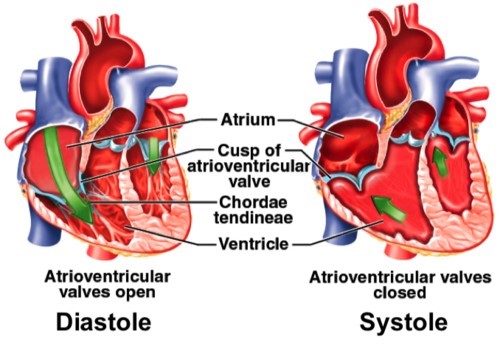
The chordae tendineae are thin, fibrous cords that connect the mitral and tricuspid valves to the papillary muscles within the ventricles. These structures help to anchor the valves in place during ventricular contraction, and prevent them from prolapsing (bulging back into the atria) and causing regurgitation (backflow of blood).
The trabeculae carneae are muscular ridges within the ventricles that help to increase the force of ventricular contraction, but they do not play a direct role in closing the mitral and tricuspid valves. Similarly, the reduced pressure in the atria during ventricular contraction is due to the fact that blood is being pumped out of the atria and into the ventricles, rather than the atria "pulling" the valves closed.
Correct Answer is B
Explanation
Calcium channel blockers (CCBs) are a class of medications that block the influx of calcium ions into cardiac and smooth muscle cells, leading to relaxation of these muscles and dilation of blood vessels.
In the heart, CCBs primarily affect the L-type calcium channels in the cardiac myocytes, which are responsible for the influx of calcium ions during the plateau phase of the cardiac action potential. By blocking these channels, CCBs decrease the amount of calcium that enters the cardiac myocytes, which in turn reduces the strength of cardiac contractions (i.e. contractility). 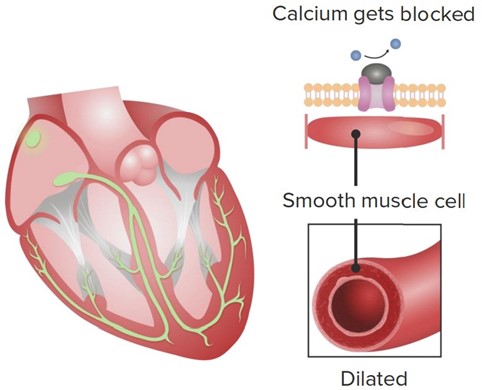
This reduction in contractility can be beneficial in certain conditions where the heart is working too hard or experiencing insufficient blood flow, such as in hypertension, angina, or some forms of arrhythmia. By reducing the workload of the heart, CCBs can help to lower blood pressure, decrease oxygen demand, and improve blood flow to the heart.
While CCBs can also have effects on the rate and rhythm of cardiac contractions, these effects are generally less pronounced than the reduction in contractility. Some CCBs, such as verapamil and diltiazem, can slow the heart rate by blocking the L-type calcium channels in the sinoatrial (SA) and atrioventricular (AV) nodes, while others, such as nifedipine, have little effect on heart rate.
Whether you are a student looking to ace your exams or a practicing nurse seeking to enhance your expertise , our nursing education contents will empower you with the confidence and competence to make a difference in the lives of patients and become a respected leader in the healthcare field.
Visit Naxlex, invest in your future and unlock endless possibilities with our unparalleled nursing education contents today