
The nurse is educating a group of clients on how high cholesterol leads to heart disease.
Which explanation regarding high cholesterol is most appropriate?
it binds to vessel walls, decreasing the amount of blood getting to the heart
it damages the heart muscle
it thickens the blood, causing clots.
it interferes with the conduction system of the heart.
The Correct Answer is A
A. High cholesterol can lead to the buildup of plaque in the arteries, which can narrow the blood vessels and decrease blood flow to the heart, increasing the risk of heart disease.
B. High cholesterol does not directly damage the heart muscle but can contribute to conditions like atherosclerosis, which can affect heart function.
C. High cholesterol does not directly thicken the blood but can contribute to the formation of blood clots when combined with other factors.
D. High cholesterol does not typically interfere with the conduction system of the heart but can contribute to conditions like coronary artery disease.
Nursing Test Bank
Naxlex Comprehensive Predictor Exams
Related Questions
Correct Answer is A
Explanation
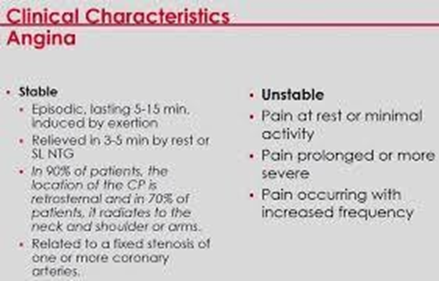
A. Stable angina is predictable and typically occurs with exertion or emotional stress and is relieved with rest or nitroglycerin. Unstable angina is less predictable and more serious, occurring at rest, with minimal exertion, or worsening pattern from stable angina.
B. This answer misrepresents the characteristics and causes of stable and unstable angina, mixing definitions or incorrectly assigning causes.
C. This answer misrepresents the characteristics and causes of stable and unstable angina, mixing definitions or incorrectly assigning causes.
D. This answer misrepresents the characteristics and causes of stable and unstable angina, mixing definitions or incorrectly assigning causes.
Correct Answer is D
Explanation
Explanation:
A. Adequate hydration is important to prevent lithium toxicity; decreasing fluid intake is not recommended.
B. Constipation can slow the excretion of lithium and may increase the risk of toxicity, but it is not the most appropriate preventive measure.
C. Sudden changes in sodium intake can affect lithium levels, so restricting sodium-rich foods without medical advice is not advisable.
D. Clients should be cautious with physical activity in hot weather, as excessive sweating can lead to dehydration, increasing the risk of lithium toxicity.
Whether you are a student looking to ace your exams or a practicing nurse seeking to enhance your expertise , our nursing education contents will empower you with the confidence and competence to make a difference in the lives of patients and become a respected leader in the healthcare field.
Visit Naxlex, invest in your future and unlock endless possibilities with our unparalleled nursing education contents today