
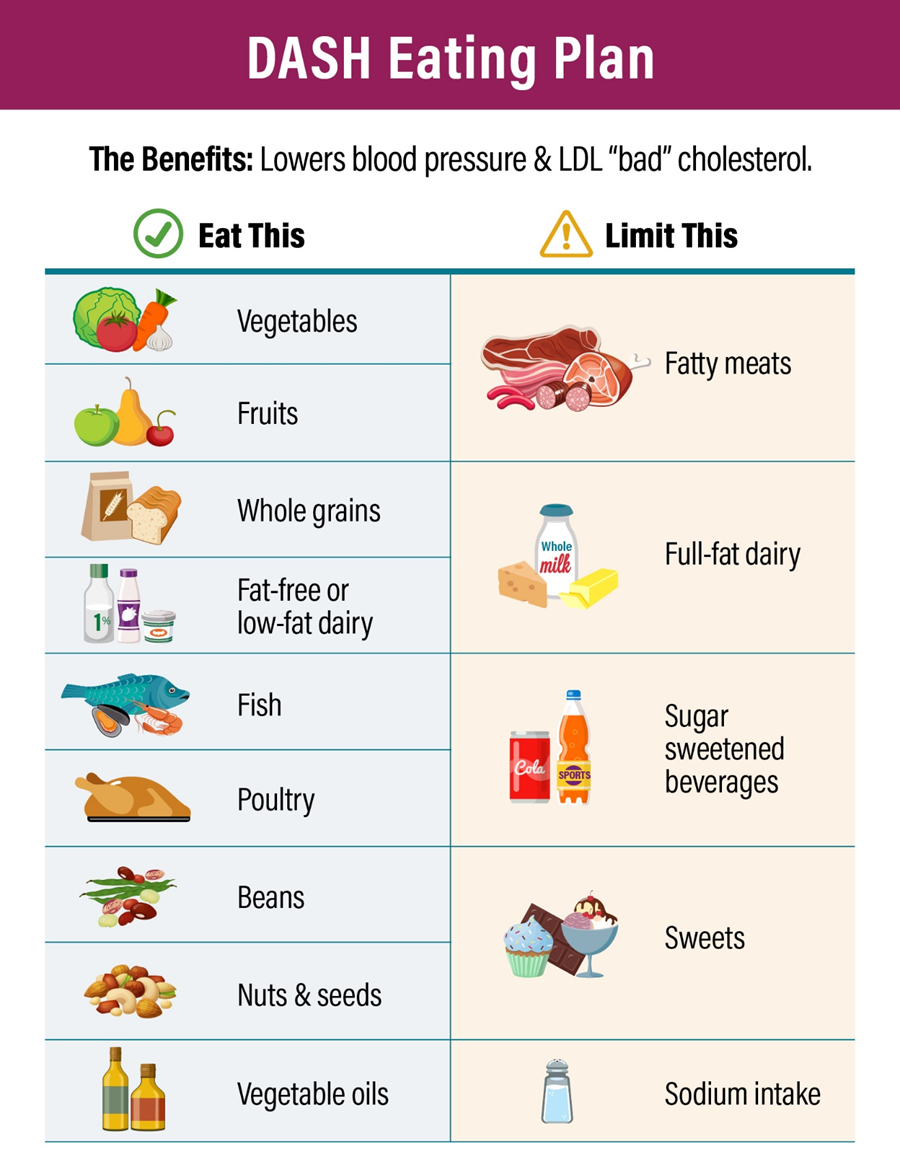
The nurse is evaluating a client's understanding of diet teaching about the DASH (Dietary Approaches to Stop Hypertension) eating plan. Which behavior indicates that the client is adhering to the eating plan?
Carefully cleans and peels all fresh fruit and vegetables
Uses only lactose-free dairy products.
No longer includes grains in daily diet.
Enjoys fat-free yogurt as an occasional snack food
The Correct Answer is D
A. Carefully cleans and peels all fresh fruit and vegetables:
While cleaning and peeling fresh fruits and vegetables may contribute to food safety, it is not a specific indication of adherence to the DASH eating plan.
B. Uses only lactose-free dairy products:
The DASH eating plan encourages the consumption of low-fat or fat-free dairy products. Using lactose-free dairy products may be necessary for individuals with lactose intolerance, but it is not a specific behavior related to the DASH plan.
C. No longer includes grains in the daily diet:
The DASH eating plan includes whole grains as part of a balanced diet. Eliminating grains altogether is not consistent with the DASH plan, which encourages the consumption of whole grains.
D. Enjoys fat-free yogurt as an occasional snack food:
This is the correct answer. The DASH eating plan recommends the inclusion of low-fat or fat-free dairy products as part of a heart-healthy diet. Choosing fat-free yogurt as an occasional snack aligns with the principles of the DASH plan, which emphasizes low-fat dairy options.
Nursing Test Bank
Naxlex Comprehensive Predictor Exams
Related Questions
Correct Answer is D
Explanation
A. Administer a topical analgesic:
Administering a topical analgesic can help alleviate pain and discomfort associated with oral thrush. However, it addresses the symptom rather than the cause of the issue.
B. Cleanse the mouth with swabs:
Cleansing the mouth with swabs can be part of the care plan for managing oral thrush. It helps remove debris and may reduce the fungal load in the mouth.
C. Obtain a soft diet for the client:
Providing a soft diet is important for clients with oral thrush as it minimizes irritation to the affected area. However, it may not be the first intervention; rather, it is part of the overall care plan.
D. Encourage frequent mouth care:
Encouraging the client to perform frequent mouth care is the most immediate and direct intervention. This includes gentle rinsing with a mild solution, which can help relieve symptoms and prevent the spread of the infection.
Correct Answer is D
Explanation
A. Have the client sign the surgical and transfusion permits:
While obtaining signed consent is important, the immediate concern is addressing the client's medication history, especially the use of heparin, which can contribute to bleeding.
B. Ensure that the potential for bleeding is explained to the client:
Education about the potential for bleeding is important, but the immediate action is to communicate the client's medication history to the healthcare provider for appropriate guidance.
C. Observe the heparin injection sites for signs of bruising:
Monitoring for bruising at injection sites is a consideration, but it is not the priority when the client is actively bleeding from an open fracture.
D. Notify the healthcare provider of the client's medication history:
This is the correct answer. Heparin is an anticoagulant, and its use can increase the risk of bleeding during surgery. The healthcare provider needs to be informed of the client's current medication history to make decisions regarding the timing and management of heparin therapy in the perioperative period.
Whether you are a student looking to ace your exams or a practicing nurse seeking to enhance your expertise , our nursing education contents will empower you with the confidence and competence to make a difference in the lives of patients and become a respected leader in the healthcare field.
Visit Naxlex, invest in your future and unlock endless possibilities with our unparalleled nursing education contents today