
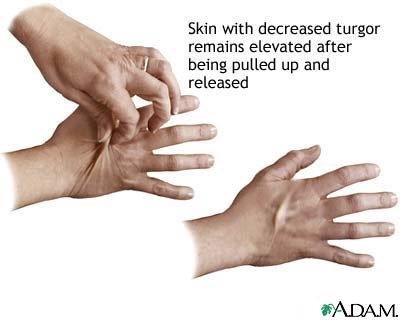
The nurse is performing a head-to-toe assessment on a patient. The nurse uses their thumb and first finger to lift or pinch a fold of skin under the clavicle to check for skin turgor. Which of the following findings would be considered normal for this assessment?
Skin fold is difficult to lift/pinch.
Skin fold is released and an indentation of 2 mm remains.
Skin fold returns to its usual shape quickly when released.
Skin fold returns to its usual shape slowly when released.
The Correct Answer is C
The correct answer is choice C: Skin fold returns to its usual shape quickly when released. When assessing skin turgor, the nurse is checking for the elasticity and hydration of the skin. In a normal assessment, when the skin fold is lifted or pinched, it should return to its usual shape quickly when released. This indicates good skin turgor, which is an indication of proper hydration. If the skin fold is difficult to lift or pinch (choice A), this indicates poor skin turgor and possible dehydration. If an indentation of 2 mm remains after releasing the skin fold (choice B), this indicates poor skin turgor and possible dehydration. If the skin fold returns to its usual shape slowly when released (choice D), this may indicate a decrease in skin elasticity and possible dehydration.
Nursing Test Bank
Naxlex Comprehensive Predictor Exams
Related Questions
Correct Answer is ["A","B","C"]
Explanation
SOAP is an acronym for subjective, objective, assessment, and plan, which are the four sections that should be present in the charting. The subjective section includes the client's report of symptoms or how they feel. The objective section includes the nurse's observations of the patient, such as vital signs and physical examination findings. The assessment section includes the nurse's analysis of the subjective and objective data to identify health problems, while the plan section includes the nurse's plan of care for the patient, including interventions and goals.
The problem section is not typically included in SOAP documentation but may be included in other formats such as SOAPIE or DAR.
Correct Answer is A
Explanation
A pureed diet is a type of texture-modified diet where food is blended to a smooth consistency to make it easier to swallow. Nectar-thick liquids are liquids that have a slightly thicker consistency than water, which makes them easier for the client to swallow without choking or aspirating.
Options B, C, and D are not appropriate for a client with dysphagia on a pureed diet with nectar-thick liquids. Corn on the cob is a hard, crunchy food that is difficult to puree, while a hamburger and a salad are both difficult to make into a smooth consistency. These foods could pose a choking or aspiration risk for the client.
Whether you are a student looking to ace your exams or a practicing nurse seeking to enhance your expertise , our nursing education contents will empower you with the confidence and competence to make a difference in the lives of patients and become a respected leader in the healthcare field.
Visit Naxlex, invest in your future and unlock endless possibilities with our unparalleled nursing education contents today