
The nurse is providing anticipatory guidance to a mother of a 5-month-old boy about introducing solid foods. Which statement by the mother indicates that effective teaching has occurred?
"Once he gets used to the cereal, then we'll try giving him a cup."
"I can puree the meat that we are eating to give to my baby."
"The cereal should be a fairly thin consistency at first."
"I'll start with baby oatmeal cereal mixed with low-fat milk."
The Correct Answer is C
A. This statement doesn't demonstrate understanding of appropriate feeding practices for a 5-month-old.
B. While pureeing food is a method of introducing solid foods, it doesn't specifically address the appropriate consistency or type of food.
C. Introducing cereal with a thin consistency is appropriate as a first solid food for a 5-month-old.
D. Starting with baby oatmeal cereal mixed with low-fat milk may not be appropriate as cow's milk is not recommended before the age of 1.
Nursing Test Bank
Naxlex Comprehensive Predictor Exams
Related Questions
Correct Answer is A
Explanation
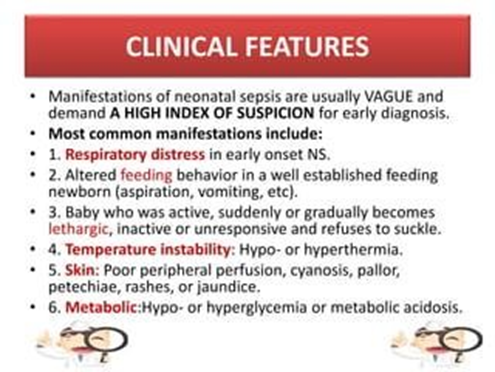
A. Correct. Temperature instability, including fever or hypothermia, can be a sign of sepsis in newborns, as it reflects the body's response to infection.
B. Increased urinary output is not typically associated with sepsis in newborns and may have other causes, such as adequate fluid intake or renal function.
C. Wakefulness is a normal behavior in newborns and is not specific to sepsis.
D. Interest in feeding is a positive sign and indicates the newborn's responsiveness to hunger cues, but it is not specific to sepsis.
Correct Answer is D
Explanation
A. A height of 47 inches would indicate excessive growth.
B. A height of 41 inches would indicate insufficient growth.
C. A height of 45 inches would be slightly above the normal range.
D. The normal range of growth for a preschooler varies, but typically, a child will grow approximately 2-3 inches per year. Given that the girl was 40 inches tall at age 4, a height of 43 inches at age 5 would be within the expected range of growth.
Whether you are a student looking to ace your exams or a practicing nurse seeking to enhance your expertise , our nursing education contents will empower you with the confidence and competence to make a difference in the lives of patients and become a respected leader in the healthcare field.
Visit Naxlex, invest in your future and unlock endless possibilities with our unparalleled nursing education contents today