
The nurse should utilize what type of precaution when palpating the lips in a healthy adult?
Contact precautions.
Airborne precautions.
Standard precautions.
Droplet precautions.
The Correct Answer is C
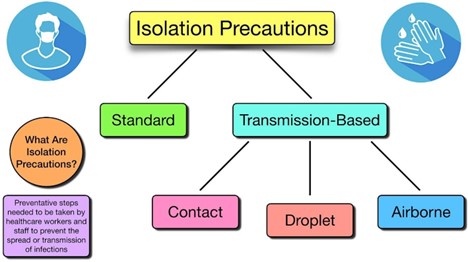
Standard precautions refer to the basic infection prevention measures that should be taken with all patients, regardless of their known or suspected infection status. This includes hand hygiene, the use of personal protective equipment (such as gloves), and the proper handling and disposal of contaminated items.
If there is a concern for an infection, additional precautions may be necessary based on the suspected or confirmed pathogen. In such cases, the nurse should follow transmission-based precautions, which are specific measures designed to prevent the spread of certain types of infections. For example, if there is a concern for a respiratory infection such as influenza, the nurse may need to use droplet precautions, which would include wearing a mask in addition to standard precautions.
It's important for the nurse to assess the patient's medical history and current condition to determine what precautions are necessary. The nurse should also be aware of and follow the infection control policies and procedures of their healthcare facility.
Nursing Test Bank
Naxlex Comprehensive Predictor Exams
Related Questions
Correct Answer is ["A","B","C"]
Explanation
Prostate enlargement is not directly assessed through an anal examination.

Correct Answer is A
Explanation
A. The examiner uses bimanual palpitation to evaluate the tail of spence.
This statement is true. The tail of Spence is the extension of breast tissue into the axilla, and it is important to evaluate this area during a breast examination. Bimanual palpation, which involves using both hands to examine the breast tissue, is commonly used to assess the tail of Spence.
B. The axillae are not palpated if the breast tissue is normal.
This statement is false. The axillae should be palpated during a breast examination, even if the breast tissue is normal. Lymph nodes in the axilla can sometimes be the first site of metastasis for breast cancer, so it is important to check for any abnormalities in this area.
C. Nipple discharge in pregnant women is considered abnormal.
This statement is false. Nipple discharge is a common occurrence during pregnancy and is usually considered normal, especially in the later stages of pregnancy. However, any sudden or persistent discharge should be evaluated by a healthcare provider.
D. The breasts are inspected as the client changes positions to detect abnormal symmetry.
This statement is false. The breasts should be inspected in a consistent position, such as with the patient sitting or lying down. Changing positions can alter the appearance of the breasts and make it difficult to detect any changes or abnormalities. However, it is important to inspect both breasts and compare them for any signs of asymmetry or abnormalities.
Whether you are a student looking to ace your exams or a practicing nurse seeking to enhance your expertise , our nursing education contents will empower you with the confidence and competence to make a difference in the lives of patients and become a respected leader in the healthcare field.
Visit Naxlex, invest in your future and unlock endless possibilities with our unparalleled nursing education contents today