
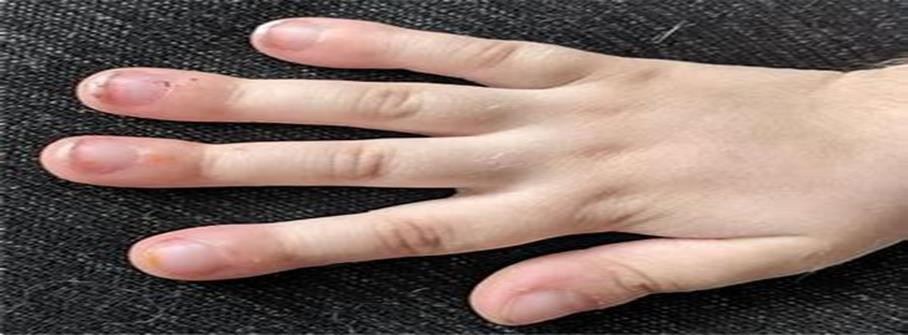
The parent of a 1-year-old child with tetralogy of Fallot asks the nurse, "Why do my child's fingertips look like that?" On what understanding does the nurse base a response?
Clubbing occurs as a result of decreased cardiac output.
Clubbing occurs as a result of a left-to-right shunting of blood.
Clubbing occurs as a result of chronic hypoxia
Clubbing occurs as a result of untreated congestive heart failure.
The Correct Answer is C
C. Clubbing, characterized by bulbous enlargement of the fingertips and nail bed, is a result of chronic hypoxia in tetralogy of Fallot. In tetralogy of Fallot, there is a right-to-left shunting of blood due to the presence of a ventricular septal defect, overriding aorta, pulmonary stenosis, and right ventricular hypertrophy. This leads to reduced oxygenation of blood and chronic hypoxia, which can result in clubbing of the fingertips over time.
A This option is not the primary explanation for clubbing in tetralogy of Fallot. While decreased cardiac output may contribute to some manifestations of the condition, clubbing specifically results from chronic hypoxia rather than decreased cardiac output alone.
B Clubbing is not directly caused by a left-to-right shunting of blood. Instead, it is associated with chronic hypoxia, which can occur due to right-to-left shunting of blood in tetralogy of Fallot.
D Congestive heart failure may occur in individuals with tetralogy of Fallot but it is not the primary cause of clubbing. Clubbing in tetralogy of Fallot is primarily attributed to chronic hypoxia rather than heart failure alone.
Nursing Test Bank
Naxlex Comprehensive Predictor Exams
Related Questions
Correct Answer is C
Explanation
C. Cerebral palsy is a chronic condition that affects muscle control and movement. It is caused by damage to or abnormal development of the parts of the brain that control movement, balance, and posture. This damage can occur before, during, or shortly after birth, and it results in difficulties with muscle coordination, balance, and motor skills.
A. Cerebral palsy is not caused by an infectious agent; it is a non-progressive neurological disorder that affects movement, posture, and muscle coordination. It is primarily caused by abnormal development or damage to the brain before, during, or shortly after birth, rather than by an infectious disease.
B. Cerebral palsy is not caused by inflammation of the brain due to a viral illness. While viral illnesses can lead to complications, such as encephalitis (inflammation of the brain), cerebral palsy itself is not caused by inflammation but rather by neurological damage or abnormal development.
D. Cerebral palsy primarily affects movement and muscle control but it does not necessarily result in intellectual disability. Intellectual disability can occur in some cases of cerebral palsy, but it is not a defining characteristic of the condition.
Correct Answer is D
Explanation
D. The correct action would be to place the client on NPO (Nothing by Mouth) status, option D. This is because a decreased level of consciousness can increase the risk of aspiration.
A. Liver biopsy is not indicated for suspected meningitis with a decreased level of consciousness. Liver biopsy is a procedure used to obtain a sample of liver tissue for diagnostic purposes, typically to evaluate liver function or diagnose liver diseases.
B. A protective environment (option B) is more related to immunocompromised patients. In the case of decreased level of consciousness, preventing aspiration is key.
C. Dorsal recumbent position refers to lying on the back with the knees flexed. While this position may be suitable for certain medical procedures or examinations, it is not specifically indicated for a client with suspected meningitis and a decreased level of consciousness.
Whether you are a student looking to ace your exams or a practicing nurse seeking to enhance your expertise , our nursing education contents will empower you with the confidence and competence to make a difference in the lives of patients and become a respected leader in the healthcare field.
Visit Naxlex, invest in your future and unlock endless possibilities with our unparalleled nursing education contents today