
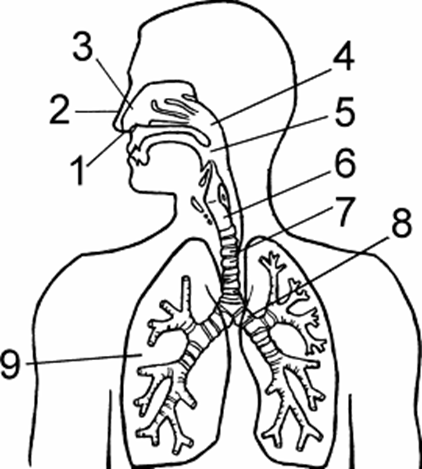
Using the provided diagram, identify the structure labeled as #8.
Bronchi
Trachea
Alveoli
Bronchioles
The Correct Answer is A
A. Bronchi: The bronchi are the main airways that branch off from the trachea and enter each lung. Structure #8 is shown as the large branches that split into the lungs, consistent with the location and appearance of the bronchi.
B. Trachea: The trachea is the main airway above the bronchi, running down the neck before it splits into the left and right bronchi. It is likely labeled as #7 in the diagram.
C. Alveoli: Alveoli are microscopic air sacs at the end of the bronchioles where gas exchange occurs. They are not visibly distinct in this diagram and are located much further down the airway branches than where #8 is labeled.
D. Bronchioles: Bronchioles are the smaller branches that come off the bronchi and lead to the alveoli. They would be located deeper into the lung structure and are smaller than the bronchi seen at label #8.
Nursing Test Bank
Naxlex Comprehensive Predictor Exams
Related Questions
Correct Answer is ["A","C","D"]
Explanation
A. Trachea: The trachea is the beginning of the lower respiratory tract and conducts air to the bronchi.
B. Pharynx: The pharynx is part of the upper respiratory system.
C. Lungs: The lungs are the primary organs of the lower respiratory tract responsible for gas exchange.
D. Bronchial tree: The bronchial tree, including bronchi and bronchioles, is part of the lower respiratory system.
E. Larynx: The larynx is the uppermost structure of the lower respiratory system in some classifications but is more commonly considered part of the upper respiratory tract.
Correct Answer is D
Explanation
A. Hyperventilating: this means rapid, deep breathing.
B. Having difficulty breathing: that is dyspnea.
C. Experiencing Kussmaul respirations: that’s deep, labored breathing, often seen in metabolic acidosis.
D. Not breathing: apnea means absence of breathing.
Whether you are a student looking to ace your exams or a practicing nurse seeking to enhance your expertise , our nursing education contents will empower you with the confidence and competence to make a difference in the lives of patients and become a respected leader in the healthcare field.
Visit Naxlex, invest in your future and unlock endless possibilities with our unparalleled nursing education contents today