
What discharge teaching will the nurse provide to a patient who has gastric bypass surgery? Select all that apply.
Each of your meals should contain about 10 tablespoons of food.
You are likely to have little urine output for the first few weeks.
Report any back, shoulder, or abdominal pain to the surgeon.
Be certain to stay hydrated by drinking water.
Solid food can be introduced back into the diet in a week.
Correct Answer : A,C,D
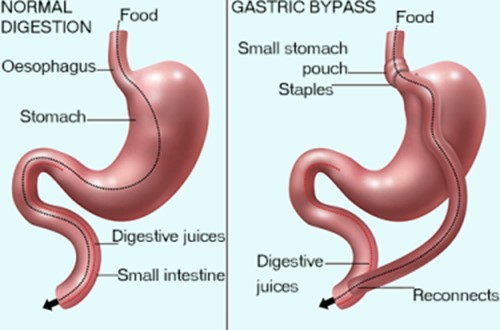
Each of your meals should contain about 10 tablespoons of food: After gastric bypass surgery, the stomach's size is reduced, and the patient's capacity to consume large quantities of food is limited. It is important to educate the patient about appropriate portion sizes to avoid overeating and potential complications.
Be certain to stay hydrated by drinking water: Hydration is crucial after gastric bypass surgery. Patients should be advised to drink enough water throughout the day to prevent dehydration and ensure proper bodily function.
Solid food can be introduced back into the diet in a week: Following gastric bypass surgery, the diet is initially limited to liquid and pureed foods. Gradually, solid foods can be reintroduced into the diet over time, typically after a week or as directed by the surgeon. This information is important for the patient to understand the progression of their diet post-surgery. You are likely to have little urine output for the first few weeks: This statement is not true and may cause unnecessary concern for the patient. Urine output should not be affected by gastric bypass surgery unless there are other complications.
Report any back, shoulder, or abdominal pain to the surgeon: While it is important to report any significant pain or discomfort to the surgeon, including back, shoulder, or abdominal pain, this is not specific to discharge teaching for gastric bypass surgery. Pain management and reporting should be covered during the post-operative care instructions, but it is not limited to discharge teaching alone.
Nursing Test Bank
Naxlex Comprehensive Predictor Exams
Related Questions
Correct Answer is D
Explanation
To calculate the milliliters per hour (mL/hr) for the IV infusion, you divide the total volume (in milliliters) by the total time (in hours).
In this case, the total volume is 1 liter, which is equal to 1000 milliliters, and the total time is 6 hours.
So, you divide 1000 mL by 6 hours:
1000 mL / 6 hours = 166.67 mL/hr
Rounding off, the nurse will program the IV infusion device to infuse at approximately 167 mL/hr.
Correct Answer is B
Explanation
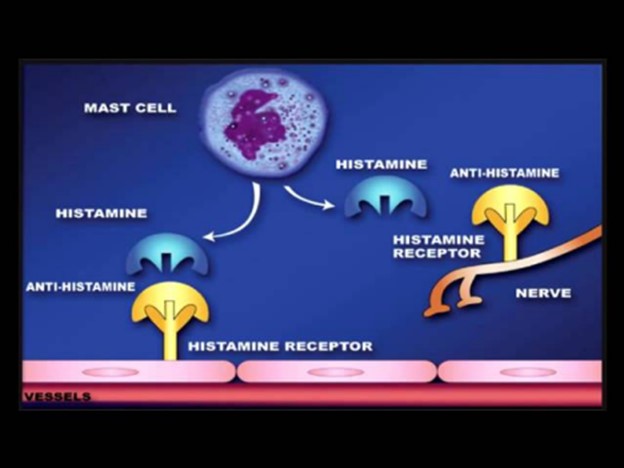
Antihistamines primarily work by blocking the H1 receptors, which are the receptors responsible for mediating the actions of histamine in the body. By blocking these receptors, antihistamines prevent or reduce the effects of histamine, such as itching, sneezing, runny nose, and watery eyes. This is the main mechanism by which antihistamines provide their therapeutic effects. "Antihistamines block release of histamine from mast cells and basophils." This statement is incorrect. Antihistamines do not block the release of histamine; instead, they block the histamine receptors to prevent the effects of histamine.
"H1 antagonists can bind to H1 receptors, H2 receptors, and muscarinic receptors." This statement is incorrect. H1 antagonists, or H1 receptor blockers, specifically bind to H1 receptors and do not have significant affinity for H2 receptors or muscarinic receptors. "First-generation antihistamines are more selective than second-generation antihistamines." This statement is incorrect. First-generation antihistamines are generally less selective and can have more sedating and anticholinergic effects compared to second-generation antihistamines, which are designed to be more selective for H1 receptors and have reduced sedative properties.
Whether you are a student looking to ace your exams or a practicing nurse seeking to enhance your expertise , our nursing education contents will empower you with the confidence and competence to make a difference in the lives of patients and become a respected leader in the healthcare field.
Visit Naxlex, invest in your future and unlock endless possibilities with our unparalleled nursing education contents today