
When an older female adult client complains of itching and pain and several days later shows you a rash, what do you realize she has?
Scabies
Herpes zoster
Skin cancer
Actinic keratosis
The Correct Answer is B
Choice A reason: Scabies is a skin infestation caused by tiny mites that burrow into the skin and lay eggs. It causes intense itching and a pimple-like rash, usually in the folds of the skin, such as the armpits, groin, or between the fingers. Scabies is highly contagious and can spread through direct skin contact or shared clothing or bedding.
Choice B reason: Herpes zoster, also known as shingles, is a viral infection that affects the nerves and the skin. It causes a painful, blistering rash that usually appears on one side of the body or face. Herpes zoster is caused by the same virus that causes chickenpox, which can reactivate later in life, especially in older adults or people with weakened immune systems.
Choice C reason: Skin cancer is an abnormal growth of skin cells that can be caused by exposure to ultraviolet (UV) radiation from the sun or tanning beds. It can appear as a new or changing mole, a sore that does not heal, or a scaly or crusty patch of skin. Skin cancer can vary in appearance, size, shape, and color, depending on the type and stage of the cancer.
Choice D reason: Actinic keratosis is a precancerous skin condition that is caused by chronic sun damage. It appears as rough, scaly, or crusty spots on the skin, usually on the face, ears, scalp, or hands. Actinic keratosis can sometimes develop into squamous cell carcinoma, a type of skin cancer, if left untreated.
Nursing Test Bank
Naxlex Comprehensive Predictor Exams
Related Questions
Correct Answer is ["B","C","D","E"]
Explanation
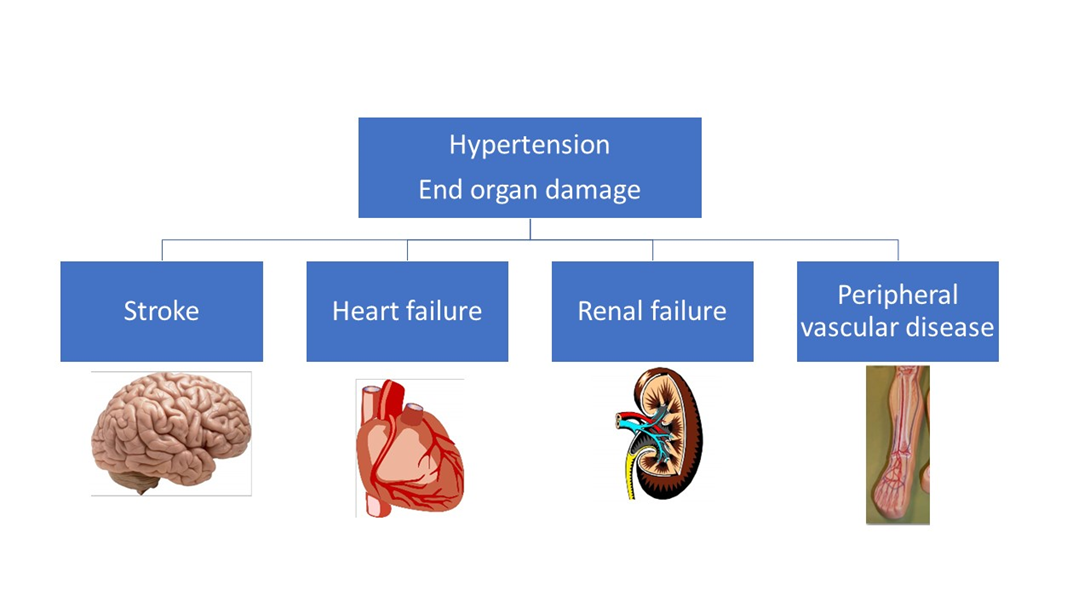
Choice A reason: Isolated systolic hypertension is not a result of end-organ damage from chronic hypertension, but rather a risk factor for it. Isolated systolic hypertension is a condition where the systolic blood pressure is elevated (>140 mmHg) while the diastolic blood pressure is normal (<90 mmHg). It is common in older adults due to the stiffening of the arteries, and can increase the risk of cardiovascular and cerebrovascular events.
Choice B reason: Atrial fibrillation is a result of end-organ damage from chronic hypertension. Atrial fibrillation is an irregular and often rapid heart rate that can cause poor blood flow and increase the risk of stroke and heart failure. Chronic hypertension can damage the heart muscle and the electrical system of the heart, leading to atrial fibrillation.
Choice C reason: Renal insufficiency is a result of end-organ damage from chronic hypertension. Renal insufficiency is a condition where the kidneys are unable to filter waste and fluid from the blood adequately. Chronic hypertension can damage the blood vessels and the nephrons of the kidneys, leading to renal insufficiency.
Choice D reason: Stroke is a result of end-organ damage from chronic hypertension. Stroke is a sudden interruption of blood supply to the brain, causing brain cell death and neurological deficits. Chronic hypertension can damage the blood vessels in the brain, making them prone to rupture (hemorrhagic stroke) or blockage (ischemic stroke).
Choice E reason: Cardiac disease is a result of end-organ damage from chronic hypertension. Cardiac disease is a broad term that encompasses various disorders of the heart, such as coronary artery disease, heart attack, heart failure, and cardiomyopathy. Chronic hypertension can damage the heart by increasing the workload and the oxygen demand of the heart, causing the heart to enlarge and weaken over time.
Correct Answer is B
Explanation
Choice A reason: This statement is incorrect because the zoster vaccine Shingrix can be given to individuals who have had a previous episode of Herpes Zoster (HZ), as long as they are not currently experiencing an acute outbreak. The vaccine can help prevent future recurrences of HZ, as well as reduce the risk of postherpetic neuralgia, a painful complication of HZ.
Choice B reason: This statement is correct because the zoster vaccine Shingrix is recommended for all individuals over age 50 that have no contraindications to the vaccine, such as a history of severe allergic reaction to any component of the vaccine, or a current severe immunodeficiency. The vaccine can help prevent HZ and its complications, which are more common and severe in older adults.
Choice C reason: This statement is incorrect because the zoster vaccine Shingrix can be given to individuals with a chronic cardiac or respiratory condition, as long as they are not immunocompromised. The vaccine is not a live vaccine, so it does not pose a risk of causing or worsening the underlying condition. The vaccine can help protect the individuals from HZ and its complications, which can exacerbate their condition or interfere with their treatment.
Choice D reason: This statement is incorrect because the zoster vaccine Shingrix does not always prevent an individual from developing Herpes Zoster. The vaccine has a high efficacy rate of about 90%, but it is not 100%. The vaccine can reduce the severity and duration of HZ, as well as the risk of postherpetic neuralgia, if it does occur.
Whether you are a student looking to ace your exams or a practicing nurse seeking to enhance your expertise , our nursing education contents will empower you with the confidence and competence to make a difference in the lives of patients and become a respected leader in the healthcare field.
Visit Naxlex, invest in your future and unlock endless possibilities with our unparalleled nursing education contents today