
Whenever a nurse is caring for clients who are receiving warfarin (Coumadin), which of the following medications should the nurse have on hand in the event of an overdose?
Protamine
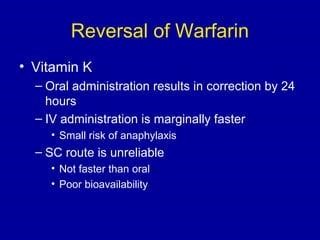
Vitamin K
Atropine
Epinephrine
The Correct Answer is B
A. Protamine is used to reverse the effects of heparin, not warfarin.
B. Vitamin K is the antidote for warfarin overdose, as it promotes the synthesis of clotting factors that are inhibited by warfarin.
C. Atropine is used to treat bradycardia and other conditions, but it is not used to reverse the effects of warfarin.
D. Epinephrine is used to treat severe allergic reactions (anaphylaxis) and cardiac arrest, but it is not used to reverse the effects of warfarin.
Nursing Test Bank
Naxlex Comprehensive Predictor Exams
Related Questions
Correct Answer is C,A,D,B,E
Explanation
The correct order is C,A,D,B,E.
C. Open the airway using a jaw-thrust maneuver.
This is the first priority since maintaining a clear airway is critical for the client’s survival.
A. Determine effectiveness of ventilatory efforts.
After ensuring the airway is open, assess the client’s breathing and whether they are ventilating effectively.
D. Perform a Glasgow Coma Scale assessment.
This step evaluates the client’s neurological status to determine their level of consciousness and identify any brain injuries.
B. Remove clothing for a thorough assessment.
To expose the client for a comprehensive physical examination and assess any injuries.
E. Control any external bleeding.
As part of circulation management, identify and stop any significant bleeding to prevent shock. This step addresses the "C" in ABCDE.
Correct Answer is A
Explanation
A. This behavior reflects the secretive and recurring nature of binge-purge cycles characteristic of bulimia nervosa. The condition often involves a pattern of eating large amounts of food (binging) followed by compensatory behaviors such as self-induced vomiting (purging) to prevent weight gain.
B. This statement is not characteristic of bulimia nervosa.
C. This statement could indicate laxative abuse, which may occur in individuals with bulimia nervosa, but it is not specific to the disorder.
D. This statement could indicate anorexia nervosa, which is characterized by restrictive eating, but it is not specific to bulimia nervosa.
Whether you are a student looking to ace your exams or a practicing nurse seeking to enhance your expertise , our nursing education contents will empower you with the confidence and competence to make a difference in the lives of patients and become a respected leader in the healthcare field.
Visit Naxlex, invest in your future and unlock endless possibilities with our unparalleled nursing education contents today