
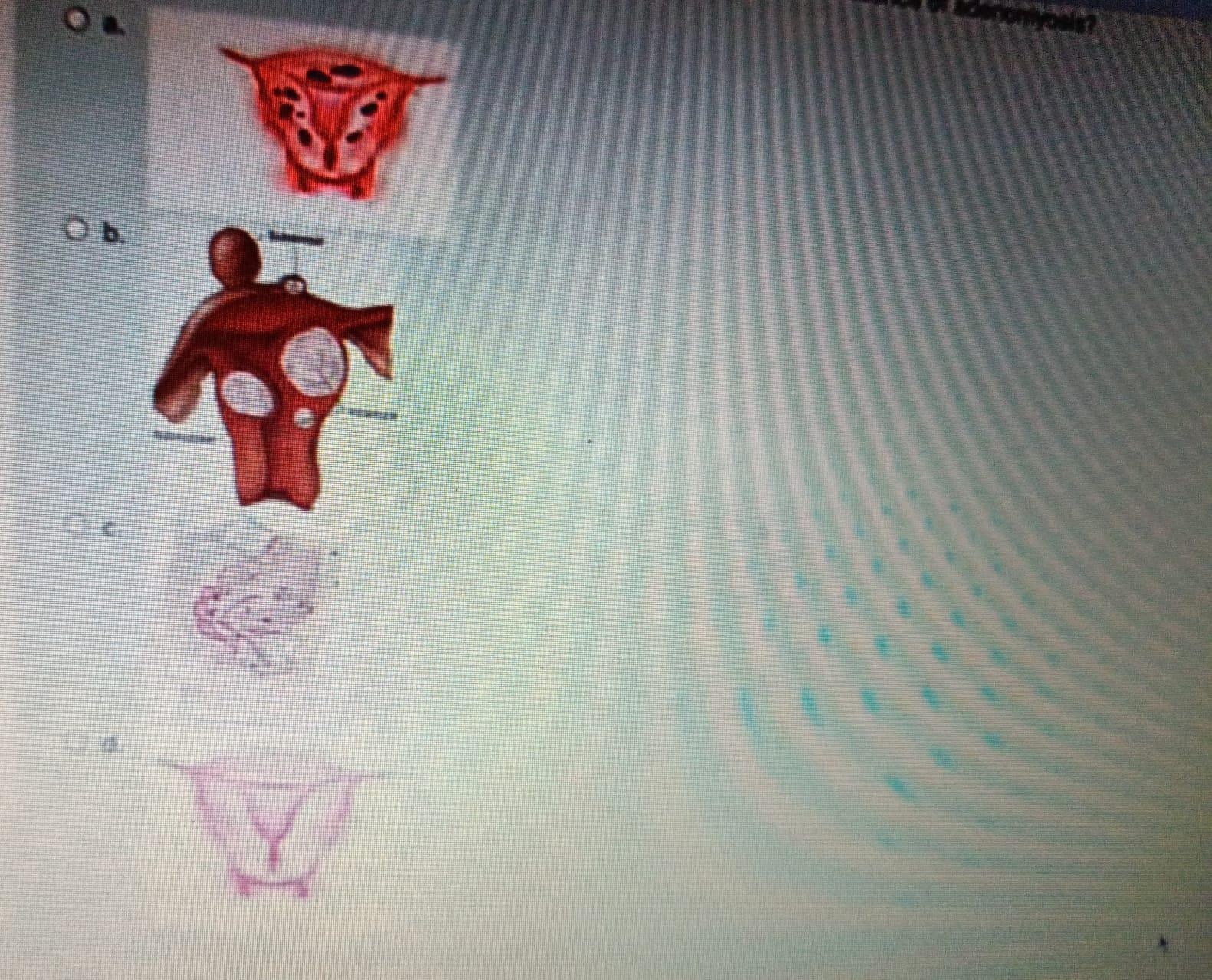
Which of the following imagine the nurse will recognize as a positive evidence of adenomyosis?
A
B
C
D
The Correct Answer is A
Choice A rationale: this is the correct answer since the darkened spots in the uterus represent endometrial-like tissue growths within the muscular wall of the uterus (the myometrium).
Choice B rationale: This picture shows leiomyomas, also known as fibroids, which are benign tumors that develop from the smooth muscle cells of the uterus. They can vary in size, number, and location within or outside the uterus. They can cause symptoms such as heavy bleeding, pelvic pressure, pain, and infertility.
Choice C rationale: This is endometriosis which is a condition where tissue similar to the endometrium (the lining of the uterus) grows outside the uterus, such as on the ovaries, fallopian tubes, pelvic wall, or bowel. This tissue responds to hormonal changes and bleeds during the menstrual cycle, causing inflammation, pain, and sometimes infertility.
Choice D rationale: This image shows a normal uterus.
Nursing Test Bank
Naxlex Comprehensive Predictor Exams
Related Questions
Correct Answer is D
Explanation
Choice A rationale: These are symptoms of advance renal failure. Stomatitis and diarrhea are signs of uremia, which is the accumulation of waste products in the blood.
Choice B rationale: Dyspnea and anuria are signs of fluid overload and kidney shutdown and indicate advanced renal failure.
Choice C rationale: Confusion and vomiting are signs of acidosis and electrolyte disturbances and occur in advanced stages of renal failure.
Choice D rationale: One of the early symptoms of renal insufficiency is nocturia, which is the need to urinate frequently at night. This occurs because the kidneys are unable to concentrate urine during the day and produce more urine at night. Another early symptom is oliguria, which is the production of less than 400 mL of urine per day. This occurs because the kidneys are unable to excrete enough urine to maintain fluid balance.
Correct Answer is ["B","D"]
Explanation
Choice A rationale: While the temperature is important in assessing health, it isn't the most concerning finding in this scenario compared to others.
Choice B rationale: A thready pulse (a weak, barely palpable pulse) could indicate a critical drop in blood pressure and cardiac output, which is a significant concern.
Choice C rationale: While indicating a possible issue with hydration, it's not as immediately concerning as other findings in this context.
Choice D rationale: Recently lost his job - While this has social and economic implications, it's not an immediate physiological concern in this clinical scenario.
Choice E rationale: While significant in his overall health, it's not a direct finding from the current assessment that immediately raises concern.
Whether you are a student looking to ace your exams or a practicing nurse seeking to enhance your expertise , our nursing education contents will empower you with the confidence and competence to make a difference in the lives of patients and become a respected leader in the healthcare field.
Visit Naxlex, invest in your future and unlock endless possibilities with our unparalleled nursing education contents today