
Which of the following means of receiving an order for specimen collection is considered to be the most accurate method?
Multipart requisition
Manual requisition
Automated requisition
Verbal requisition
The Correct Answer is C
Choice A Reason:
A multipart requisition involves multiple copies of a paper form, which can be prone to errors due to manual entry, misplacement, or illegible handwriting. While it provides physical copies for various departments, it is not the most accurate method compared to digital solutions.
Choice B Reason:
A manual requisition is similar to a multipart requisition but typically consists of a single form. It carries the same risks of human error and does not offer the benefits of automated tracking and data entry that come with electronic systems.
Choice C Reason:
An automated requisition is considered the most accurate method for receiving orders for specimen collection. It reduces the risk of human error associated with manual data entry and allows for better tracking and integration with laboratory information systems. Automated systems can also provide immediate feedback if there is an issue with the order, such as a missing patient identifier or a test code.
Choice D Reason:
A verbal requisition is the least reliable method as it depends on the memory and communication skills of the individuals involved. It lacks the documentation and verification steps present in written or automated methods, making it susceptible to misunderstandings and errors.
Nursing Test Bank
Naxlex Comprehensive Predictor Exams
Related Questions
Correct Answer is D
Explanation
Choice A reason:
Heparin is an anticoagulant, not a clot activator. It works by inhibiting thrombin and preventing the conversion of fibrinogen to fibrin, thus preventing clot formation. It is commonly found in green-top tubes and is suitable for collecting plasma samples for tests like electrolyte levels and coagulation studies.
Choice B reason:
Oxalate is also an anticoagulant that prevents clotting by precipitating calcium. It is not used to promote clot formation but rather to maintain a blood sample in a non-coagulated state for various tests.
Choice C reason:
Citrate functions similarly to heparin and oxalate as an anticoagulant. It chelates calcium ions in the blood, inhibiting the coagulation process. Citrate is often used in blue-top tubes and is ideal for collecting plasma samples for coagulation studies.
Choice D reason:
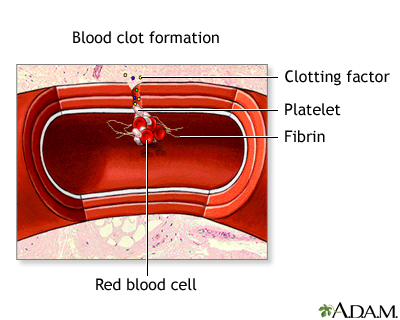
Silica is a clot activator. It is commonly used in serum separator tubes (SSTs) with a gold or red speckled top. The silica particles provide a surface for the rapid formation of the clot, allowing for the separation of serum from the blood cells. This is essential when serum is needed for testing.
Correct Answer is D
Explanation
Choice A reason:
Covering a quarter of the slide is not an acceptable criterion for the quality of a peripheral blood smear. The smear should be spread across the slide in a manner that allows for proper examination under a microscope, and covering only a quarter of the slide would not provide enough area for an adequate assessment.
Choice B reason:
Having a well-defined edge is not specifically indicative of the quality of a peripheral blood smear. While the edges should be clean to allow for clear viewing of the cells at the margins, the quality is more accurately determined by the distribution and integrity of the cells on the slide.
Choice C reason:
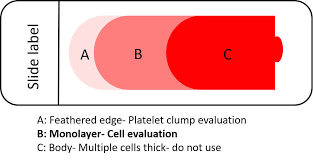
Covering the entire slide is also not a criterion for a quality peripheral blood smear. In fact, if the blood covers the entire slide, it may be too thick to allow for proper cell differentiation and examination. A proper smear should have a gradient of cell distribution, ending with a feathered edge.
Choice D reason:
A feathered edge is the correct criterion for a quality peripheral blood smear. The feathered edge is the thinnest part of the smear and is where the cells are ideally distributed in a single layer, which is optimal for microscopic examination. This allows for the best visualization of cell morphology and is essential for accurate diagnosis.
Whether you are a student looking to ace your exams or a practicing nurse seeking to enhance your expertise , our nursing education contents will empower you with the confidence and competence to make a difference in the lives of patients and become a respected leader in the healthcare field.
Visit Naxlex, invest in your future and unlock endless possibilities with our unparalleled nursing education contents today