
Which of the following medications should be administered whole (e.g., not divided or crushed for administration)?
A capsule
A scored tablet
An unscored tablet
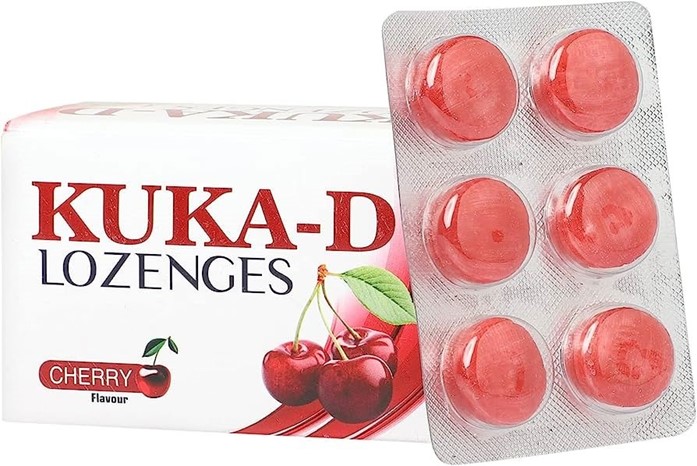
A lozenge
The Correct Answer is D
A lozenge is a type of medication that is designed to dissolve slowly in the mouth, usually to treat sore throat, cough, or oral infections. It should not be divided or crushed for administration because it may alter its effectiveness, taste, or absorption. It should also not be swallowed whole because it may cause choking or irritation.
A capsule is a type of medication that consists of a gelatin shell enclosing a powder or liquid. It can be opened and sprinkled on soft food or mixed with water for administration unless it is an extended-release or enteric-coated capsule.
A scored tablet is a type of medication that has a groove or indentation on its surface to facilitate breaking into equal halves or quarters. It can be divided along the score line for administration unless it is an extended-release or enteric-coated tablet.
An unscored tablet is a type of medication that does not have a groove or indentation on its surface. It can be crushed or cut into smaller pieces for administration unless it is an extended-release or enteric-coated tablet.
Nursing Test Bank
Naxlex Comprehensive Predictor Exams
Related Questions
Correct Answer is D
Explanation
The correct technique for preparing this insulin order is to follow these steps¹²:
- Perform hand hygiene and put on gloves.
- Mix NPH (cloudy) insulin by gently rotating the vial between the palms of your hands. Do not shake the vial.
- Clean the tops of both vials with alcohol swabs and let them dry.
- Draw up the amount of air equal to the dose of NPH insulin into a syringe. Inject the air into the NPH vial without touching the needle to the solution. Withdraw the needle and syringe without drawing up any insulin. This will create positive pressure in the NPH vial and make it easier to draw up later.
- Draw up the amount of air equal to the dose of regular (clear) insulin into the same syringe. Inject the air into the regular vial and invert the vial. Make sure the needle tip is below the fluid level and draw up slightly more than the dose of regular insulin. Tap the syringe gently to remove any air bubbles and push out any excess insulin to get the exact dose. Withdraw the needle and syringe from the regular vial.
- Reinsert the needle and syringe into the NPH vial without touching the needle to the solution. Invert the vial and draw up slightly more than the dose of NPH insulin. Tap the syringe gently to remove any air bubbles and push out any excess insulin to get the exact dose. Withdraw the needle and syringe from the NPH vial.
- Check that you have the correct doses of both insulins in one syringe. The total volume should be equal to the sum of both doses.
- Administer the dose within 5 to 10 minutes after drawing up because regular insulin binds to NPH and this decreases its action.

Correct Answer is D
Explanation
This numeric form is appropriate, according to the Joint Commission, because it does not use a trailing zero after a decimal point, which is a common cause of medication errors and should be avoided. A trailing zero may be misread or misinterpreted as a larger dose or omited altogether, resulting in a 10-fold overdose or underdose, respectively. For example, when prescriptions have been writen for "Coumadin 1.0 mg," patients have received 10 mg in error¹². Therefore, the Joint Commission requires that a trailing zero may be used only when required to demonstrate the level of precision of the value being reported, such as for laboratory results, imaging studies that report the size of lesions, or catheter/tube sizes. It may not be used in medication orders or other medication-related documentation.
The other options are not appropriate numeric forms because:
a) 3.0 uses a trailing zero after a decimal point, which poses a risk of confusion or error.
b) 0.30 uses a trailing zero after a decimal point, which poses a risk of confusion or error.
c) 0.03 is not equivalent to 0.3, as it is 10 times smaller.
Whether you are a student looking to ace your exams or a practicing nurse seeking to enhance your expertise , our nursing education contents will empower you with the confidence and competence to make a difference in the lives of patients and become a respected leader in the healthcare field.
Visit Naxlex, invest in your future and unlock endless possibilities with our unparalleled nursing education contents today