
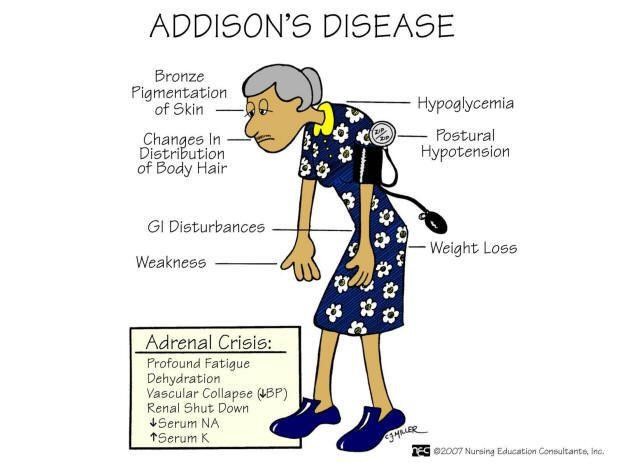
Which of the following would be the most appropriate nursing diagnosis for a client admitted with Addison's disease?
Impaired skin integrity
Fluid volume overload
Imbalanced nutrition: more than body requirements
Risk for injury
The Correct Answer is D
Choice A Reason: Impaired skin integrity is not the most appropriate nursing diagnosis for a client with Addison's disease, as it does not reflect the main problem of adrenal insufficiency and cortisol deficiency.
Choice B Reason: Fluid volume overload is not the most appropriate nursing diagnosis for a client with Addison's disease, as it does not reflect the main problem of adrenal insufficiency and aldosterone deficiency.
Choice C Reason: Imbalanced nutrition: more than body requirements is not the most appropriate nursing diagnosis for a client with Addison's disease, as it does not reflect the main problem of adrenal insufficiency and weight loss.
Choice D Reason: Risk for injury is the most appropriate nursing diagnosis for a client with Addison's disease, as it reflects the main problem of adrenal insufficiency and hypotension, which can cause falls, fainting, or shock.
Nursing Test Bank
Naxlex Comprehensive Predictor Exams
Related Questions
Correct Answer is B
Explanation
Choice A Reason: Painful urination is not a common finding in BPH, but it may indicate a urinary tract infection or bladder stones.
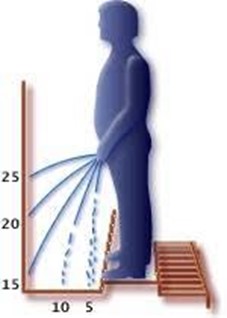
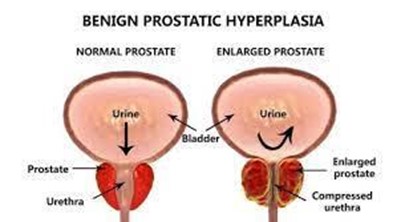
Choice B Reason: Decreased urinary stream is a common finding in BPH, as the enlarged prostate compresses the urethra and obstructs the flow of urine.
Choice C Reason: Critically elevated PSA level is not a common finding in BPH, but it may indicate prostate cancer or prostatitis.
Choice D Reason: Urge incontinence is not a common finding in BPH, but it may indicate an overactive bladder or neurogenic bladder.
Correct Answer is D
Explanation
Choice A Reason: Compressing the nares is not the first action that the nurse should take, as it may increase intracranial pressure and worsen the head injury.
Choice B Reason: Administering decongestant for postnasal drip is not the first action that the nurse should take, as it may mask the signs of cerebrospinal fluid (CSF) leakage and delay diagnosis and treatment.
Choice C Reason: Tilting the head back is not the first action that the nurse should take, as it may cause aspiration of CSF or blood and increase the risk of infection.
Choice D Reason: Collecting the drainage is the first action that the nurse should take, as it helps to identify if the drainage is CSF or nasal secretions, and to monitor the amount and characteristics of the drainage.
Whether you are a student looking to ace your exams or a practicing nurse seeking to enhance your expertise , our nursing education contents will empower you with the confidence and competence to make a difference in the lives of patients and become a respected leader in the healthcare field.
Visit Naxlex, invest in your future and unlock endless possibilities with our unparalleled nursing education contents today