
While caring for a client receiving total parenteral nutrition (TPN), it is most important for the nurse to monitor which of the client's lab values?
Urinary ketones.
Serum protein.
Serum osmolarity.
Capillary glucose.
None
None
The Correct Answer is D
Correct answer: D
Choice A
Urinary ketones are not most important. Monitoring urinary ketones can provide information about the utilization of glucose and fat as energy sources. However, it is not the primary lab value to monitor in TPN administration.
Choice B
Serum protein is not most important. Monitoring serum protein levels is important to assess nutritional status, but it might not be as immediate a concern as serum osmolarity.
Choice C
Serum osmolarity reflects the concentration of particles (such as electrolytes, glucose, and other solutes) in the blood. Monitoring serum osmolarity is important to prevent complications related to fluid and electrolyte imbalances that can arise from the administration of TPN. Blood glucose levels (option D) are more critical because TPN can significantly impact glucose metabolism
Choice D
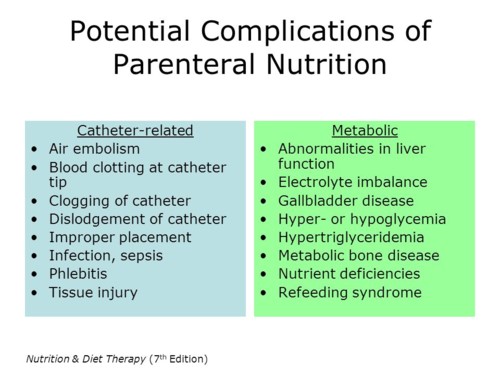
When caring for a client receiving total parenteral nutrition (TPN), the nurse’s priority is to monitor blood glucose levels. TPN can affect blood glucose, and observing for signs of hyperglycemia or hypoglycemia is crucial. Additionally, administering insulin as directed based on blood glucose levels is essential.
C
Nursing Test Bank
Naxlex Comprehensive Predictor Exams
Related Questions
Correct Answer is B
Explanation
Choice A
24-hour food recall, food preferences, and allergies is incorrect. While these factors are important for understanding the client's dietary habits and possible dietary restrictions, they do not directly provide information about the client's current nutritional status or overall nutritional health.
Choice B
Body mass index (BMI) and serum albumin level is correct. Body mass index (BMI) and serum albumin level are commonly used parameters to assess a client's nutritional status. These measures provide valuable information about the client's weight, muscle mass, and protein status. Let's break down the options:
Choice C
Triceps skin fold and mid-arm circumference is incorrect. These measurements can provide information about the client's body composition and muscle mass. However, they are not as commonly used as BMI and serum albumin level for assessing nutritional status.
Choice D
Weight loss history and body surface area (BSA) is incorrect. Weight loss history is relevant for understanding changes in the client's weight over time, which can indicate potential malnutrition. However, it's not as comprehensive as BMI, which considers both weight and height. Body surface area (BSA) is not typically used to assess nutritional status.
Correct Answer is ["A","C","D","E"]
Explanation
Choice A
Grilled salmon is correct. Salmon is a good source of protein and healthy omega-3 fatty acids. Protein is essential for wound healing and tissue repair, while omega-3 fatty acids have anti-inflammatory properties that can help with the healing process.
Choice B
Soda crackers is incorrect. Soda crackers are not particularly nutrient-dense and may not contribute significantly to postoperative healing. While they might be a bland option for settling the stomach, they do not offer the same nutritional benefits as the other selected options.
Choice C
Scrambled eggs are correct. Eggs are a good source of high-quality protein and contain essential nutrients like vitamin D and choline. Protein is crucial for tissue repair and recovery, and vitamin D supports bone health.
Choice D
Baked chicken is correct: Lean protein sources like baked chicken are important for wound healing and maintaining muscle mass. Protein helps the body repair and build new tissues.
Choice E
Flavoured gelatine is correct. Flavoured gelatine can be a soft and easily digestible source of hydration and calories. It's also a good option for someone recovering from surgery as it provides some energy and can be gentle on the digestive system.
Whether you are a student looking to ace your exams or a practicing nurse seeking to enhance your expertise , our nursing education contents will empower you with the confidence and competence to make a difference in the lives of patients and become a respected leader in the healthcare field.
Visit Naxlex, invest in your future and unlock endless possibilities with our unparalleled nursing education contents today