
A client in the beginning stages of an asthma attack has arterial blood gases that reveal the following results: pH 7.51, PaCO2 28 mmHg, PaO2 75 mmHg, O2 saturation 92%, HCO3 24 mEq/L. The nurse interprets this blood gas result as:
Metabolic alkalosis.
Metabolic acidosis.
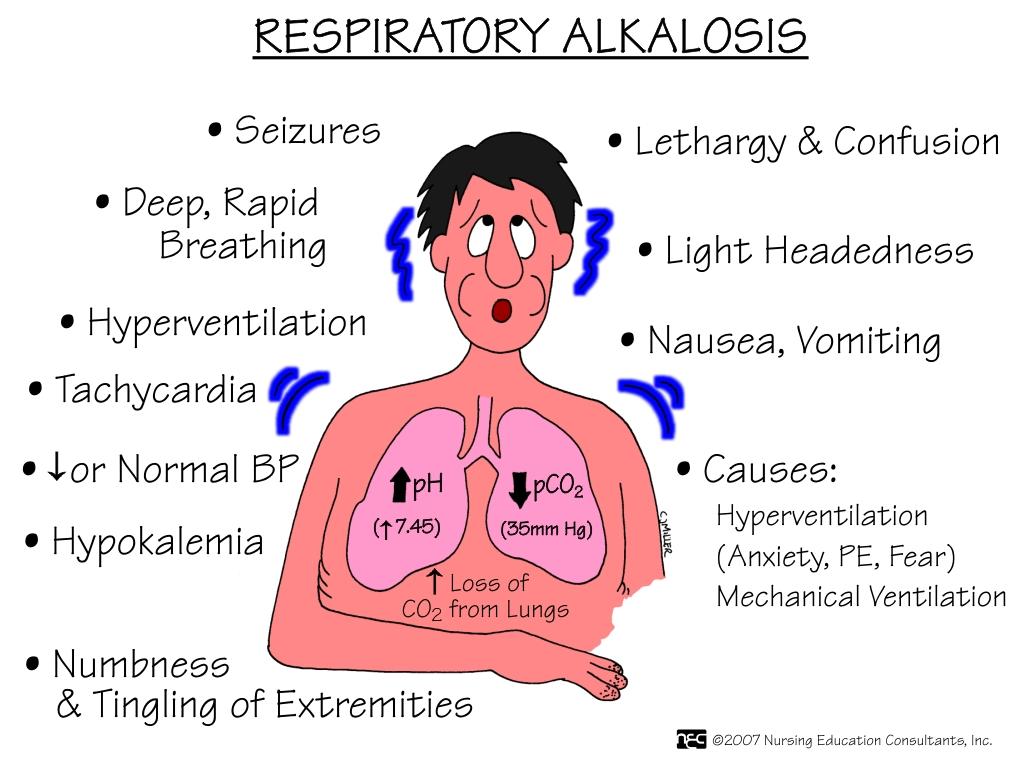
Respiratory alkalosis.
Respiratory acidosis.
The Correct Answer is C
Choice A reason: Metabolic alkalosis is characterized by an elevated pH and an increased bicarbonate (HCO3) level. In this case, the pH is elevated (7.51), but the bicarbonate level is within the normal range (24 mEq/L), indicating that the alkalosis is not metabolic in origin.
Choice B reason: Metabolic acidosis is characterized by a decreased pH and a decreased bicarbonate (HCO3) level. In this scenario, the pH is elevated, not decreased, and the bicarbonate level is normal, ruling out metabolic acidosis.
Choice C reason: Respiratory alkalosis is characterized by an elevated pH and a decreased partial pressure of carbon dioxide (PaCO2). The given values show a pH of 7.51 (elevated) and a PaCO2 of 28 mmHg (decreased), which are indicative of respiratory alkalosis. This condition often occurs in the early stages of an asthma attack due to hyperventilation, which causes excessive exhalation of CO2.
Choice D reason: Respiratory acidosis is characterized by a decreased pH and an increased PaCO2. In this case, the pH is elevated, and the PaCO2 is decreased, which is the opposite of what is seen in respiratory acidosis.
Nursing Test Bank
Naxlex Comprehensive Predictor Exams
Related Questions
Correct Answer is D
Explanation
Choice A reason:
An increase in cellular size of the bronchi and bronchioles is not the primary issue in emphysema. Emphysema primarily affects the alveoli, the tiny air sacs in the lungs, rather than the bronchi and bronchioles.
Choice B reason:
Overexpansion of the diaphragm is not a primary problem in emphysema. While the diaphragm may become flattened due to hyperinflation of the lungs, this is a secondary effect rather than the primary issue.
Choice C reason:
A decreased ability to inhale is not the main problem in emphysema. The primary issue is difficulty exhaling due to the loss of elasticity in the alveolar walls, which leads to air trapping and hyperinflation
Choice D reason:
Destruction of alveolar walls and loss of lung elasticity is the primary physiologic problem in emphysema. This destruction leads to reduced surface area for gas exchange and impaired lung function. The loss of elasticity makes it difficult for the lungs to expel air, leading to air trapping and hyperinflation.
Correct Answer is C
Explanation
Choice A reason: Stating that none of these medications will work for this activity is incorrect. Albuterol, a short-acting beta-agonist, is specifically used to prevent exercise-induced bronchoconstriction (EIB). It is effective in opening the airways and preventing asthma symptoms triggered by exercise.
Choice B reason: Using beclomethasone prior to exercising is not recommended. Beclomethasone is an inhaled corticosteroid used for long-term control of asthma and is not effective as a pre-exercise medication. It helps reduce inflammation in the airways over time but does not provide immediate relief or prevention of exercise-induced symptoms.
Choice C reason: Albuterol is most effective when taken before this type of activity. Albuterol is a short-acting beta-agonist (SABA) that works quickly to relax the muscles around the airways, making it easier to breathe. It is commonly prescribed to be taken 10-15 minutes before exercise to prevent exercise-induced bronchoconstriction. This medication helps to prevent the narrowing of the airways that can occur during physical activity, making it the best choice for preventing exercise-induced asthma symptoms.
Choice D reason: Using zafirlukast prior to aerobic activity is not the best option. Zafirlukast is a leukotriene receptor antagonist used for long-term control of asthma. It helps reduce inflammation and prevent asthma symptoms but is not typically used as a pre-exercise medication. It does not provide the immediate bronchodilation needed to prevent exercise-induced bronchoconstriction.
Whether you are a student looking to ace your exams or a practicing nurse seeking to enhance your expertise , our nursing education contents will empower you with the confidence and competence to make a difference in the lives of patients and become a respected leader in the healthcare field.
Visit Naxlex, invest in your future and unlock endless possibilities with our unparalleled nursing education contents today