
A client who delivered vaginally 18-hours ago develops a slight fever. The delivery record shows spontaneous rupture of membranes (SROM) for 36 hours prior to delivery and labor lasting 24 hours. An epidural was placed during labor, and the client experienced a third-degree perineal laceration.
The practical nurse (PN) should recognize which information poses the greatest risk for developing postpartum endometritis?
Epidural anesthesia.
SROM for 36 hours.
Third-degree perineal laceration.
Labor lasting for 24 hours.
The Correct Answer is B
The information that poses the greatest risk for developing postpartum endometritis in this situation is that the client experienced spontaneous rupture of membranes (SROM) for 36 hours prior to delivery. SROM for an extended period of time increases the risk of infection, including postpartum endometritis, which is an infection of the uterus. The practical nurse (PN) should recognize this risk factor and monitor the client closely for signs of infection. The other information listed may also be important to consider, but SROM for 36 hours poses the greatest risk for developing postpartum endometritis in this situation.
Nursing Test Bank
Naxlex Comprehensive Predictor Exams
Related Questions
Correct Answer is B
Explanation
The information that poses the greatest risk for developing postpartum endometritis in this situation is that the client experienced spontaneous rupture of membranes (SROM) for 36 hours prior to delivery. SROM for an extended period of time increases the risk of infection, including postpartum endometritis, which is an infection of the uterus. The practical nurse (PN) should recognize this risk factor and monitor the client closely for signs of infection. The other information listed may also be important to consider, but SROM for 36 hours poses the greatest risk for developing postpartum endometritis in this situation.
Correct Answer is C
Explanation
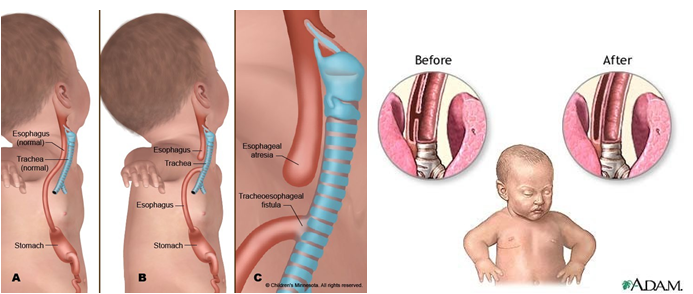
During gastrostomy (GT) feedings for a newborn infant with a tracheo-esophageal repair, the practical nurse (PN) should offer a pacifier to satiate the sucking reflex associated with feedings. Sucking is a natural reflex for infants and providing a pacifier during feedings can help satisfy this need and promote comfort. The other interventions listed may also be important to implement during GT feedings, but offering a pacifier to satiate the sucking reflex is the most appropriate intervention in this situation.
Whether you are a student looking to ace your exams or a practicing nurse seeking to enhance your expertise , our nursing education contents will empower you with the confidence and competence to make a difference in the lives of patients and become a respected leader in the healthcare field.
Visit Naxlex, invest in your future and unlock endless possibilities with our unparalleled nursing education contents today