
A client who is at full-term gestation is in active labor and complains of a cramp in her leg.
Which intervention should the practical nurse (PN) implement?
Massage the calf and foot.
Extend the leg and flex the foot.
Check the pedal pulse in the affected leg.
Elevate the leg above the heart.
None
None
The Correct Answer is B
The correct answer is B. Extend the leg and flex the foot.
Choice A rationale:
Massaging the calf and foot is not recommended as it could potentially dislodge a blood clot if one is present, which can be dangerous.
Choice B rationale:
Extending the leg and flexing the foot helps to relieve the cramp by stretching the muscles involved. This is a safe and effective method to alleviate muscle cramps.
Choice C rationale:
Checking the pedal pulse in the affected leg is important for assessing circulation but does not directly address the immediate discomfort of the cramp.
Choice D rationale:
Elevating the leg above the heart is generally used to reduce swelling and improve circulation but is not specifically effective for relieving muscle cramps.
: 3
Nursing Test Bank
Naxlex Comprehensive Predictor Exams
Related Questions
Correct Answer is A
Explanation
The correct answer is choice A: Descriptions of numbness and tingling in fingers distal to the AVF.
Choice A rationale:
Descriptions of numbness and tingling in fingers distal to the arteriovenous fistula (AVF) suggest possible nerve compression or impaired blood flow, which are concerning findings. These symptoms could indicate reduced perfusion to the distal extremities and require immediate attention to prevent further complications.
Choice B rationale:
A loud and consistent bruit auscultated at the AVF site is an expected finding and indicates adequate blood flow through the fistula. A bruit is the sound of turbulent blood flow and is commonly heard over functional AV fistulas.
Choice C rationale:
Bruising at the AVF site is a common occurrence after the creation of the fistula. It is expected due to the surgical intervention and the manipulation of blood vessels. As long as the bruising is not severe or accompanied by other concerning symptoms, it does not need immediate reporting.
Choice D rationale:
The absence of the radial pulse distal to the AVF and the presence of the ulnar pulse are normal findings in a functioning AV fistula. The AV fistula diverts blood flow away from the radial artery, leading to a diminished pulse. This is not a cause for concern as long as the ulnar pulse is present, indicating adequate perfusion to the hand.
Correct Answer is D
Explanation
The correct answer is choice D, Pupils reactive to accommodation. Choice A rationale:
"Peripheral vision intact”. refers to the ability to see objects at the outer edges of one's visual field. It is not relevant to the assessment of pupillary response and does not describe the finding of pupils constricting as they change focus from a far object to a near object.
Choice B rationale:
"Nystagmus present with pupillary focus”. suggests involuntary rapid eye movements accompanied by changes in pupillary response. Nystagmus is not an expected finding during pupillary accommodation, and its presence would indicate a neurological issue rather than a normal response.
Choice C rationale:
"Consensual pupillary constriction present”. refers to both pupils constricting when light is shined into one eye. While this finding is normal, it does not specifically describe the pupils' response during accommodation when focusing from a far object to a near object.
Choice D rationale:
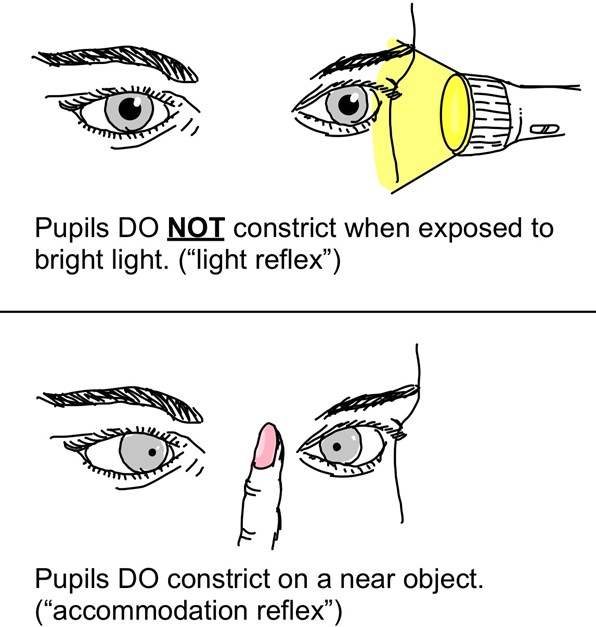
"Pupils reactive to accommodation”. accurately describes the normal physiological response of the pupils constricting as they change focus from a distant object to a nearby object. This response ensures that the appropriate amount of light enters the eyes to maintain clear vision during different distances of focus.
Whether you are a student looking to ace your exams or a practicing nurse seeking to enhance your expertise , our nursing education contents will empower you with the confidence and competence to make a difference in the lives of patients and become a respected leader in the healthcare field.
Visit Naxlex, invest in your future and unlock endless possibilities with our unparalleled nursing education contents today