
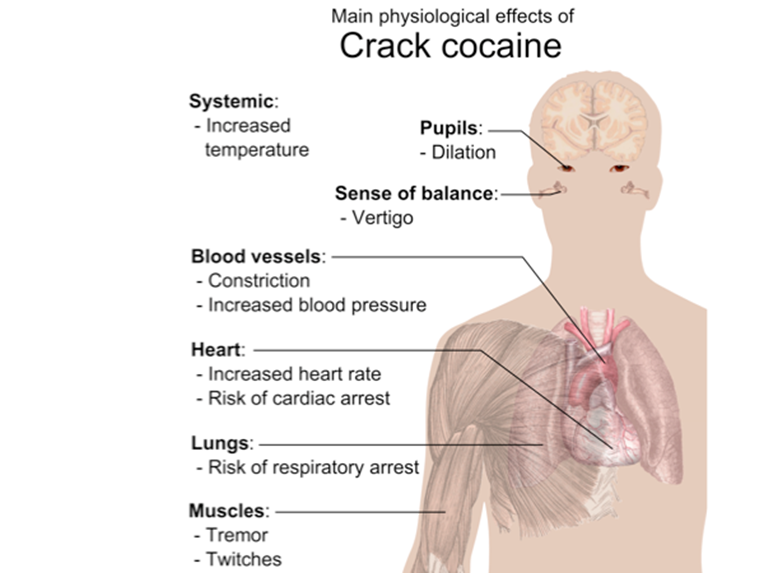
A nurse is assessing a client who reports using cocaine 1 hr ago. Which of the following findings should the nurse expect?
Polyphagia
Fever
Bradycardia
Oliguria
The Correct Answer is B
A. Polyphagia: Polyphagia refers to excessive hunger or increased appetite. Cocaine use is not typically associated with increased appetite; in fact, it often suppresses appetite. Therefore, polyphagia is not an expected finding.
B. Fever: Cocaine use can lead to an increase in body temperature due to its stimulant effects on the central nervous system. Therefore, fever is a possible finding associated with cocaine use.
C. Bradycardia: Cocaine use is more commonly associated with tachycardia, an elevated heart rate, rather than bradycardia. Stimulants like cocaine typically increase heart rate and can cause palpitations and arrhythmias.
D. Oliguria: Oliguria refers to decreased urine output. While cocaine use can have various effects on the body, it is not typically associated with oliguria. Instead, it can lead to increased urinary frequency due to its stimulant effects.
Nursing Test Bank
Naxlex Comprehensive Predictor Exams
Related Questions
Correct Answer is B
Explanation
A. Keep the client hospitalized until there is no longer a threat
Nurses do not have the authority to unilaterally detain clients in a hospital. This decision is typically made by a physician or a legal authority, especially in the context of a medical-surgical unit where mental health professionals may need to be involved.Keeping a client hospitalized without proper legal procedures and mental health evaluation could lead to legal repercussions for unlawful detainment.
B. Ensure the client's ex-partner is notified of the threat
This option involves notifying the potential victim about the threat made by the client. While it's important to ensure the safety of others, the nurse's legal duty primarily lies with protecting the confidentiality of the client's information. Without consent from the client or a legal obligation, such as mandatory reporting laws for imminent harm, the nurse cannot disclose the threat to the ex-partner.
C. Ask a friend or family member to monitor the client
While involving family or friends might provide support, it is not a sufficient or appropriate response to a threat of harm. It does not address the immediate risk posed to the ex-partner and may not comply with legal obligations.
D. Transfer the client to a mental health facility
Transferring the client to a mental health facility for further evaluation and treatment might be necessary, but it must be done through appropriate medical and legal channels. It addresses the need for a thorough mental health assessment and ensures that the client receives the necessary care.
Correct Answer is C
Explanation
A. Remain 15 cm (6 in) away from the client: Maintaining a safe physical distance is important to ensure the safety of both the client and the staff member. However, the specific distance may vary depending on the situation and the client's level of agitation. It's essential to maintain a safe distance while still engaging with the client in a supportive manner.
B. Use a raised voice when speaking to the client: Using a raised voice can escalate the situation further and may increase the client's agitation or aggression. It's important to speak calmly and softly to avoid escalating the situation.
C. Determine the cause of the client's feelings: Understanding the underlying reasons for the client's aggression can help the nurse address the root cause and implement appropriate interventions. It's important to listen actively to the client, validate their feelings, and demonstrate empathy.
D. Ask the client short close-ended questions: Close-ended questions typically elicit simple "yes" or "no" responses and may not encourage open communication or help the client express their feelings. Instead, it's more beneficial to ask open-ended questions that allow the client to express themselves and feel heard.
Whether you are a student looking to ace your exams or a practicing nurse seeking to enhance your expertise , our nursing education contents will empower you with the confidence and competence to make a difference in the lives of patients and become a respected leader in the healthcare field.
Visit Naxlex, invest in your future and unlock endless possibilities with our unparalleled nursing education contents today