
A nurse is caring for a client who is experiencing an acute exacerbation of ulcerative colitis. The nurse should recognize that which of the following actions is the priority?
Provide emotional support.
Evaluate fluid and electrolyte levels.
Promote physical mobility.
Review stress factors that can cause disease exacerbation
The Correct Answer is B
Choice A reason: Providing emotional support is important for a client who has ulcerative colitis, as the condition can affect their quality of life and mental health. However, this is not the priority action for a nurse who is caring for a client who is experiencing an acute exacerbation of ulcerative colitis, as it does not address the immediate physical needs of the client.
Choice B reason: Evaluating fluid and electrolyte levels is the priority action for a nurse who is caring for a client who is experiencing an acute exacerbation of ulcerative colitis, as the client is at risk of dehydration, hypovolemia, and electrolyte imbalances due to diarrhea, vomiting, and poor oral intake. The nurse should monitor the client’s vital signs, urine output, weight, skin turgor, mucous membranes, and laboratory values such as serum sodium, potassium, chloride, bicarbonate, blood urea nitrogen (BUN), and creatinine.
Choice C reason: Promoting physical mobility is beneficial for a client who has ulcerative colitis, as it can help prevent complications such as deep vein thrombosis (DVT), pulmonary embolism (PE), and pressure ulcers. However, this is not the priority action for a nurse who is caring for a client who is experiencing an acute exacerbation of ulcerative colitis, as the client may have abdominal pain, fatigue, and weakness that limit their mobility. The nurse should encourage rest and provide comfort measures such as positioning, heat therapy, and analgesics.
Choice D reason: Reviewing stress factors that can cause disease exacerbation is helpful for a client who has ulcerative colitis, as stress can trigger or worsen inflammation in the bowel. However, this is not the priority action for a nurse who is caring for a client who is experiencing an acute exacerbation of ulcerative colitis, as it does not address the immediate physical needs of the client. The nurse should teach the client about stress management techniques and refer them to appropriate resources such as counseling or support groups.
Nursing Test Bank
Naxlex Comprehensive Predictor Exams
Related Questions
Correct Answer is C
Explanation
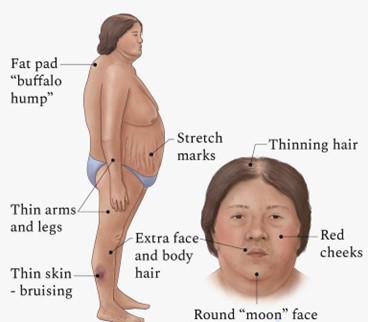
Choice A reason: Weight loss is not a symptom of Cushing’s syndrome. On the contrary, weight gain and obesity are common signs of this condition, especially in the trunk, face and upper back1.
Choice B reason: Diaphoresis, or excessive sweating, is not a symptom of Cushing’s syndrome. It can be caused by other conditions, such as hyperthyroidism, menopause or anxiety.
Choice C reason: Hyperpigmentation, or darkening of the skin, is a symptom of Cushing’s syndrome. It occurs due to increased production of melanin, the pigment that gives color to the skin. Hyperpigmentation can affect any part of the body, but it is more noticeable in areas exposed to friction or pressure, such as the elbows, knees, knuckles and armpits.
Choice D reason: Hypotension, or low blood pressure, is not a symptom of Cushing’s syndrome. In fact, high blood pressure (hypertension) is one of the common symptoms of this condition, due to the effects of cortisol on the cardiovascular system.
Correct Answer is A
Explanation
Choice A reason: Injecting insulin into a muscle that is going to be exercised can increase the absorption of insulin and lower the blood glucose level, leading to hypoglycemia. Therefore, it is advisable to avoid injecting insulin into the same body part that will be involved in the exercise.
Choice B reason: Carrying a complex carbohydrate snack with you when you exercise is not a good idea. Complex carbohydrates take longer to digest and raise the blood glucose level slowly. They are not suitable for treating or preventing hypoglycemia during or after exercise. A simple carbohydrate snack, such as glucose tablets, juice or candy, is more appropriate for this purpose.
Choice C reason: Exercising first thing in the morning before eating breakfast is not recommended for people with type 1 diabetes. This can cause a drop in blood glucose level and increase the risk of hypoglycemia. It is beter to have a balanced breakfast that includes some carbohydrates and adjust the insulin dose accordingly before exercising.
Choice D reason: Increasing the intensity of your exercise routine if your urine is positive for ketones is a dangerous practice. Ketones are produced when the body breaks down fat for energy due to lack of insulin or glucose. High levels of ketones can lead to diabetic ketoacidosis, a life-threatening condition that requires urgent medical atention. Intense exercise can raise the blood glucose level further and worsen the situation. If your urine is positive for ketones, you should avoid vigorous activity and check your blood glucose and ketone levels frequently.
Whether you are a student looking to ace your exams or a practicing nurse seeking to enhance your expertise , our nursing education contents will empower you with the confidence and competence to make a difference in the lives of patients and become a respected leader in the healthcare field.
Visit Naxlex, invest in your future and unlock endless possibilities with our unparalleled nursing education contents today