
A nurse is caring for a school age child who is 1 hour postoperative following a tonsillectomy.
Which of the following actions should the nurse take?
. Discourage the child from coughing
Provide cranberry juice to the child
Maintain the child in a supine position
Administer an analgesic to the child on a schedule basis
Correct Answer : A
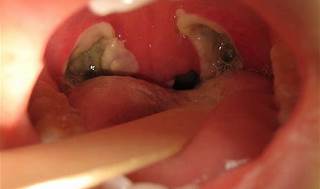
The correct answer is choice a. Discourage the child from coughing.
Choice A rationale:
Discouraging the child from coughing is important because coughing can dislodge clots and cause bleeding at the surgical site, which is a common complication after a tonsillectomy.
Choice B rationale:
Providing cranberry juice to the child is not recommended because acidic juices can irritate the throat and cause discomfort or pain.
Choice C rationale:
Maintaining the child in a supine position is not ideal as it can increase the risk of aspiration. Instead, the child should be positioned on their side or with the head elevated to facilitate drainage and reduce the risk of aspiration.
Choice D rationale:
Administering an analgesic to the child on a scheduled basis is important for pain management, but it is not the most immediate action to take one hour postoperatively. Pain management should be part of the overall care plan.
Nursing Test Bank
Naxlex Comprehensive Predictor Exams
Related Questions
Correct Answer is A
Explanation
Choice A rationale
Pertussis, also known as whooping cough, is a highly contagious bacterial disease. Health care providers are required to report cases of pertussis to the local health department to help track and control the spread of the disease.
Choice B rationale
Placing the child in a protected environment for 48 hours is not a standard action for a child with pertussis. The child will need to be isolated until they have completed a full course of antibiotics to prevent spreading the infection.
Choice C rationale
Administering the pertussis vaccine is not typically done when a child is already infected. The vaccine is used for prevention, not treatment.
Choice D rationale
Restricting oral fluids to 500 mL per day is not a standard action for a child with pertussis. Adequate hydration is important for children with respiratory infections.
Correct Answer is B
Explanation
Choice A rationale
Aspartame is a low-calorie sweetener used in place of sugar. However, it is not recommended for individuals with phenylketonuria (PKU) because it contains phenylalanine, an amino acid that individuals with PKU cannot metabolize properly.
Choice B rationale
Individuals with PKU are advised to avoid foods containing milk products. This is because milk and other
dairy products contain phenylalanine, which individuals with PKU cannot metabolize properly. Instead, they are advised to consume a diet low in protein and supplemented with a phenylalanine-free medical formula.
Choice C rationale
Increasing protein consumption is not recommended for individuals with PKU. This is because protein-rich foods often contain phenylalanine, an amino acid that individuals with PKU cannot metabolize properly.
Instead, they are advised to consume a diet low in protein and supplemented with a phenylalanine-free medical formula.
Choice D rationale
Limiting foods high in iron is not specifically related to the dietary management of PKU. Individuals with PKU primarily need to avoid foods high in phenylalanine.
Whether you are a student looking to ace your exams or a practicing nurse seeking to enhance your expertise , our nursing education contents will empower you with the confidence and competence to make a difference in the lives of patients and become a respected leader in the healthcare field.
Visit Naxlex, invest in your future and unlock endless possibilities with our unparalleled nursing education contents today