
A nurse is collecting data from a client about a range of motion for various joints. Which of the following images should the nurse identify as an example of a ball an socket joint?
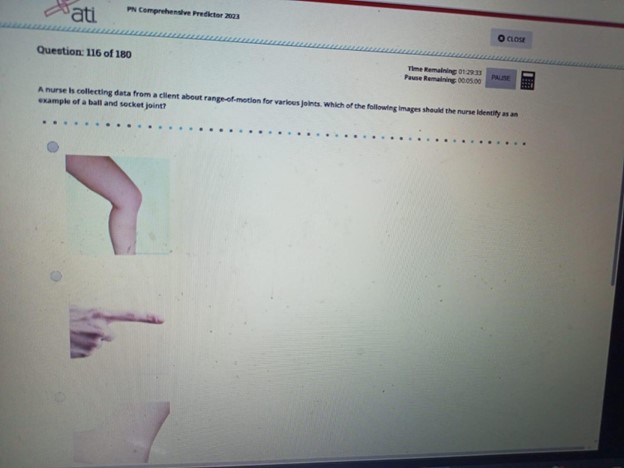
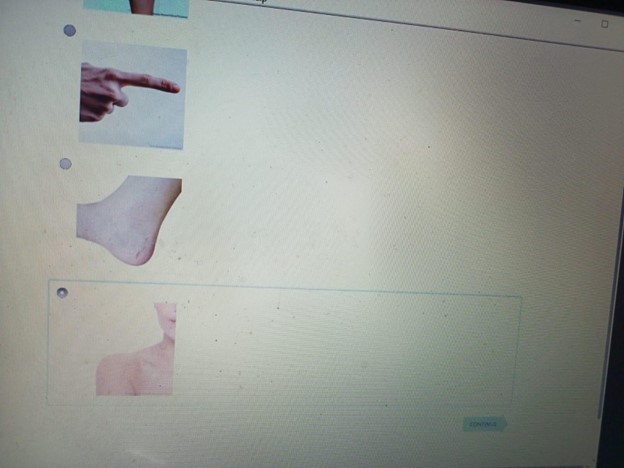
Knee joint
Interphalangeal joint
Ankle joint
Shoulder joint
The Correct Answer is D
A) Incorrect. The knee joint is a hinge joint that allows primarily flexion and extension.
B) Incorrect. The interphalangeal joints are hinge joints that allow primarily flexion and extension of the fingers and toes.
C) Incorrect. The ankle joint is a hinge joint that allows primarily dorsiflexion and plantarflexion of the foot.
D) Correct. The shoulder joint is a classic example of a ball and socket joint, allowing for a wide range of motion in various directions, including flexion, extension, abduction, adduction, rotation, and circumduction.
Nursing Test Bank
Naxlex Comprehensive Predictor Exams
Related Questions
Correct Answer is C
Explanation
A. One fingerbreadth of space between the cast and the skin is important to prevent constriction, but diminished pulses suggest compromised blood circulation, which is a higher priority.
B. Muscle spasms are common and can cause discomfort, but diminished pulses indicate a more serious circulation issue.
C. Correct. Diminished pulses suggest reduced blood flow, which is a serious concern and requires immediate attention.
D. Ecchymosis might be related to the cast application, but it's less urgent than compromised circulation.
Correct Answer is C
Explanation
A. Incorrect. In the event of an outdoor chemical disaster, individuals should stay indoors and take shelter rather than exiting the home.
B. Incorrect. Opening the dampers of fireplaces could allow outdoor contaminants to enter the home.
C. Correct. Covering heat registers with plastic and tape can help prevent outdoor chemicals from entering the home through the ventilation system.
D. Incorrect. Turning on ceiling fans and air conditioners could potentially bring outdoor contaminants indoors through the ventilation system.
Whether you are a student looking to ace your exams or a practicing nurse seeking to enhance your expertise , our nursing education contents will empower you with the confidence and competence to make a difference in the lives of patients and become a respected leader in the healthcare field.
Visit Naxlex, invest in your future and unlock endless possibilities with our unparalleled nursing education contents today