
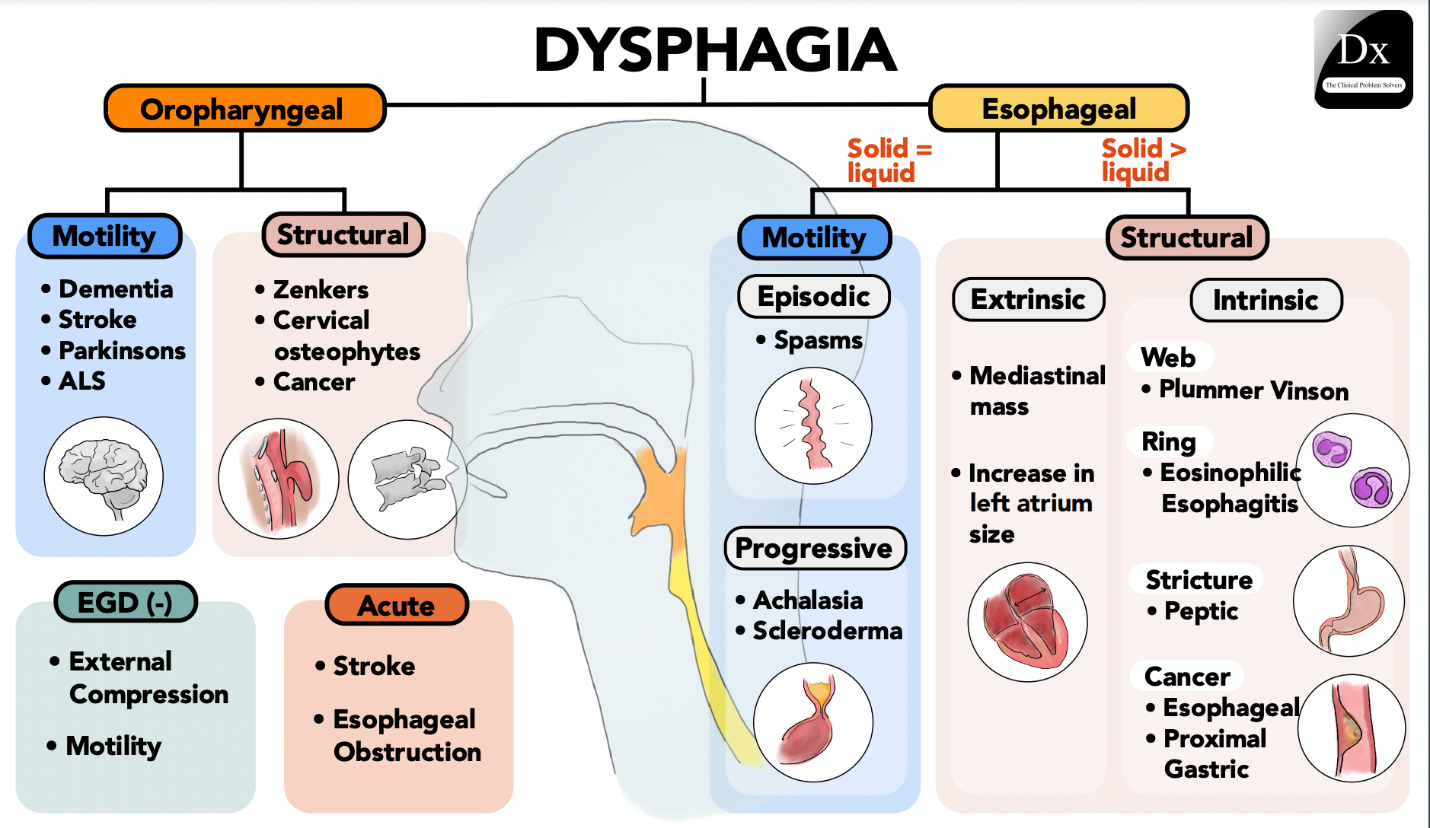
A nurse is planning to administer medications to an older adult client who has dysphagia. Which of the following actions should the nurse plan to take?
Place the medications on the back of the client's tongue.
Tilt the client's head back when administering the medications.
Administer more than one pill to the client at a time.
Mix the medications with a semisolid food for the client.
The Correct Answer is D
A. Place the medications on the back of the client's tongue:
Incorrect Explanation: Placing medications on the back of the tongue can increase the risk of choking and aspiration, especially in individuals with dysphagia.
Explanation: Individuals with dysphagia have difficulty swallowing and are at an increased risk of choking or aspirating (inhaling) substances into the lungs. Placing medications on the back of the tongue can be unsafe and is not recommended.
B. Tilt the client's head back when administering the medications:
Incorrect Explanation: Tipping the head back can worsen swallowing difficulties and increase the risk of choking or aspiration.
Explanation: Tipping the head back can compromise the natural swallowing mechanism and increase the risk of aspiration. It's important to keep the client's head in an upright position to aid safe swallowing.
C. Administer more than one pill to the client at a time:
Incorrect Explanation: Administering multiple pills at once can increase the risk of choking and aspiration, especially in individuals with dysphagia.
Explanation: Administering multiple pills at once can overwhelm the client's ability to swallow safely. This action can increase the risk of choking and aspiration, which is especially dangerous for individuals with dysphagia.
D. Mix the medications with a semisolid food for the client:
Correct Answer: This action is appropriate and safer for administering medications to an older adult client with dysphagia.
Explanation: Mixing medications with semisolid food, such as applesauce or yogurt, can help the client swallow more easily and reduce the risk of choking or aspiration. It's important to check with the healthcare provider or pharmacist to ensure that the medications can be mixed with food and that there are no interactions.
Nursing Test Bank
Naxlex Comprehensive Predictor Exams
Related Questions
Correct Answer is B
Explanation
A. Pedal edema
Explanation: Pedal edema (swelling of the feet) is not a typical sign of an acute infusion reaction to IV amphotericin B.
B. Fever
Explanation: Fever is a common sign of an acute infusion reaction, indicating an inflammatory response to the medication.
An acute infusion reaction to IV amphotericin B is most commonly characterized by fever and chills, as well as other flu-like symptoms such as headache, muscle or joint pain, and sometimes a dry cough. Fever is a key indicator of an acute reaction to amphotericin B, and the presence of fever during or after administration should raise concern and prompt the nurse to take appropriate action, including notifying the healthcare provider and discontinuing the infusion.
Pedal edema and hyperglycemia are not typically associated with acute infusion reactions to amphotericin B and are not common manifestations of this type of reaction.
C. Hyperglycemia
Explanation: Hyperglycemia (high blood sugar) is not typically associated with an acute infusion reaction to IV amphotericin B.
D. Dry cough
Explanation: A dry cough can be a symptom of an acute infusion reaction, potentially indicating irritation or inflammation of the respiratory tract.

Correct Answer is ["A","C","D"]
Explanation
A. "Rinse your child's mouth following administration." - This is important advice to prevent the development of oral thrush (a fungal infection) and to reduce the risk of irritation in the mouth and throat caused by the medication. After using a fluticasone inhaler, rinsing the mouth with water can help prevent these side effects.
C. "Shake the device prior to administration." - Shaking the inhaler before use ensures proper mixing of the medication and enhances its effectiveness.
D. "A spacer will make it easier to use the device." - A spacer is a device that attaches to the inhaler and helps the medication get into the lungs more effectively, especially for children who might have difficulty coordinating the timing of inhalation with activating the inhaler.
The other options:
B. "Have your child take one inhalation as needed for shortness of breath." - This instruction might not be accurate, as fluticasone is usually used as a maintenance medication to control chronic conditions like asthma. It's not typically used as a rescue inhaler for immediate shortness of breath.
E. "Soak the inhaler in water after use." - Soaking the inhaler in water after use is not a standard practice and is not necessary for proper administration or maintenance.
Whether you are a student looking to ace your exams or a practicing nurse seeking to enhance your expertise , our nursing education contents will empower you with the confidence and competence to make a difference in the lives of patients and become a respected leader in the healthcare field.
Visit Naxlex, invest in your future and unlock endless possibilities with our unparalleled nursing education contents today