
A nurse is preparing to administer aspirin 650 mg PO every 12 hr. The amount available is aspirin 325 mg tablets. How many tablets should the nurse administer?
(Round the answer to the nearest whole number. Use a leading zero if it applies. Do not use a trailing zero.)
The Correct Answer is ["2"]
The nurse should administer 2 tablets.
Here's the calculation:
650 mg / 325 mg per tablet = 2 tablets
Since the nurse should administer a whole number of tablets, the answer is 2 tablets.
Nursing Test Bank
Naxlex Comprehensive Predictor Exams
Related Questions
Correct Answer is B
Explanation
A. Apply cool sterile soaks to the child's head.
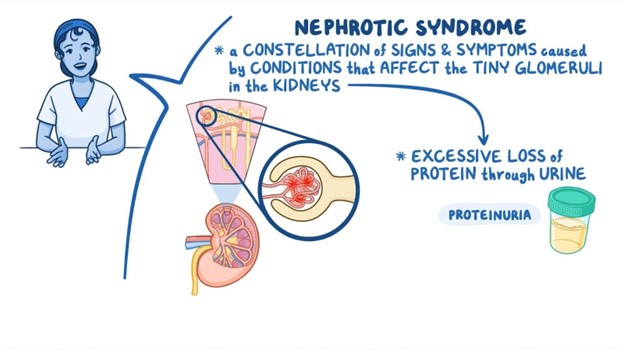
Explanation: Applying cool sterile soaks to the child's head would not directly address periorbital edema. Nephrotic syndrome is a kidney disorder that results in proteinuria (loss of protein in urine), leading to fluid accumulation and edema. Cooling the head would not have a significant impact on reducing periorbital edema caused by nephrotic syndrome.
B. Apply warm compresses.
Explanation: Correct Choice. Applying warm compresses can help increase blood circulation and promote the reabsorption of excess fluid causing periorbital edema. Warmth can dilate blood vessels and improve the movement of fluids, potentially alleviating the edema.
C. Encourage the child to eat low protein foods.
Explanation: While dietary modifications might be part of managing nephrotic syndrome, specifically encouraging low protein foods may not directly address periorbital edema. The primary treatment for nephrotic syndrome involves medications to control proteinuria and manage fluid balance.
D. Elevate the head of the bed.
Explanation: Elevating the head of the bed is more commonly used to manage conditions like heart failure or obstructive sleep apnea. It might have some impact on overall fluid distribution, but it's not the most effective measure for reducing periorbital edema caused by nephrotic syndrome.
Correct Answer is D
Explanation
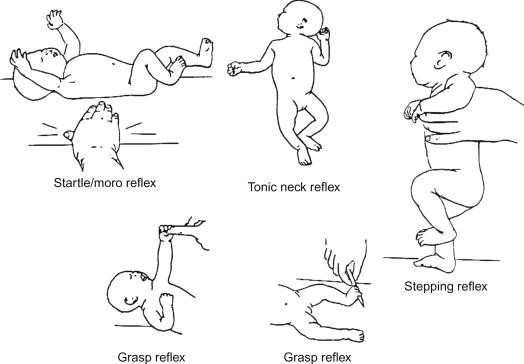
Reflexes play a crucial role in evaluating the neurological status of infants.
Moro reflex: Also known as the startle reflex, the Moro reflex is a normal response in infants. It occurs when an infant is startled by a sudden noise or movement. The baby responds by extending their arms and legs, followed by a quick contraction. This reflex usually disappears around 4-6 months of age.
Tonic neck reflex (fencer's reflex): This reflex involves turning an infant's head to one side, causing the arm on that side to extend and the opposite arm to flex. It's a normal reflex that typically disappears around 4-6 months of age.
Withdrawal reflex: The withdrawal reflex is a normal response to a stimulus, such as touching a baby's foot with a cold object. The baby will pull their leg away in response to the stimulus.
Symptomatic of decorticate or decerebrate posturing (options A and B):
Decorticate and decerebrate posturing are abnormal postures seen in individuals with severe brain damage or injury. Decorticate posturing involves the arms being flexed and held close to the body, while decerebrate posturing involves the arms being extended and the wrists being pronated. These reflexes are typically indicative of significant neurological dysfunction and are not expected in a 2-month-old infant after a car accident.
Indicators of severe brain damage (option C):
The reflexes described (Moro, tonic neck, and withdrawal reflexes) are not indicative of severe brain damage in a 2-month-old infant. These reflexes are normal for an infant of this age and are part of their typical neurological development.
Normal findings (option D):
The reflexes described are normal findings in a 2-month-old infant and are expected as part of their developmental milestones.
Whether you are a student looking to ace your exams or a practicing nurse seeking to enhance your expertise , our nursing education contents will empower you with the confidence and competence to make a difference in the lives of patients and become a respected leader in the healthcare field.
Visit Naxlex, invest in your future and unlock endless possibilities with our unparalleled nursing education contents today