
Educating a client about starting nifedipine (Procardia) for preterm labor prevention, the nurse knows that her educational plan for this client should include which of the following?
Your respiratory rate may slow down, so make sure to monitor your breathing rate!
You will most likely be hospitalized until delivery while on your medication
You should try to get up slowly and drink plenty of fluids
You will stop this medication at 28 weeks.
The Correct Answer is C
Nifedipine is a calcium channel blocker that can cause hypotension as a side effect, so the client should be advised to rise slowly from a sitting or lying position to avoid dizziness or fainting. The client does not necessarily need to be hospitalized and should continue taking the medication until a healthcare provider advises otherwise. The medication is typically continued until around 36-37 weeks gestation. There is no need to monitor respiratory rate with this medication.
Nursing Test Bank
Naxlex Comprehensive Predictor Exams
Related Questions
Correct Answer is C
Explanation
This tool helps in assessing the severity of withdrawal symptoms in infants who were exposed to opioids during pregnancy. Based on the Finnegan score, the nurse can implement appropriate interventions to manage the symptoms and prevent complications. While offering the infant a pacifier with a drop of mom's breast milk or tightly swaddling the infant may be helpful for soothing the infant, these interventions may not directly address the underlying hyperreflexia associated with opioid withdrawal. Placing the infant under a radiant warmer is not indicated for managing hyperreflexia.
Correct Answer is C
Explanation
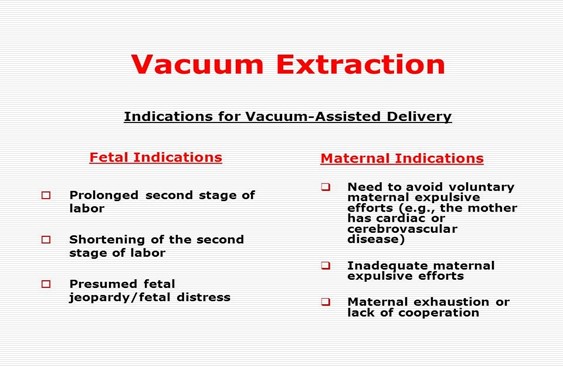
The most common indication for a vacuum-assisted delivery is a prolonged second stage of labor, which means that the mother has been pushing for an extended period without effective descent of the fetal head. The vacuum can help to provide traction to the fetal head and assist with delivery.
Option A is incorrect because a vacuum-assisted delivery is not indicated for the prevention of fetal abnormalities.
Option B is incorrect because a vacuum-assisted delivery is not indicated for the prevention of maternal hemorrhage.
Option D is incorrect because a prolonged first stage of labor is not an indication of
vacuum-assisted delivery. In this case, other interventions, such as augmentation of labor with oxytocin, may be used.
Whether you are a student looking to ace your exams or a practicing nurse seeking to enhance your expertise , our nursing education contents will empower you with the confidence and competence to make a difference in the lives of patients and become a respected leader in the healthcare field.
Visit Naxlex, invest in your future and unlock endless possibilities with our unparalleled nursing education contents today