
Heparin 7,000 units is ordered. Heparin 5,000 units per ml is available. How many milliliters (ml) should the nurse administer?
(Do not round)
The Correct Answer is ["1.4"]
We know that 7,000 units is equivalent to 5,000 units per ml. So, we can set up the proportion:
7,000 units / 5,000 units per ml = x ml / 1 ml x = 7,000 / 5,000
x = 1.4
Therefore, the nurse should administer 1.4 milliliters (ml) of heparin.
Nursing Test Bank
Naxlex Comprehensive Predictor Exams
Related Questions
Correct Answer is B
Explanation
Acute adrenal insufficiency, also known as adrenal crisis, is characterized by low levels of adrenal hormones, particularly cortisol. One of the primary manifestations of adrenal insufficiency is electrolyte imbalance, specifically hyponatremia (low sodium) and hyperkalemia (high potassium). Inadequate cortisol levels can lead to impaired sodium reabsorption in the kidneys, resulting in sodium loss and low serum sodium levels.
When the patient receives appropriate therapies for acute adrenal insufficiency, such as administration of glucocorticoids (e.g., hydrocortisone), the cortisol levels begin to normalize. As a result, the impaired sodium reabsorption improves, leading to an increase in serum sodium levels.
Correct Answer is D
Explanation
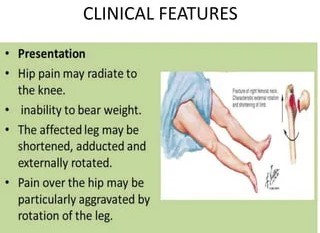
This finding suggests that the client may have experienced a hip fracture. The shorter leg can be a result of the fractured bone, causing a misalignment or displacement. The protruding bump on the side can be a sign of a dislocated or fractured hip joint. It is important to assess and confirm this suspicion through appropriate diagnostic measures, such as X-rays, to provide the necessary medical intervention and management.
Whether you are a student looking to ace your exams or a practicing nurse seeking to enhance your expertise , our nursing education contents will empower you with the confidence and competence to make a difference in the lives of patients and become a respected leader in the healthcare field.
Visit Naxlex, invest in your future and unlock endless possibilities with our unparalleled nursing education contents today