
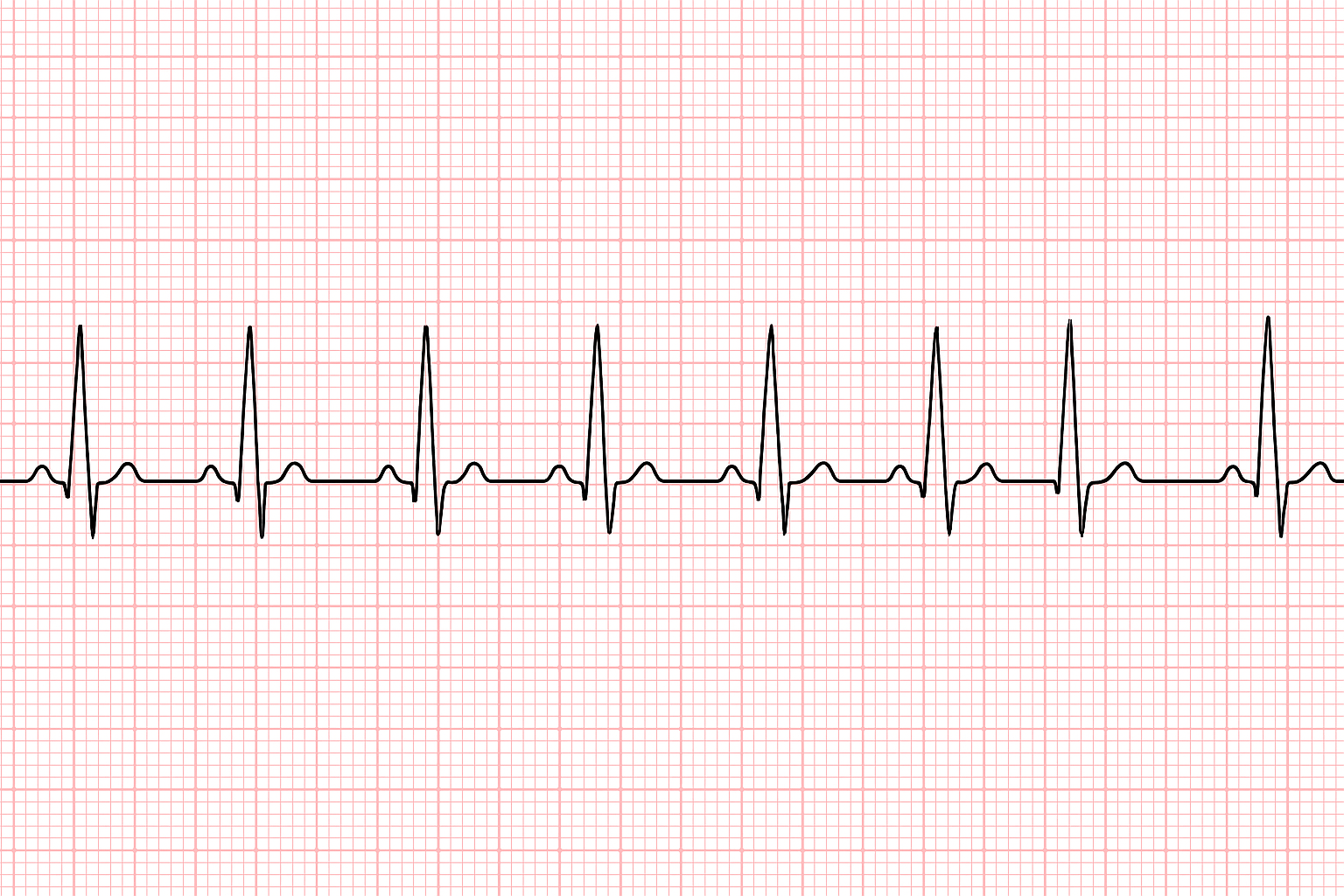
Identify the telemetry rhythm strip below.
Sinus Rhythm.
Sinus rhythm with first-degree AV block.
STEMI.
NSTEMI.
The Correct Answer is B
Choice A rationale
Sinus rhythm is characterized by a regular heart rate between 60 and 100 beats per minute, a P wave preceding every QRS complex, and a consistent PR interval. The rhythm strip shown does not meet the criteria for a normal sinus rhythm due to a prolonged PR interval, indicating a conduction delay.
Choice B rationale
Sinus rhythm with first-degree AV block is identified by a regular sinus rhythm with a prolonged PR interval (greater than 0.20 seconds). This indicates a delay in electrical impulse conduction from the atria to the ventricles through the AV node, but all atrial impulses are still conducted.
Choice C rationale
STEMI (ST-segment elevation myocardial infarction) is characterized by significant ST-segment elevation on the electrocardiogram, indicating acute myocardial injury. This specific rhythm strip does not display the characteristic ST-segment elevation associated with a STEMI.
Choice D rationale
NSTEMI (non-ST-segment elevation myocardial infarction) is typically characterized by ST-segment depression, T-wave inversion, or non-specific ST-T wave changes, without persistent ST-segment elevation. The provided rhythm strip does not exhibit these specific ischemic changes.
Nursing Test Bank
Naxlex Comprehensive Predictor Exams
Related Questions
Correct Answer is D
Explanation
Choice A rationale
While adequate rest is generally beneficial for overall health, excessive or prolonged rest for subacute back pain can actually be detrimental. Prolonged inactivity can lead to deconditioning of core muscles, joint stiffness, and a decrease in spinal mobility, which can contribute to the transition of subacute pain to chronic pain. Moderate activity and movement are generally encouraged.
Choice B rationale
Stating there is nothing a patient can do is inaccurate and unhelpful. There are numerous evidence-based strategies, including exercise, physical therapy, ergonomic adjustments, and lifestyle modifications, that can significantly impact the progression and chronicity of back pain. This response does not empower the patient with self-management techniques or provide accurate information.
Choice C rationale
Adjusting medication schedules without professional guidance can be dangerous and lead to adverse effects, inadequate pain control, or drug dependency. Medications for pain, especially analgesics, have specific dosing intervals based on pharmacokinetics and pharmacodynamics to maintain therapeutic levels and minimize side effects. Self-adjusting doses can lead to toxicity or insufficient pain relief.
Choice D rationale
Maintaining good posture and strengthening core muscles (abdominal and back muscles) are fundamental strategies for preventing chronic low back pain. A strong core provides essential support for the spine, improves spinal alignment, reduces mechanical stress on spinal structures, and enhances overall biomechanics during daily activities, thereby mitigating factors contributing to chronicity.
Correct Answer is C
Explanation
Choice A rationale
Encouraging wide-grip utensils does not address homonymous hemianopsia, which is a visual field deficit. Wide-grip utensils are typically used for clients with motor deficits or grip issues, not visual field cuts. This action would not help the client locate food within their blind visual field.
Choice B rationale
Encouraging the client to use their right hand, which is typically affected by a right-sided stroke, would be counterproductive and likely lead to frustration and difficulty with self-feeding. The left side of the body is often weaker or paralyzed after a right-sided stroke.
Choice C rationale
Homonymous hemianopsia involves a loss of half of the visual field in both eyes, contralateral to the stroke. For a right-sided stroke, the client will have left homonymous hemianopsia, meaning they cannot see things on their left side. Reminding them to look for food on the left side of the tray helps compensate for this visual deficit by prompting them to scan their blind field.
Choice D rationale
Providing a nonskid mat addresses plate movement, which can be helpful for clients with tremors or coordination issues, but it does not directly address the visual field deficit of homonymous hemianopsia. The primary problem here is not the plate moving, but the client's inability to see part of the plate.
Whether you are a student looking to ace your exams or a practicing nurse seeking to enhance your expertise , our nursing education contents will empower you with the confidence and competence to make a difference in the lives of patients and become a respected leader in the healthcare field.
Visit Naxlex, invest in your future and unlock endless possibilities with our unparalleled nursing education contents today