
The nurse is caring for a client who reports a sudden, severe headache, and facial numbness.The nurse asks the client to smile and observes an uneven smile with a facial droop to the right side and a hand grasp strength that is weaker on the right than the left. The client denies a recent history of headaches or trauma. After obtaining vital signs, the nurse should implement which intervention?
Place an indwelling urinary catheter and measure strict intake and output.
Maintain elevated positioning of the dependent joints on affected side.
Raise the head of the bed to 30 degrees keep head and neck in neutral alignment.
Determine when symptoms began and if improved or worsened since onset.
The Correct Answer is D
A) Incorrect- While monitoring urinary output is important for overall assessment, it is not the most critical intervention in this situation of suspected stroke. The client's neurological symptoms take precedence.
B) Incorrect- Positioning might be relevant to preventing complications, but it is not the highest priority intervention in this situation. The focus should be on assessing the client's neurological status and determining appropriate intervention.
C) Incorrect- Although head positioning is relevant for intracranial pressure management, it is not the immediate priority. The nurse should first assess the time of symptom onset and determine if the client is experiencing an acute stroke.
D) Correct- The client's symptoms, including sudden severe headache, facial numbness, facial droop, and weakness on one side, are suggestive of a stroke. The nurse should prioritize assessing the time of symptom onset, as time is a crucial factor in determining the appropriate intervention. Rapid intervention can improve outcomes in stroke cases, especially when considering interventions like thrombolytic therapy. The other options are not as directly relevant to the immediate management of a suspected stroke.
Nursing Test Bank
Naxlex Comprehensive Predictor Exams
Related Questions
Correct Answer is D
Explanation
A) Incorrect- While the history of vomiting is important to assess, it may not be the most crucial information to gather at this point, as the client is postoperative and the focus is on immediate postoperative care.
B) Incorrect- While assessing for fluid intake is important, the client's refusal of ice chips is not an urgent concern compared to other potential complications, such as pain management, oxygenation, and fluid balance.
C) Incorrect- These assessments are important, but the client's history of right hemicolectomy and the current infusion and medication administration require closer attention to fluid balance, pain control, and oxygenation.
D) Correct- While all options are important to consider, the most critical information in this scenario is assessing peripheral pulses and the range of motion of both legs. A right hemicolectomy involves abdominal surgery and decreased or absent peripheral pulses along with a limited range of motion could indicate impaired circulation, thrombosis, or other post-operative complications. These findings might necessitate prompt intervention to prevent potential complications.
Correct Answer is C
Explanation
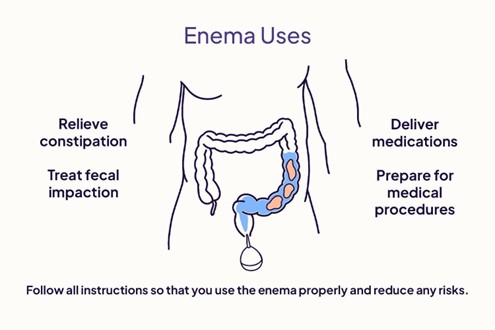
- An oil retention enema is used to soften the stool and lubricate the rectum, making it easier to pass the stool. It is usually oil-based and contains 90-120 ml of solution.
- The temperature of the enema solution affects the effectiveness and comfort of the procedure. If the solution is too hot or cold, it can cause pain, cramps, or damage to the rectal tissue³. If the solution is too warm, it can also stimulate peristalsis and cause the client to expel the enema before it has time to work.
- The ideal temperature for an enema solution is close to the client’s body temperature, which is around 98°F or 36°C. This temperature ensures that the solution is comfortable and does not cause adverse reactions.
Option A is incorrect because the client’s comfort level may not reflect the optimal temperature for the enema.
Option B is incorrect because the temperature of the enema does affect its effectiveness and safety.
Option D is incorrect because the temperature is too high and can cause harm to the client.
Whether you are a student looking to ace your exams or a practicing nurse seeking to enhance your expertise , our nursing education contents will empower you with the confidence and competence to make a difference in the lives of patients and become a respected leader in the healthcare field.
Visit Naxlex, invest in your future and unlock endless possibilities with our unparalleled nursing education contents today