
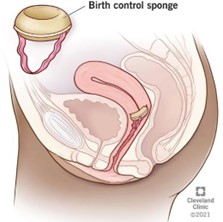
The nurse is teaching methods of contraception with a young client. The client decides on the contraceptive sponge as her method of choice Which information should the Nurse include in the teaching?
“You can use this at any time. even when you are menstruating.”
“Keep the sponge in place for at least 6 hours after intercourse.”
“You need to have the sponge fited before using it.”
“Clean the with mild soap and water after using it.”
The Correct Answer is B
The contraceptive sponge is a barrier method of contraception that is inserted into the vagina before sexual intercourse. It contains spermicide and blocks the sperm from reaching the egg. The sponge must be left in place for at least 6 hours after intercourse before it is removed. Don't leave it in for more than a total of 30 hours.
a. "You can use this at any time, even when you are menstruating" is incorrect information because the contraceptive sponge should not be used during menstruation.
c. "You need to have the sponge fited before using it" is incorrect information because the contraceptive sponge is a one-size-fits-all device and does not require fitting.
d. "Clean the with mild soap and water after using it" is also incorrect information because the contraceptive sponge is a disposable device and should be discarded after use. It should not be reused or washed.
Nursing Test Bank
Naxlex Comprehensive Predictor Exams
Related Questions
Correct Answer is A
Explanation
Breast self-examination is an essential part of breast cancer detection and should be performed regularly by all women, regardless of their medical history. While the client may have undergone a left modified radical mastectomy, this does not eliminate the possibility of developing breast cancer in the right breast or other parts of the body. Therefore, it is essential to continue performing breast self-examination regularly to detect any changes that may occur in the right breast.
Option b, "Is lucky that the cancer was caught in time" and option c, "should schedule a follow- up appointment in 6 months" may also be appropriate responses depending on the client's specific situation but option a is the most universally applicable response.
Option d, "I have irregular menses" is unrelated to the topic and does not address the client's
concern or needs.
Correct Answer is C
Explanation
The most recommended contraceptive method for young adults depends on various factors such as their medical history, lifestyle, preferences, and sexual behavior. However, in general, healthcare providers recommend starting with the least invasive and reversible options before considering more permanent methods.
Therefore, the most recommended contraceptive method for young adults is usually barrier methods, such as condoms or diaphragms, or hormonal contraception, such as birth control
pills, patches, or rings. These methods are highly effective when used correctly and consistently
and do not affect long-term fertility.
Abstinence is also an effective way to prevent pregnancy and sexually transmitted infections, but it may not be a realistic option for everyone. Sterilization, on the other hand, is a permanent method that should only be considered by individuals who are sure that they do not want to have children in the future.
It is important for the nurse to provide comprehensive information on all contraceptive options, their effectiveness, benefits, and risks, to help the young adult group make informed decisions about their reproductive health.
Whether you are a student looking to ace your exams or a practicing nurse seeking to enhance your expertise , our nursing education contents will empower you with the confidence and competence to make a difference in the lives of patients and become a respected leader in the healthcare field.
Visit Naxlex, invest in your future and unlock endless possibilities with our unparalleled nursing education contents today