
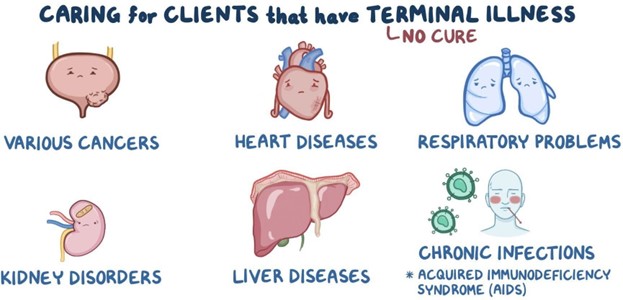
The practical nurse (PN) should collect the following information during the admission assessment of a terminally ill client to an acute care facility:
Health care proxy documentation.
Name of funeral home to contact.
Client's wishes regarding organ donation.
Contact information for the client's next of kin.
Contact information for the client's next of kin.
The Correct Answer is A
This is the information that the PN should collect during the admission assessment of a terminally ill client to an acute care facility. Health care proxy documentation is a legal document that appoints a person to make health care decisions for the client when they are unable to do so themselves. It is important to have this information in case the client's condition deteriorates and they need end-of-life care.
Nursing Test Bank
Naxlex Comprehensive Predictor Exams
Related Questions
Correct Answer is ["B","C","E"]
Explanation
The practical nurse (PN) should provide the following instructions to the unlicensed assistive personnel (UAP) for cleaning the hearing aid of an older adult resident:
A- Keep the battery door closed during storage: his is incorrect because the battery door should be kept open when the hearing aid is not in use. Keeping it open helps prevent moisture buildup inside the device.
B- Remove ear wax from the device's surface: Earwax accumulation can affect the performance of the hearing aid. Instructing the UAP to clean the device's surface and remove any visible ear wax will help maintain optimal functioning.
C- Verify that the device is labeled with the client's identification: Labeling the device with the client's identification is crucial to ensure that it is returned to the correct person. This step helps prevent mix-ups or misplacements of hearing aids among residents.
D- This is not appropriate as it can expose the device to heat and sunlight, which could damage it.
E- Observe and report any ear drainage after removing the device: After removing the hearing aid, the UAP should observe the client's ears for any signs of drainage or abnormal discharge. If ear drainage is noticed, it should be reported to the PN or appropriate healthcare provider for further assessment and management.
Correct Answer is C
Explanation
The activity that the PN should suggest to meet the physical and social needs of wheelchair-bound older residents who are mentally alert is an outdoor game of balloon
volleyball. It promotes physical activity, coordination, and social interaction among the residents. It allows them to engage with each other, participate in a fun and inclusive game, and enjoy the outdoor environment. Balloon volleyball can be adapted to accommodate individuals with varying abilities and provide an enjoyable and stimulating experience for wheelchair-bound residents who are mentally alert.
A. A picnic in the park: While a picnic in the park can be enjoyable, it may pose challenges for wheelchair-bound individuals in terms of accessibility and maneuverability. It might limit their participation and engagement in the activity.
B. An outdoor concert: While an outdoor concert can be entertaining, it may not actively engage wheelchair-bound residents. They may be limited in their ability to fully participate and interact with others during the concert.
D. A tea party in the courtyard: While a tea party can be a pleasant social activity, it may not provide the desired physical engagement for wheelchair-bound residents. They may require activities that involve more movement and physical participation.
Whether you are a student looking to ace your exams or a practicing nurse seeking to enhance your expertise , our nursing education contents will empower you with the confidence and competence to make a difference in the lives of patients and become a respected leader in the healthcare field.
Visit Naxlex, invest in your future and unlock endless possibilities with our unparalleled nursing education contents today