
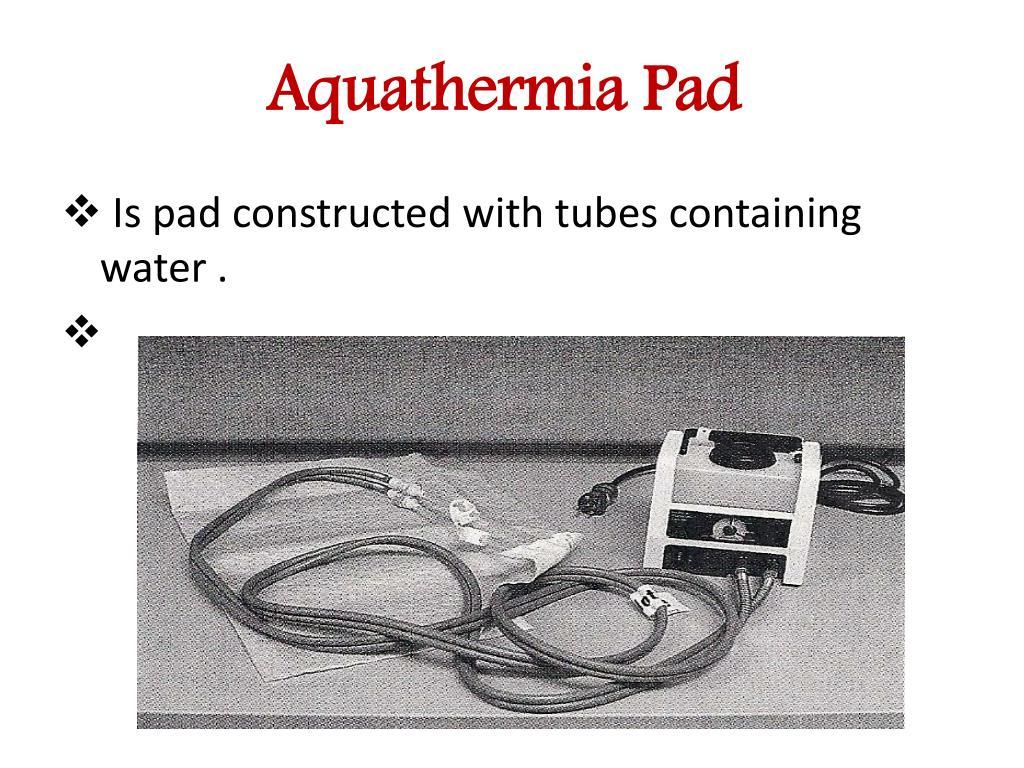
What safety factors should be considered when using an Aquathermia pad unit for a patient? (Select all that apply)
Inspecting the plug and cord for cracks or fraying
Securing the pad to the patient
Instructing the patient not to sleep on the pad
Assisting the patient to lie on top of the pad
Using a thermometer to check the temperature of the pad
Correct Answer : A,B,C,E
Choice A rationale
Inspecting the plug and cord for cracks or fraying is essential to prevent electrical hazards and ensure the safety of both the patient and healthcare staff.
Choice B rationale
Securing the pad to the patient helps to maintain the correct position and prevent burns or other injuries from improper pad placement.
Choice C rationale
Instructing the patient not to sleep on the pad is important because prolonged, direct contact with the heat source can cause burns, especially if the patient is immobile or has sensory deficits.
Choice D rationale
Assisting the patient to lie on top of the pad is not recommended as it can lead to burns due to increased temperature exposure in one area.
Choice E rationale
Using a thermometer to check the temperature of the pad ensures that it is within a safe range for application to the patient's skin, preventing burns.
Nursing Test Bank
Naxlex Comprehensive Predictor Exams
Related Questions
Correct Answer is C
Explanation
Choice A rationale
Leaving the old dressing in place and simply covering it with new wet dressings would not address the issue of the dressing being adhered to the wound bed, which could lead to further tissue damage when it is eventually removed.
Choice B rationale
Povidone-iodine is an antiseptic and not typically used to moisten dressings that are stuck to a wound bed, as it may irritate the wound and delay healing.
Choice C rationale
Adding normal saline is the gentlest method to loosen a dressing that is stuck to a wound bed. It helps to rehydrate the dressing and the wound, making it easier to remove without causing additional trauma to the healing tissue.
Choice D rationale
Pulling off the dressing using slow, steady pressure could cause damage to the new tissue forming in the wound bed and should be avoided unless all other methods have failed.
Correct Answer is ["A","B","D"]
Explanation
Choice A rationale
Promoting protein in the diet is beneficial for wound healing as it provides the necessary building blocks for tissue repair and regeneration.
Choice B rationale
NPWT (Negative Pressure Wound Therapy) therapy, also known as Wound Vacs, creates negative pressure to help wounds with large amounts of drainage and has been shown to be beneficial for chronic wounds³.
Choice C rationale
Wet-to-dry dressings are generally not recommended for chronic wounds as they can cause trauma to the wound bed when removed, potentially delaying healing.
Choice D rationale
Hydrocolloid dressings are beneficial for chronic wounds as they maintain a moist environment, which is conducive to wound healing.
Choice E rationale
Tolerating pressure treatment is not typically a method used for treating chronic wounds. Instead, pressure relief is important, especially for pressure ulcers.
Whether you are a student looking to ace your exams or a practicing nurse seeking to enhance your expertise , our nursing education contents will empower you with the confidence and competence to make a difference in the lives of patients and become a respected leader in the healthcare field.
Visit Naxlex, invest in your future and unlock endless possibilities with our unparalleled nursing education contents today