
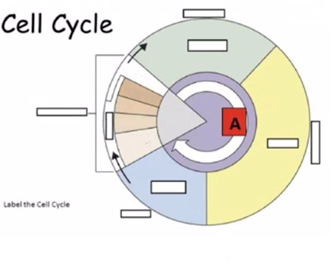
What stage of the cell cycle is letter A?
G1 phase
S phase
G2 phase
M phase
The Correct Answer is D
- G1 phase: This is the first gap phase where the cell grows and performs normal functions, not division.
- S phase: DNA replication occurs here, but chromosomes are not yet dividing.
- G2 phase: The cell prepares for mitosis by synthesizing proteins and checking DNA integrity, but division has not started.
- M phase (Mitosis): The cell undergoes nuclear division (prophase, metaphase, anaphase, telophase) followed by cytokinesis. The diagram highlights "A" in the central red segment, which typically represents mitosis in cell cycle charts. This is the stage where the cell actually divides, making it distinct from the preparatory phases.
Nursing Test Bank
Naxlex Comprehensive Predictor Exams
Related Questions
Correct Answer is B
Explanation
A. Elastic cartilage: Elastic cartilage is found in structures like the external ear and epiglottis, where flexibility is required. The thyroid cartilage of the larynx is not elastic cartilage.
B. Hyaline cartilage: The thyroid cartilage is composed of hyaline cartilage, which provides firm support and maintains the open airway. Hyaline cartilage is the most common type of cartilage in the body and is found in the laryngeal framework, trachea, and costal cartilages.
C. Fibrocartilage: Fibrocartilage is found in intervertebral discs, pubic symphysis, and menisci. It is specialized for resisting compression and tension, not for forming the laryngeal cartilages.
D. Skeletal muscle: Skeletal muscle surrounds the larynx and pharynx to aid in swallowing and phonation, but the arrow is pointing to the thyroid cartilage, which is connective tissue, not muscle.
Correct Answer is B
Explanation
A. Messenger RNA (mRNA): mRNA carries the genetic code from the DNA in the nucleus to the ribosome. It consists of a single linear strand of codons, rather than the "cloverleaf" shape seen here.
B. Transfer RNA (tRNA): This molecule is responsible for bringing the correct amino acid to the ribosome during translation. Its structure features an anticodon at one end to pair with an mRNA codon and an amino acid attachment site at the other.
C. Ribosomal RNA (rRNA): rRNA is a structural component of ribosomes. While it is made of RNA, it does not function as an adapter molecule carrying specific amino acids via an anticodon.
D. DNA Polymerase: This is an enzyme, not a nucleic acid. Its role is to synthesize new DNA strands during replication, not to transport amino acids during protein synthesis.
Whether you are a student looking to ace your exams or a practicing nurse seeking to enhance your expertise , our nursing education contents will empower you with the confidence and competence to make a difference in the lives of patients and become a respected leader in the healthcare field.
Visit Naxlex, invest in your future and unlock endless possibilities with our unparalleled nursing education contents today