
What type of tissue is shown here?
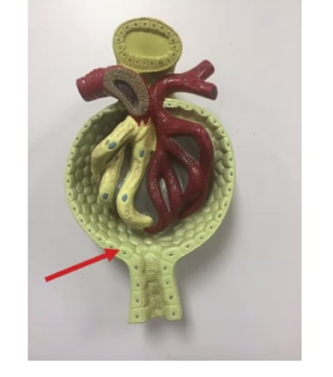
Simple cuboidal epithelium
Stratified squamous epithelium
Transitional epithelium
Simple columnar epithelium
The Correct Answer is A
A. Simple cuboidal epithelium: The nephron tubules (such as the proximal and distal convoluted tubules, and parts of the collecting duct) are lined with simple cuboidal epithelial cells. These cells are specialized for secretion and reabsorption, which are essential functions in urine formation. Their cube-like shape allows for a balance between structural support and metabolic activity.
B. Stratified squamous epithelium: Found in areas subject to friction, such as the skin and esophagus, not in nephron tubules.
C. Transitional epithelium: Specialized for stretching, found in the urinary bladder and ureters, not in the nephron.
D. Simple columnar epithelium: Taller cells found in the gastrointestinal tract, not in kidney tubules.
Simple columnar epithelium: Taller cells found in the gastrointestinal tract, not in kidney tubules.
Nursing Test Bank
Naxlex Comprehensive Predictor Exams
Related Questions
Correct Answer is C
Explanation
A. Basal Cell Carcinoma: This is the most common and least likely to spread (metastasis). It typically appears as a pearly or waxy bump, unlike the pigmented, irregular lesions shown.
B. Squamous Cell Carcinoma: While more aggressive than basal cell, it is usually less dangerous than melanoma. It often presents as a firm, red nodule or a flat lesion with a scaly surface.
C. Melanoma: This is the most severe and deadly form of skin cancer because it is highly likely to spread to other organs. The image displays the classic warning signs: Asymmetry, irregular Borders, multiple Colors, large Diameter, and Evolving/Changing.
D. Actinic Keratosis: This is a precancerous skin growth caused by sun damage. It is not yet a malignant cancer, though it can develop into squamous cell carcinoma if left untreated.
Correct Answer is C
Explanation
- Sugar-phosphate backbone: This forms the vertical sides of the DNA ladder, not the horizontal rungs.
- Hydrogen ions: These are not structural components of DNA; hydrogen bonds hold base pairs together, but hydrogen ions themselves are not part of the DNA structure.
- Base pairs (nitrogenous base pairs): The horizontal rungs of the DNA ladder represent base pairs, formed by hydrogen bonding between complementary nitrogenous bases: adenine (A) pairs with thymine (T), and cytosine (C) pairs with guanine (G). These base pairs are critical for encoding genetic information and ensuring accurate replication. The arrow is not pointing to the entire DNA molecule, but specifically to the structural unit that connects the two strands
- Ribosomes: These are cellular organelles involved in protein synthesis, not part of DNA’s structure.
Whether you are a student looking to ace your exams or a practicing nurse seeking to enhance your expertise , our nursing education contents will empower you with the confidence and competence to make a difference in the lives of patients and become a respected leader in the healthcare field.
Visit Naxlex, invest in your future and unlock endless possibilities with our unparalleled nursing education contents today